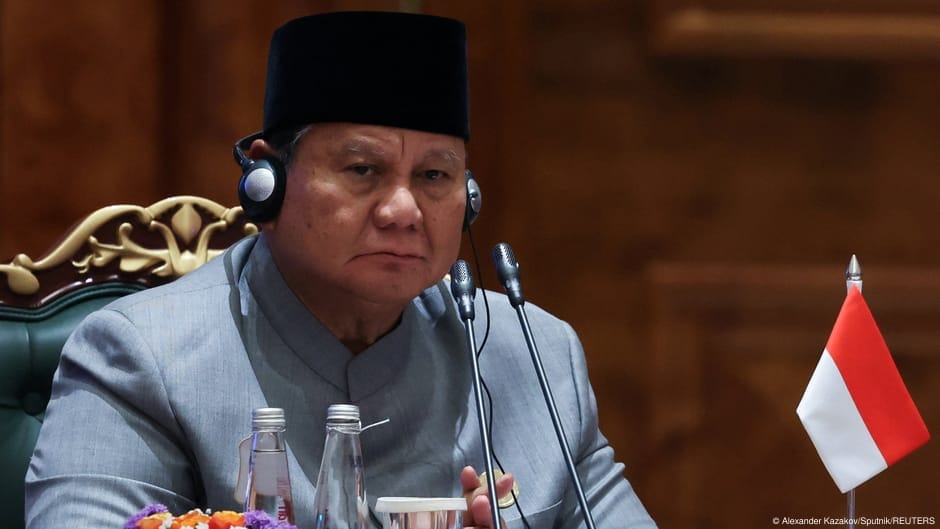
For decades, Indonesia's police and intelligence agencies have been accused of spying on politicians, journalists, and activists, Now, a widening scandal involving some of the country's most senior police officers has brought those concerns to the heart of government. Earlier this month, Indonesian police named four senior officers as suspects in an alleged illegal surveillance operation targeting President Prabowo Subianto and other prominent figures. Former national police chief Listyo Sigit Prabowo, who is not related to the president, was among the senior officers arrested.
The ex-police chief became the president's chief of staff in October, just weeks before the scandal broke. Investigators claim that officers intercepted communications without proper authorization in 2025 and 2026 and then tried to delete records of the operation. Suyudi Ario Seto, the new police chief, told a parliamentary panel this week that the surveillance targeted the president, officials within the presidential palace, ministries, state institutions, lawmakers, political party figures, governors, anti-corruption officials, activists and students.
A parliamentary commission is investigating the motive behind the wiretapping operation and trying to uncover whether other senior figures were involved. Meanwhile, the police have opened an investigation into possible treason-related offenses. Amnesty International has called for investigations to also determine whether the wiretap operation was used to intimidate government critics and weaken civil liberties.
The government has responded by ordering an additional 20,000 troops to Jakarta as a precaution, although there had been no indication that the wiretap is part of a larger campaign intended to bring down Prabowo's administration. The affair has intensified tensions between Prabowo and his predecessor, Joko Widodo, commonly known as Jokowi, while exposing deeper problems with the powers and political loyalties of Indonesia's security establishment. "The use of surveillance is actually pretty widespread," Yohanes Sulaiman, an associate professor at Universitas Jenderal Achmad Yani, told DW.
"While there are laws and regulations, they are flouted since there is no regulation on eavesdropping, especially by law enforcement agencies," he added. Officially, Indonesia's Electronic Information and Transactions Law prohibits unauthorized interception, while other legislation permits surveillance for specified law enforcement and intelligence purposes. Despite these safeguards against illegal interception, Sulaiman said it could be argued, "that the police and intelligence are essentially unconstrained." Indonesia's intelligence agencies and law enforcement have long played a role in political competition, Gatra Priyandita, a senior analyst at the Australian Strategic Policy Institute, told DW.
Under Suharto's authoritarian New Order regime, which collapsed in 1998, intelligence agencies were central in monitoring political opponents and suppressing dissent. After democratization, controversies persisted. In 1999, a leaked recording of a telephone conversation involving then-President BJ Habibie raised concerns about surveillance within the presidential palace itself.
Extract — continue reading at the source.