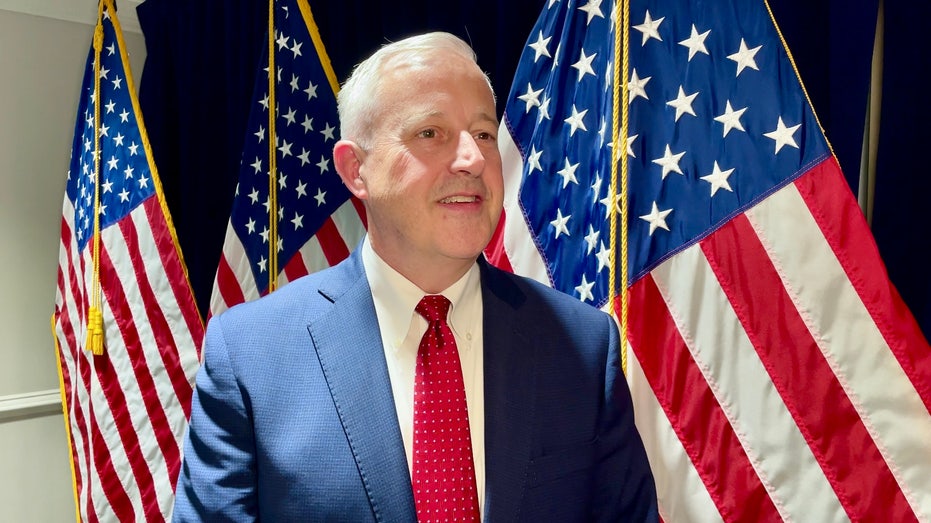
Michael Whatley, the former chair of the Republican National Committee and the Republican nominee for U.S. Senate in North Carolina, holds between $246,000 and $690,000 in energy investments with companies fueling the data center growth in the Tar Heel State, according to his federal reporting. Those holdings raise questions about whether Whatley stands to benefit from his support of data center expansion, an issue that has drawn national attention over community zoning, energy use and state growth.
Most of his reported holdings are with four companies. FOX NEWS POLL: DEMOCRATIC ENTHUSIASM SHAPES NORTH CAROLINA SENATE RACE Whatley and his family have holdings between $149,000 and $410,000 in Duke Energy, between $1,000 and $15,000 in Arista Networks, from $80,000 to $200,000 with Dominion Energy, and between $16,000 and $65,000 in GE Vernova. While most of those, like Duke and Vernova, don’t directly build data centers themselves, they offer services or products used by them.
Duke is a major utility provider in North Carolina, and Vernova produces on-site gas turbines used by data center facilities operated by companies like Amazon and Microsoft. In addition to those investments, Whatley reported $361,000 from CAPCVentures LLC, a D.C. for consulting services in 2025, according to his financial disclosure. That firm lists GE Vernova— a major supplier of turbines and grid equipment used to power data centers — as a client, along with Centrus Energy and the Renewable Fuels Association.
Earlier coverage put his pay from the same shop at about $755,000 between 2022 and 2025. When asked about his holdings and whether he saw them as a potential conflict of interest, Whatley's campaign noted that he supports restrictions on stock trading for members of Congress. "Whatley supports the Stop Insider Trading Act and urges the U.S.
Senate to pass the commonsense legislation, and supports commonsense reforms requiring elected officials to place their assets in qualified blind trusts, ensuring they have no control over how those assets are invested," DJ Griffin, a campaign spokesperson, said in a statement to Fox News Digital. The campaign also said that Whatley would support letting local communities decide for themselves what kinds of data center projects to accept and which ones to rule out. "Michael Whatley's standard is simple: data centers pay their own way, families pay nothing and communities decide.
That means Big Tech builds or buys every megawatt it needs and covers every dime of the grid upgrades to deliver it, with zero costs shifted onto residential ratepayers. It means no special subsidies and no sweetheart deals cut over the heads of taxpayers," Griffin continued. "And it means the people of North Carolina's counties and towns, not bureaucrats in Raleigh or Washington, decide what gets built in their communities.
Extract — continue reading at the source.