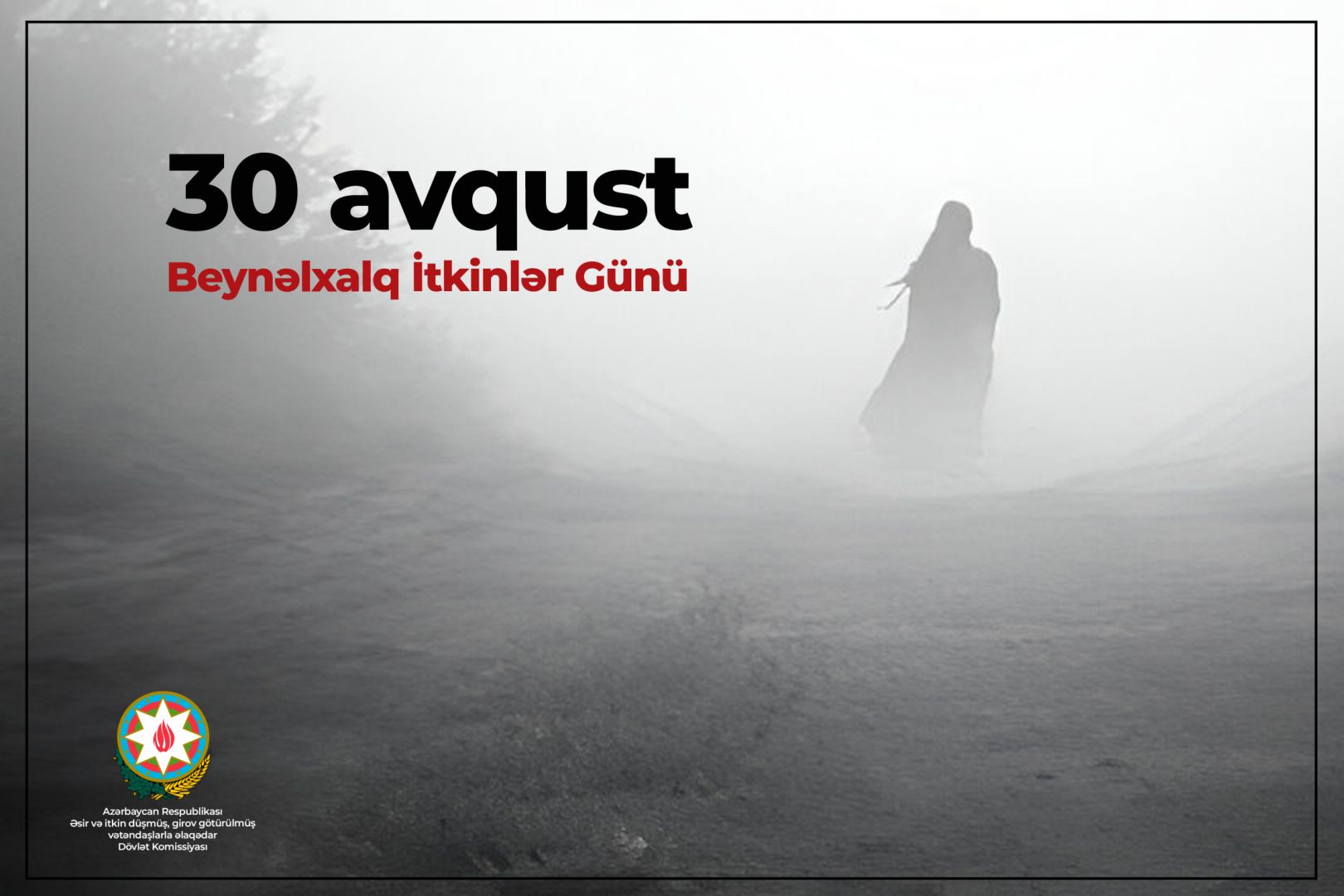
The United Nations (UN) General Assembly expressed serious concern in a resolution adopted in 2010 over the growing number of cases of enforced disappearances worldwide. Such cases include the arrest, detention and abduction of individuals. Under the same resolution (A/RES/65/209), the General Assembly declared August 30 the International Day of the Victims of Enforced Disappearances.
Enforced disappearances have become part of strategies aimed at creating an atmosphere of terror and, according to experts of the UN General Assembly, have evolved into a global problem. Various public organizations are involved in addressing the issue of missing persons. Traditionally, on this day, these organizations appeal to governments to take all possible measures to prevent and eliminate such cases.
An important instrument in this effort is the International Convention for the Protection of All Persons from Enforced Disappearance, adopted in 2006. The problem remains unresolved. Hundreds of thousands of cases of enforced disappearance have yet to be investigated, while new cases continue to occur every year.
The disappearance of people against their will is one of the most serious and grave violations of human rights. Enforced disappearance causes severe suffering both for victims and their families. Victims are often subjected to torture and live under constant threat to their lives.
Their relatives, unable to obtain information about the fate of their loved ones, remain between hope and despair, waiting anxiously for news for years and, in some cases, never receiving it. Victims who are deprived of legal protection and effectively "disappeared" from society are stripped of all their rights and become entirely dependent on those who abducted them. Even when a person ultimately survives and escapes this nightmare, the physical and psychological wounds caused by violence, along with the lasting effects of cruelty and torture that often accompany it, never fully heal.
Children may also be among the direct or indirect victims of enforced disappearances. The disappearance of a child constitutes a direct violation of several provisions of the Convention on the Rights of the Child, including the right to recognition of their identity. A child who loses one of their parents as a result of enforced disappearance also suffers a serious violation of their rights.
Extract — continue reading at the source.