In 2024, Constance Soule got a surprise from her landlord: a “notice of termination” that gave her 10 days to move out of her apartment. Soule, a disabled Alzheimer’s patient with a housing voucher, had paid her rent at a Larkspur, California complex managed by Greystar, the country’s largest apartment manager. But she was about to be evicted from her home across from the Golden Gate Bridge solely over utility charges, court documents show.
You’re charging her all these extra fees.’” Soule’s story is a familiar one to Lucie Hollingsworth, policy director of Legal Aid of Marin county, California, which helped Soule and Jones navigate the eviction notice. Hollingsworth estimated that a majority of the evictions her agency currently sees for “nonpayment” involve tenants who are unable to pay their utilities. Soule, 81, had run into a problem emerging nationwide: “ratio utility billing system” fees – known within the apartment industry as “Rubs” – that are charged on top of rent.
These costs are rarely given prices in apartment listings or leases. Unlike standard utility bills, where tenants owe money to the utility company, Rubs are owed to the landlord and often paid through a third-party billing company. Many leases that include Rubs are written so tenants can be evicted for not paying utilities even if they have paid their rent.
For more affluent tenants, Rubs can be an unwelcome jolt that raises housing costs by hundreds of dollars. For working-class and low-income tenants like Soule, falling behind on these utility charges can lead to eviction notices. While there is no national data on evictions tracked by cause, tenant attorneys and advocates in Philadelphia, Los Angeles, Oakland and Columbus, Ohio, said utility-related eviction cases appear to be increasingly common.
Across the nation, tenants and their allies are fighting back. Eight cities in California have banned the use of Rubs within their borders and multiple states have passed laws regulating the practice. California’s attorney general reached a settlement of nearly $500,000 last year with a national property management firm to resolve allegations that it had used Rubs to make “shadow” rent increases that violated the state’s limits on how steeply landlords can raise rents.
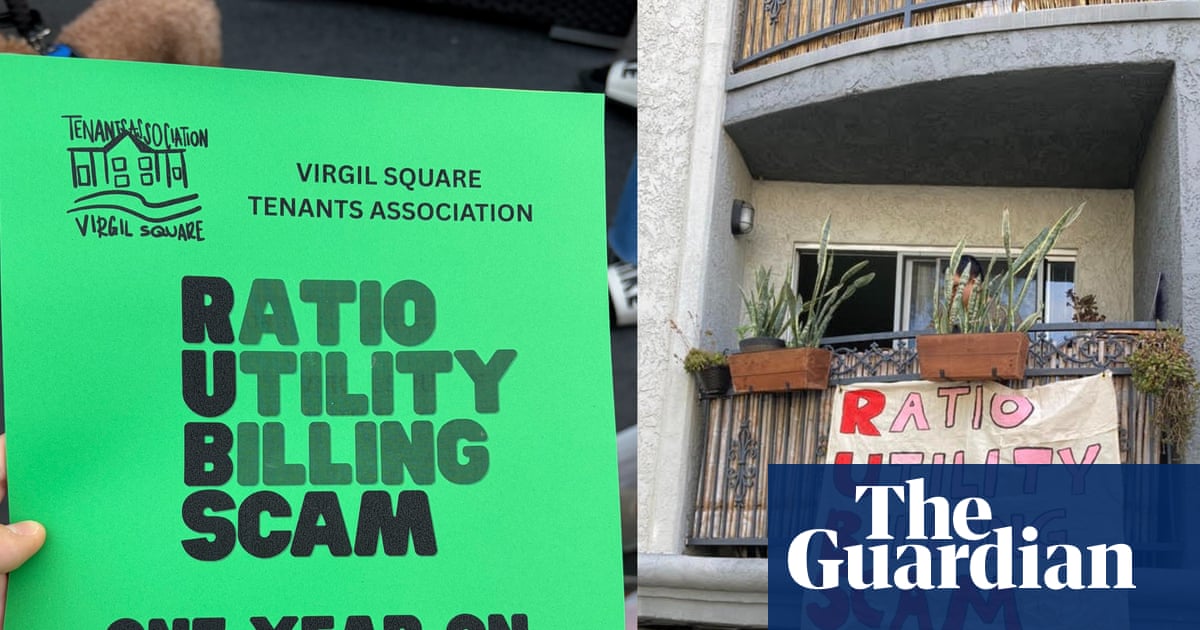
Tenants in Los Angeles and Seattle, meanwhile, have launched “Rubs strikes”, refusing to pay utilities until landlords agree to reduce charges that can approach $300 a month per apartment. Members of LA’s Virgil Square Tenants Association hung hand-made signs from their buildings that said: “Ratio Utility Billing Scam”. In Colorado, a study released last month by the Urban Institute and Denver’s Community Economic Defense Project found that utility fees were the most common charge on top of rent for more than 1,100 tenants facing eviction.
Extract — continue reading at the source.