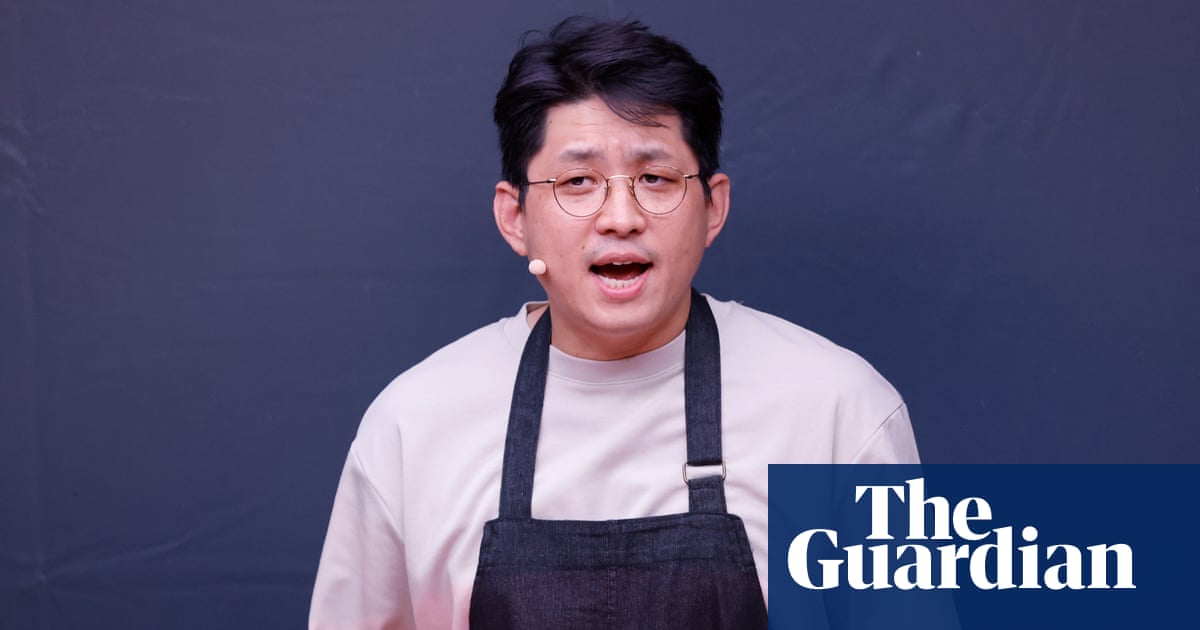
When I meet Jaha Koo in Oslo, where he has just been honoured with the prestigious International Ibsen award, I hand him a congratulatory packet of Haribo. The alternative would be a jar of kimchi but one of the many things you learn from Koo’s captivating theatre shows is that air travel and fermented vegetables can be a disastrous combo. When he moved to Berlin from South Korea with 10kg of his grandma’s finest kimchi, it became “bloated like a dead whale” and exploded on his balcony.
His new neighbours were unimpressed. In Koo’s current touring production, Haribo Kimchi, he examines how this unlikely fusion of two foods represents his cultural identity. He does so while preparing an onstage banquet for two lucky audience members.
Despite spending many years in Europe, where Haribo gummies originated around a century ago, Koo still finds himself considered foremost as Korean by Europeans. But when he returns to his original homeland he is not always seen as Korean either. We meet the day after the ceremony for the Ibsen award, founded by the Norwegian government and rewarding the winner with a huge 2.5m kroner (£200,000).
Its past recipients include Lola Arias, Taylor Mac and Forced Entertainment. Koo cheerfully packs away my sweets for the next day’s flight to Belgium, where he is now based, and outlines his life motto of “jelliness”. It was only when he arrived in Europe that he started to eat gummy bears.
If Haribo was a new discovery, kimchi “was there before I was born and it was waiting for me”. As a Korean, he says, it is impossible to think about food without this quintessential side dish and he is part of “a kimchi diaspora”. The exact ingredients may differ around the world, depending on what’s available, but that doesn’t make any recipe inauthentic, he says: “Kimchi can be very diverse.” When he prepares the dish in Belgium, it sums up how he is true to his roots yet adapting to a new environment – “a kind of cultural assimilation”.
Koo is an artist adept at setting out his stall – literally so in the case of Haribo Kimchi, where the set is a Korean snack cart called a pojangmacha. It’s a movable feast, typically frequented by hungry customers of all backgrounds and generations – “kind of like a soul place,” he says. They appear in the evening and then disappear.” He draws a parallel with the country’s pop-up shop culture, which can transform a street over night, and Korea’s rapid pace of change which, viewed from Europe, makes him feel far behind as well as far away.
Extract — continue reading at the source.