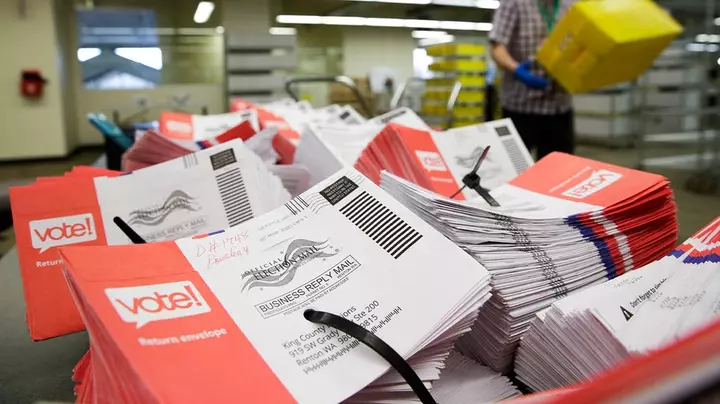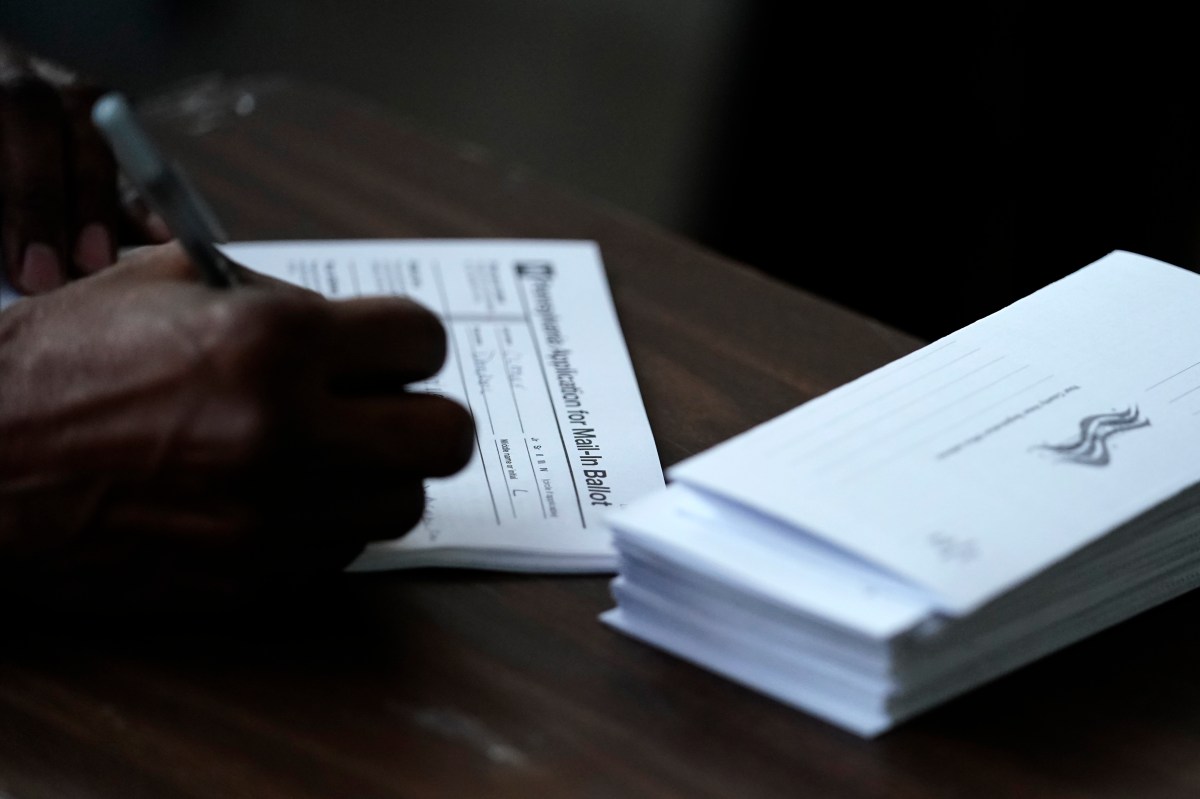
A federal judge has temporarily blocked key portions of the Trump administration’s new rules governing mail-in ballots, placing another hurdle in the administration’s effort to implement President Donald Trump’s executive order targeting mail-in voting ahead of the 2026 midterm elections. District Judge Indira Talwani, a nominee of former President Barack Obama, on Thursday issued a 14-day temporary restraining order preventing the U.S. Postal Service from enforcing portions of its newly issued rule.
The decision comes just days after the Supreme Court overturned an earlier injunction that had blocked the administration’s efforts. Newsweek reached out to the White House on Thursday night for comment. Trump’s March executive order directed the federal government to take steps aimed at tightening requirements for mail-in voting.
Talwani’s latest order focuses on the practical impact the new requirements could have on states and election officials with the midterms approaching. In her ruling, she said states did not have enough time or resources to redesign ballots, obtain necessary approvals, produce new ballots, modify election-management systems, train officials and upload voter information to a new USPS system before the election. The first mail ballots are expected to be sent in early September, adding urgency to the legal fight.
"Based on the record presently before the court, Plaintiff States face irreparable harm where they are required to comply with a likely unconstitutional regulation for which compliance is practically impossible as to the 2026 midterm elections, now little more than two months away," Talwani said in her order. "Most Plaintiff States have already ordered their mail ballots, and some are required by state law to send them to eligible voters as early as next week. Plaintiff States have neither time nor funds to design new mail ballots, seek approval of the new designs, order production of mail ballots, update their own election management systems, train election officials to use the USPS portal, and upload citizen data to the portal, all before the midterms." New York Attorney General Letitia James reacted to the order on X Thursday night, saying, "We just won a court order blocking the Trump administration's new rule that would have allowed the USPS to interfere with mail-in voting.
States are responsible for processing our elections, and the USPS does not have the authority to decide who can and cannot vote by mail." The ruling follows a rapid series of legal developments surrounding Trump’s executive order. The Supreme Court on Monday overturned an earlier injunction issued by Talwani. The justices, however, did not rule on the underlying constitutionality of Trump’s order.
Legal analyst Norman Eisen pointed that out on X following the ruling, saying in part, "The Supreme Court did NOT rule on this They said they need a final rule to reach the issues, & that they're neither approving nor disapproving what the president has done We stopped his last EO w/ our partners & @DDFund_ & @CampaignLegal will stop this one too!" After the Postal Service issued its final rule this month, Democratic-led states and voting rights groups refiled their challenges, arguing that the Trump administration was exceeding its authority and that election rules are primarily controlled by states and, in some cases, Congress. The dispute is now likely poised for another round of litigation. The outcome could have significant implications for the November midterms, as nearly one-third of Americans vote by mail, and election officials have warned that changing ballot procedures this close to an election could create substantial logistical challenges.
Extract — continue reading at the source.