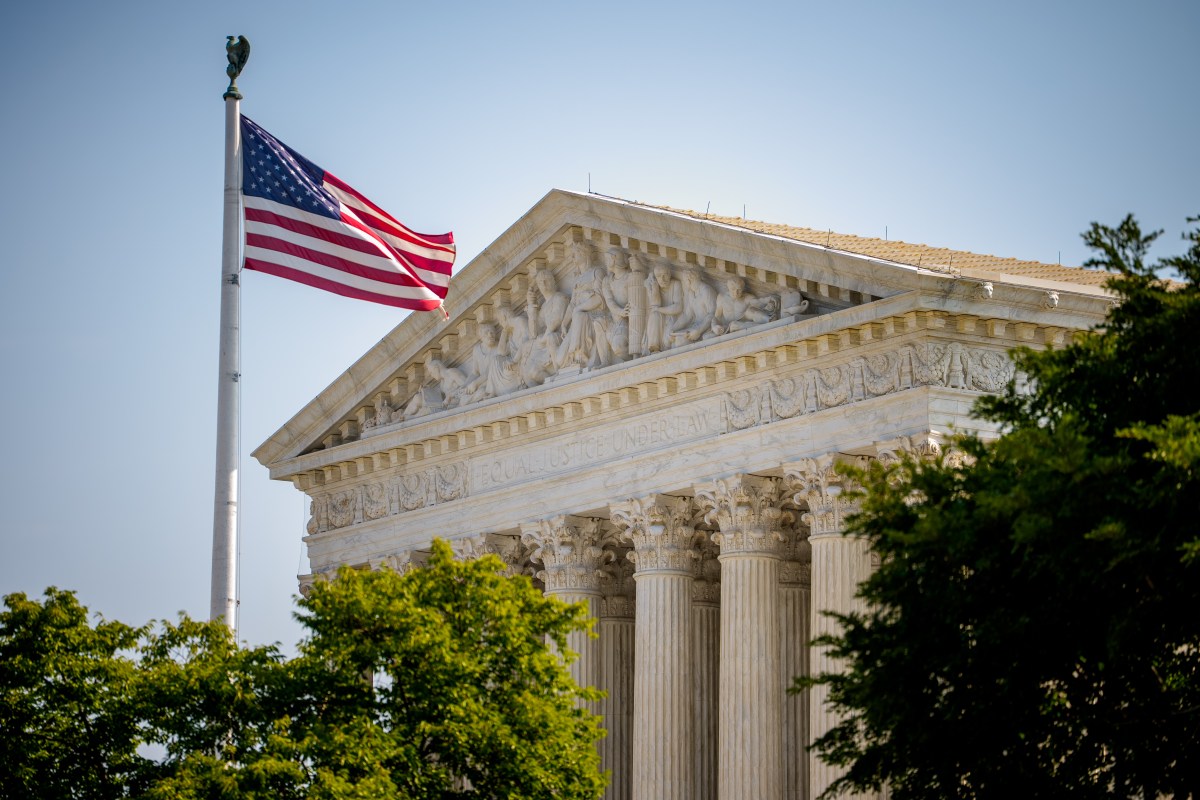
The United States Supreme Court denied an appeal Tuesday from Missouri State leaders to use a congressional district map used in recent primaries for November's midterm elections which was pushed for by President Donald Trump. The dispute has become one of the most closely watched election-law cases of the cycle because it raises broader questions about how late courts can alter congressional maps before an election and whether voters who participated in primaries can be shifted into different districts before the general election. "A federal-election-administration disaster is unfolding in Missouri," Missouri State Attorney General Catherine L.
Hanaway wrote in her appeal to the Supreme Court, arguing it was too late to switch maps ahead of the midterms. On Tuesday afternoon, U.S. Supreme Court Justice Brett Kavanaugh denied the state's bid to keep the new map in place, leaving the state's Supreme Court decision in place ordering the use of a 2022 map instead.
"The Missouri Supreme Court made the right call in this case and Justice Kavanaugh was right to deny Missouri’s attempt to avoid the ruling of its highest court," Abha Khanna, an Elias Law Group Partner and counsel on the case, told Newsweek. "The state constitution is clear that Missourians should get the final word on whether their congressional map can undergo an extreme mid-decade gerrymander at President Donald Trump’s request, and now they will. "This is a win for democracy and for the hundreds of thousands of Missourians who signed a petition to make sure they would have a chance to weigh in on the gerrymandered HB 1 map." Beyond Missouri, the case could have implications for election disputes nationwide, as other states, blue and red, seek to alter their congressional maps.
Newsweek reached out to the Missouri Secretary of State and the Missouri Attorney General for comment. The Missouri legislature approved House Bill 1 in September 2025, replacing the congressional map the state had enacted in 2022. The measure passed comfortably in both chambers before being signed into law by Republican Governor Michael Kehoe.
Missouri then used the new map during its August 2026 primary elections, in which approximately 1.2 million voters cast ballots. After lawmakers adopted the map, activist group People Not Politicians and its leader, Richard von Glahn, launched a referendum campaign seeking to place the plan before voters statewide. The legal battle quickly expanded into a series of lawsuits challenging whether Missouri's referendum process could be used against congressional redistricting legislation.
Before last week's ruling, Missouri courts had repeatedly left the map in place while litigation continued. State officials argue those decisions led election administrators, candidates and voters to rely on the map throughout the primary cycle. On September 3, the Missouri Supreme Court reversed a lower-court ruling and issued an injunction prohibiting Missouri officials from implementing or using House Bill 1.
Extract — continue reading at the source.