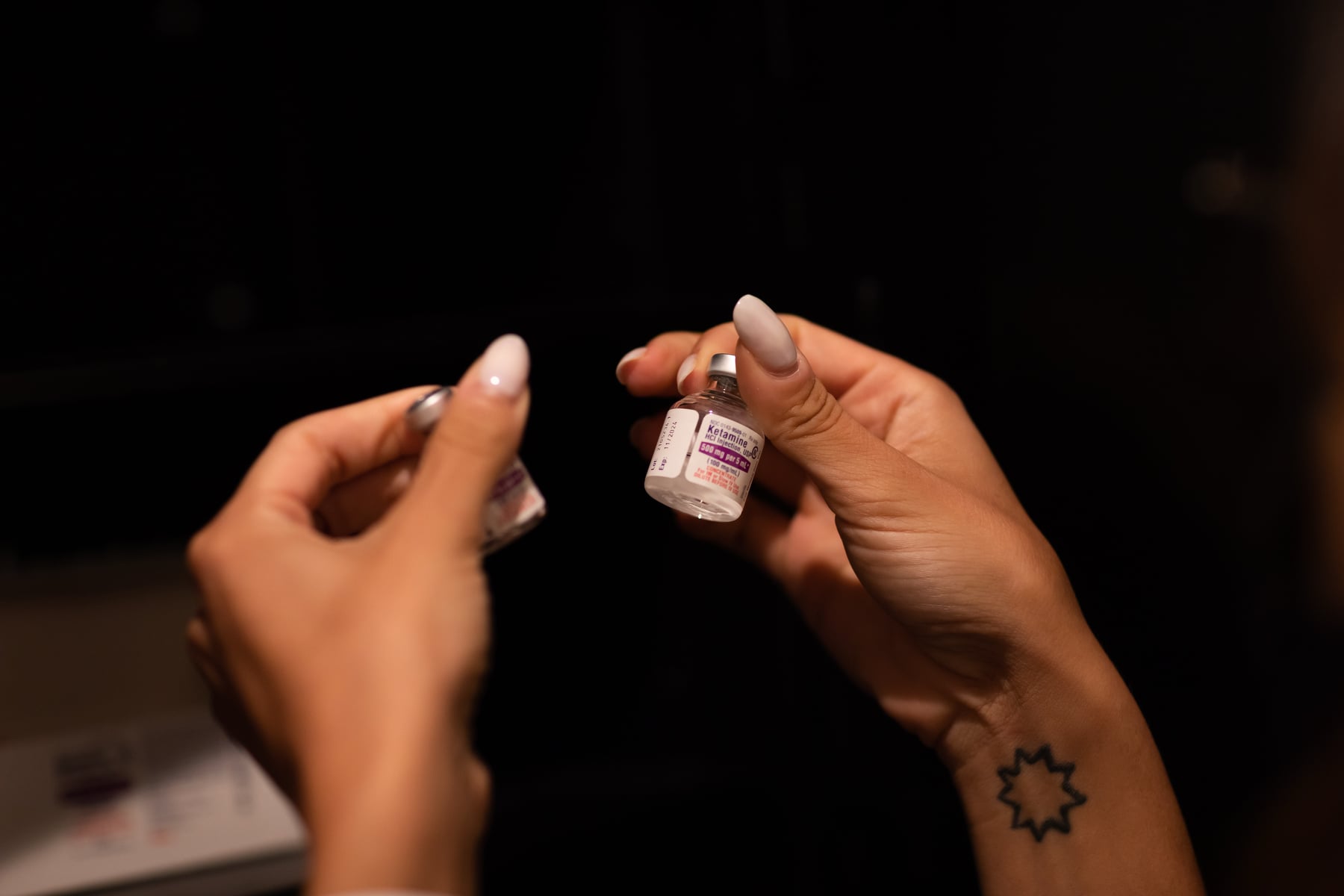
Known as special K, key and K, ketamine is both a psychoactive club drug similar to acid or ecstasy and a promising option for treating depression or substance use disorder. With its dueling profile, the anesthetic ketamine has made lots of headlines in recent years. It was scrutinized for its role in “Friends” actor Matthew Perry’s 2023 death.
During the 2024 election, billionaire and business owner Elon Musk said he used ketamine to treat depression while others reported he may have misused it. Now, a former Cornell University student’s lawsuit alleging she was gang raped by a group of fraternity members in 2024 includes numerous descriptions of ketamine use by her and her attackers. As recreational ketamine use rises and researchers continue to explore ways the drug could help people in clinical settings, here’s a primer on this drug, its uses and its risks.
It is a dissociative drug, meaning it makes users feel detached from their body, pain and the physical environment, according to the Drug Enforcement Administration. It can also cause hallucinations and sedation. The Food and Drug Administration approves of ketamine for anesthesia purposes, as it can help block pain and cause unconsciousness.
For this purpose, it is typically administered intravenously or injected into a muscle. The FDA has also approved the nasal spray esketamine, a ketamine derivative, to treat depression in very controlled circumstances. Under federal law, ketamine is classified a Schedule III drug, which means it has a “moderate to low” potential for physical and psychological dependence and less potential for abuse than Schedule II drugs such as cocaine and methamphetamine.
It has a reputation as a party, club and rave drug. Its other nicknames include ket, super K, vitamin K or super acid. Liquid ketamine is injected, mixed into drinks or evaporated into crystals that are then ground into powder that can be snorted or smoked.
It has been used to facilitate sexual assault. Ketamine is legal with a prescription for medical use, including for off-label uses such as treatment for post-traumatic stress disorder. But its status as a Schedule III drug means that it is illegal to possess and distribute or traffic ketamine for recreational use.
Extract — continue reading at the source.