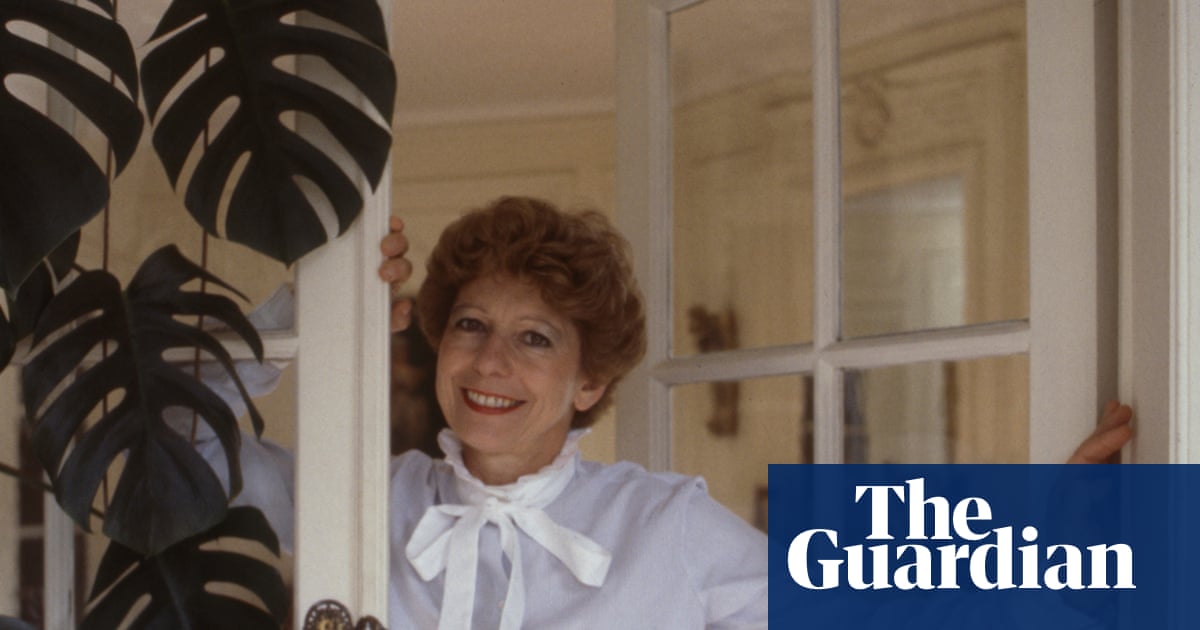
When Emmanuel Carrère’s mother, Hélène, died in 2023, at the age of 94, President Macron spoke at her memorial. She had been “perpetual secretary” of the Académie Française, in effect its head, and 200 people gathered at Les Invalides in Paris to pay tribute. Emmanuel’s father, Louis, was there too, in a wheelchair, only half aware of what was going on.
This 400-page memoir, translated into English by John Lambert, is a homage to both parents and the unlikely history that brought them together. It’s also an act of reparation towards Hélène, whom Emmanuel worshipped as a child but upset as an adult by publishing a book that she’d forbidden him to write. Hélène grew up in stateless poverty in Paris, the daughter of Georges Zourabichvili, whose parents had fled Georgia in 1921, and Nathalie von Pelken, who as a child had six governesses, one for each day excluding Sunday.
Though “the magical world of the fallen Russian aristocracy” was the backdrop, conditions were tough, not least after Georges disappeared in 1944, murdered by partisans for alleged Nazi collaboration. Hélène was 15 at the time and unsuccessfully tried to hide the truth about George’s death from her younger brother, Nicolas. She was determined and highly ambitious.
What she couldn’t excel at, she didn’t do. For a time she considered an acting career but found her metier as a Russian historian. It helped that she was charming and attractive, so much so that an Afghan pilot, on a flight from Tashkent to Paris via Tehran, first invited her to the cockpit, then landed the plane in Kabul in order to kidnap her.
He kept her there for four days before a couple of US aid workers sneaked her away on a private plane. By then she was married to Louis, who worked for an insurance company and was often away on business trips. At home Hélène ruled the roost and let Emmanuel and his two sisters sleep around her bed, a setup she called “kolkhoz”, the name for collective farms in the USSR.
There was no television or radio; the children were made to read. Her son’s reading was strenuous: from Jules Verne and Alexander Dumas, he moved on to Dostoevsky at 13. His mother brought out his softer side – whenever she went away he’d write long letters saying how “horribly” he missed her.
Extract — continue reading at the source.


