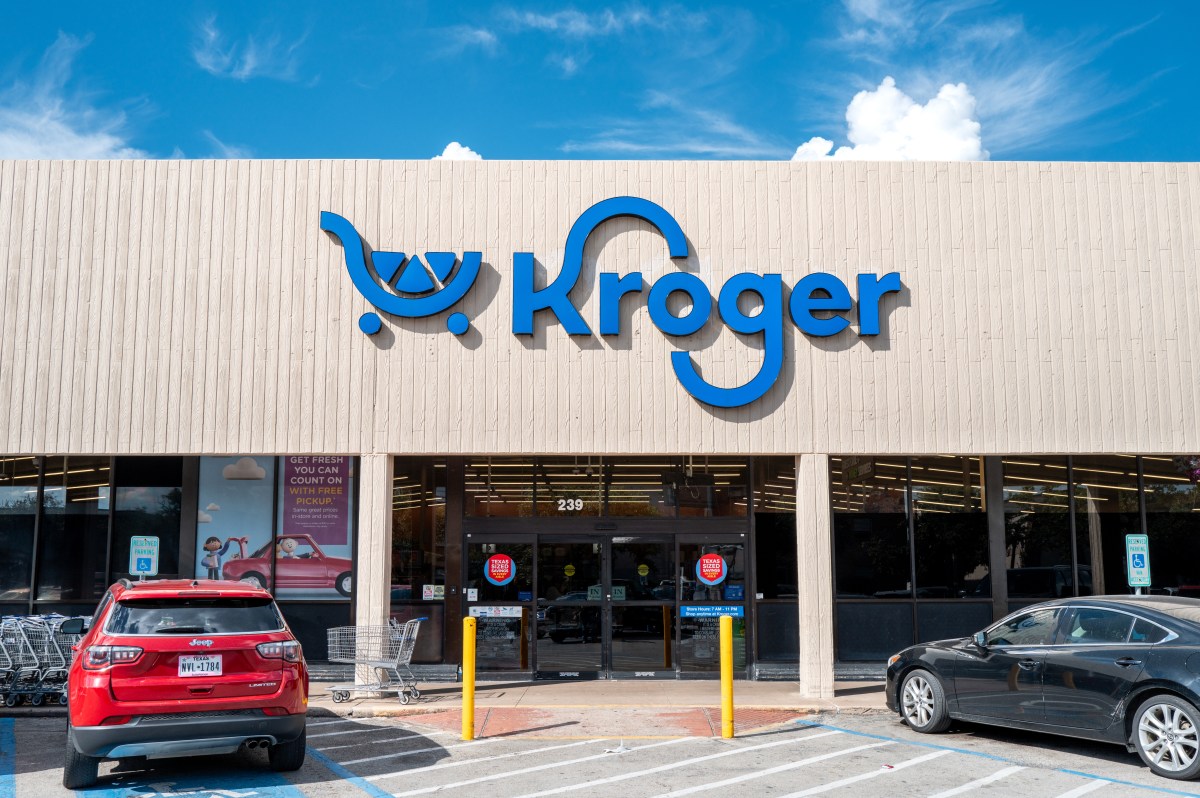
Supermarket giant Kroger is planning to lay off thousands of its workers, seemingly part of the long-running effort by its CEO to improve efficiencies across the chain. In an internal memo seen by outlets including and Bloomberg, CEO Greg Foran revealed that the company intended to eliminate 3,000 roles over the next three years—equivalent to around 37 percent of its 8,200-strong corporate headcount. This would rank among the largest layoffs in the grocer’s 143-year history, and appears to exceed all similar efforts in the past by a sizable margin.
"Simplifying means making faster decisions and deploying more resources where they matter most," Foran said in the memo, as quoted by Bloomberg. It went on to state that further information on the cuts—such as the specific impacted roles—would be revealed in the coming months. When approached for comment, a representative for Kroger confirmed to Newsweek that the company plans to cut 3,000 roles over the next three years.
Foran's announcement outlined a number of areas in which Kroger had made progress—such as price investments—but also underscored leadership’s concern that the company was not operating at maximum efficiency. Online publication Grocery Dive, which also viewed the memo, quoted Foran saying that Kroger currently has "more layers, more handoffs and more overhead than we need." "We have the opportunity to make changes that will create broader roles and faster decision making," he told employees. "This lets us move vital resources closer to the customer to lower prices, invest in our associates and create a better shopping experience." The memo also outlined Foran’s desire to further integrate AI into Kroger’s operations.
In September, Kroger published its AI strategy, which it said was already "driving meaningful results." The strategy leverages the huge amounts of customer data held by Kroger, and involves AI agents improving both the customer experience—with bespoke shopping assistance—but also workforce productivity. The company is rolling out AI literacy training and new agents it says will "cut through the noise of dozens of daily notifications and tasks and surface only the most important information." The announcement arrives amid a period of flux for Kroger and the wider grocery retail industry, which are battling slower growth, inflation concerns and tighter household budgets. Last August, Kroger cut nearly 1,000 corporate roles nationwide, which interim CEO Ron Sargent said would "simplify" the company and allow it to focus on store improvements and openings.
Weeks earlier, Kroger said it would be closing around 60 stores over the next 18 months, equivalent to around 5 percent of its overall count. The backdrop to these changes was the collapse of its $25 billion planned merger with Albertsons, which the companies said would create significant cost-saving synergies. The deal was blocked by regulators on antitrust grounds, kicking off a lengthy legal battle between the two chains.
Albertsons is demanding that Kroger pay over $9 billion associated with the merger falling apart, according to court documents filed Monday. In its most recent financial results, published in September, Kroger trimmed its full-year same-store sales guidance to between 0.2 percent and 0.8 percent, down from 1 percent to 2 percent originally. In a subsequent earnings call, the CEO noted that Kroger’s customers "remained under pressure and that has affected the industry broadly." "Reductions in SNAP benefits, higher fuel prices, and softer consumer confidence are all putting pressure on household budgets," he said.
Extract — continue reading at the source.