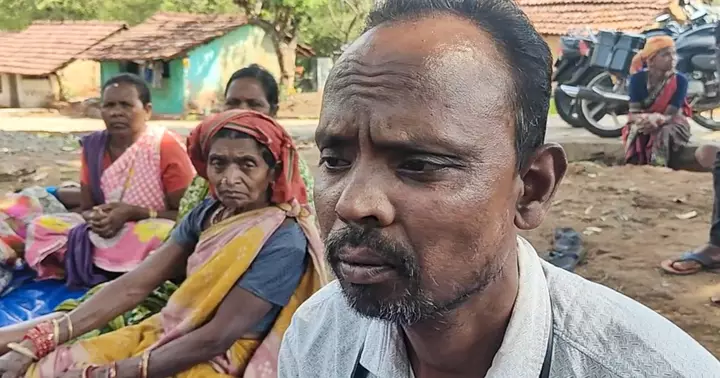
Koraput, India – Raghunath Khara was shocked to look at his thumb impression on a piece of paper that declared he had consented to a government proposal to mine his village’s pristine forest land for bauxite. He says he never gave that thumb impression. It was someone else’s thumb,” alleged Khara, a shopkeeper in Balda village in the tribal-dominated Koraput district of Odisha state in eastern India.
Khara is among hundreds of people from Indigenous tribes in Balda and neighbouring Bannur village who have lost their lands to the new bauxite mine. It is being developed by Kalinga Alumina Limited, a subsidiary of Adani Enterprises Limited, a conglomerate owned by Gautam Adani, India’s second richest businessman and close to Prime Minister Narendra Modi. The $24m project will consume a large chunk of the tabletop Balda Hill – home to forests, grasslands and caves that are considered sacred by at least 10 tribal villages surrounding it.
To push the project, the purported signatures and thumb impressions of nearly 600 tribals were allegedly collected during village council meetings in Balda and Bannur held on October 9 last year. Bannur is 5km from Balda. Khara says he never attended the meeting at Balda and was instead protesting against the proposed mine with his wife, sister and other villagers about 100 metres from the village council office.
We didn’t attend the village meeting at all. We were all busy protesting outside,” he told Al Jazeera. India’s constitution recognises the rights of Indigenous communities over their traditional lands.
Forest laws and laws granting autonomy to tribal areas dictate that village council resolutions are mandatory for any diversion of such lands for other purposes. A resolution passed in a village council meeting is valid only if 50 percent of all the adults in the village consent to it in writing. Government documents claim all the 580 adults – 360 in Balda and 227 in Bannur – agreed to give up their land for the Adani mine.
But the elected village heads in both villages denied any signatures were collected and called the two meetings “invalid”. Even photographs taken by villagers at both council meetings show a combined attendance of about 100 people – nearly 40 in Balda and 68 in Bannur – far below the minimum 50 percent quorum required to pass a valid resolution. Moreover, the villagers allege that most signatures on the resolution documents are fake, forged or impersonated.
Extract — continue reading at the source.