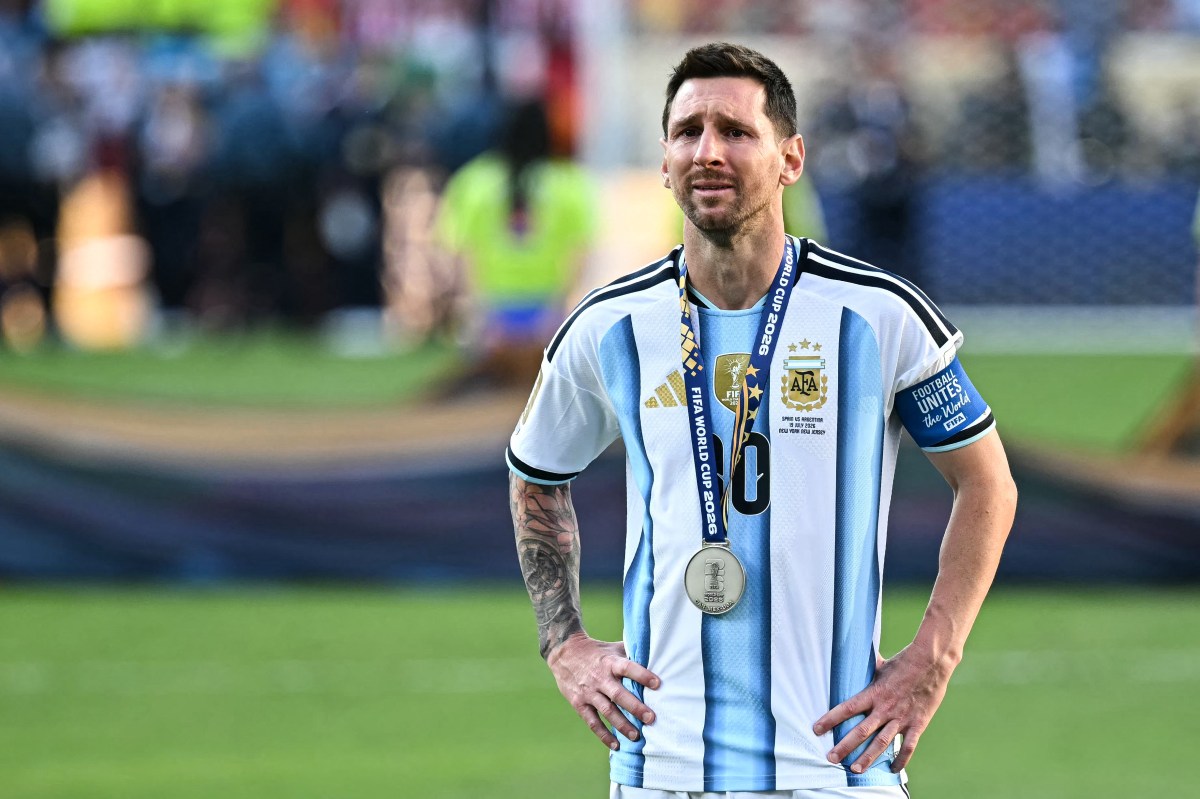
Lionel Messi is retiring from Argentina's national team, ending an international career that began in 2005, the Inter Miami soccer superstar said Monday. In a handwritten statement published on his Instagram account, Messi announced the decision, which was made days after losing the 2026 FIFA World Cup final to Spain on July 19. He held off publishing it, but in a footnote, he added that his father's recent death made him more certain than he had already been.
"Today, after what happened with my dad, I am even more convinced than before," Messi wrote. The decision had been forming since Argentina's 1-0 extra-time loss to Spain in the World Cup final, a defeat the 39-year-old described as still painful. He swore that "I always gave everything," adding that the exhaustion went back years, not just the recent stretch of titles, including a FIFA World Cup title in 2022, runner-up finishes in 2026 and 2014, and Copa Americas titles in 2020 and 2024.
He also referenced the physical toll of the tournament, saying his legs could not give any more by the time the final arrived. Messi will continue playing for Inter Miami in Major League Soccer. He leaves international soccer as Argentina's all-time leading scorer and most-capped player, with 125 goals in 207 appearances.
Jorge Messi was a steelworker from Rosario, Argentina, who became his son's manager and, later, his agent, a role he held for most of Lionel's professional career. He and his wife, Celia Cuccittini, raised four children in a two-story home on Calle Lavalleja, in a residential part of Rosario, three hours from Buenos Aires. The Messis were an average working-class Argentine family.
Jorge worked in a steel factory, and Celia worked part time as a cleaner. When Lionel was diagnosed with a growth hormone deficiency around age 11, paying for treatment became a family crisis. The injections ran roughly $900 to $1,000 a month, more than the Newell's Old Boys and River Plate teams were willing to cover long term.
Predicting his son's potential, Jorge got creative and persuaded his employer and another local business to help fund the treatment for a while. When that support ran out, the family leaned on relatives in Catalonia, Spain, to arrange a trial with Spanish giants Barcelona. The club agreed to cover the rest of Lionel's medical costs and signed him to a junior contract, reportedly sketched out first on a napkin, in 2000.
Extract — continue reading at the source.