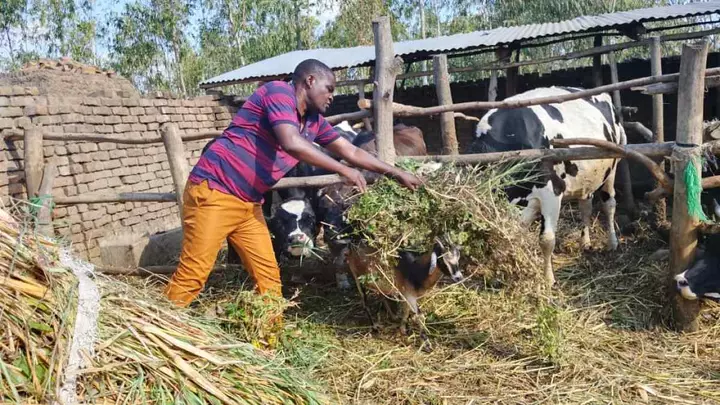
Mulanje, Malawi – Lawrence Abison walks along the bank of the Likhubula River, stopping every few metres to inspect the grass. He eventually moves towards a patch of green Napier grass and reeds. The 25-year-old takes out a sickle.
With three friends, he starts cutting. They work through the morning, tying the grass into bundles, carrying them uphill and returning to the river for more. After two hours of cutting, they had gathered enough grass to feed 10 cattle for one day.
Later that afternoon, dozens of other men carrying bundles of grass could be seen around Chitakale in Mulanje district. They had come from different directions, searching for fodder for cattle kept on farms across the district. The mountain is the highest point in tropical southern Africa and an important source of water for communities around it.
People living around the river say they have seen changes in the water and vegetation over the years. In some places, they say, the river has become shallower, while trees and grass along its banks have disappeared. The changes are being felt by farmers who depend on the river, not only for water, but also for grass to feed their cattle.
Malawi experienced dry spells and high temperatures in parts of the country during the 2023/24 rainfall season, while El Nino affected rainfall patterns across southern Africa. The Department of Climate Change and Meteorological Services warned then of below-normal rainfall and prolonged dry spells in parts of Malawi, with southern areas among those facing the increased threat of drought. For farmers in Mulanje, the immediate problem is finding enough feed for their cattle.
Abison and other fodder gatherers say they have started making trips to the rivers earlier than they used to. Previously, they would cycle to the river after October. This year, they had already been making the journey for months.
Extract — continue reading at the source.