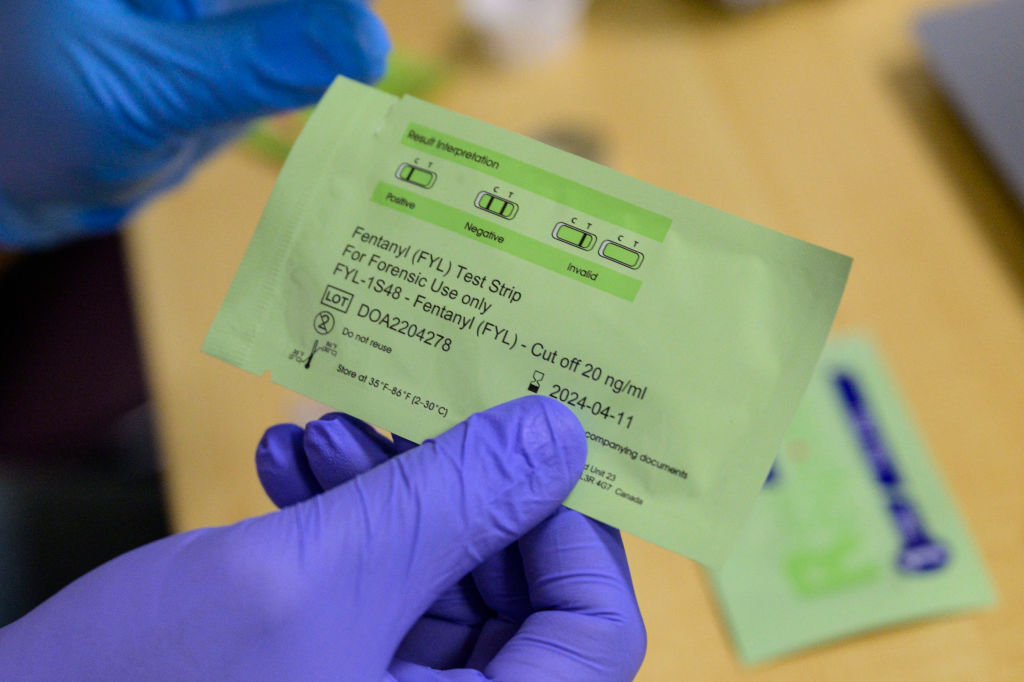
The illicit drug supply has changed rapidly over the last few months, with nitazenes, medetomidine, cychlorphine, and other novel synthetic substances appearing in rapid succession. Rapid tests for emerging substances are being developed and marketed with impressive speed, and these can return results within minutes. Law enforcement, medical examiners, employers, community organizations and even the general public can use them, if their states have decriminalized them.
Physicians treating overdoses cannot. The contrast is hard to ignore: A test can be used to fire someone or support a criminal case, yet it remains unavailable to the physician in an emergency room trying to save that person’s life, when minutes are essential. The divide is largely regulatory.
Many tests for emerging drugs are labeled for forensic use only, and clinical tests for living patients require approval by the Food and Drug Administration (FDA) as a diagnostic tool. As such, they cannot legally be used by medical clinics that adhere to federal law and funding policies. Tests used in patient care must meet FDA requirements for clinical diagnostics.
Point-of-care testing—testing performed at or near the bedside—also requires an additional determination that the test is simple and low-risk enough to qualify for waived status under the Clinical Laboratory Improvement Amendments (CLIA). There is a legitimate reason for that regulatory distinction. Tests used to make medical decisions should be accurate, reliable, and interpreted appropriately.
A rapid screen is not definitive toxicology, and it should not be treated as such. Fentanyl shows why speed matters. In early 2023, we pointed out that rapid fentanyl tests already existed outside clinical medicine, yet hospitals relied on expensive spectrometry testing that could take an hour or longer, if the equipment was available onsite at all.
By the time FDA-cleared and CLIA-waived rapid fentanyl tests arrived, the illicit market had already changed again. Starting in 2020, xylazine spread through the fentanyl supply, introducing a new clinical hurdle: naloxone reverses opioids, but not xylazine. Patients can remain dangerously sedated or unstable even after naloxone is given.
Extract — continue reading at the source.