President Donald Trump has formalized plans to temporarily lower tariff rates and import significant quantities of foreign beef in an effort to ease record-high prices in the U.S. According to a proclamation signed on Wednesday, tariffs will be waived on 300,00 metric tons of lean beef trimmings from September 1 until November 30, a 90-day reprieve the White House said would help “to ensure hard-working Americans can afford to feed themselves and their families.” This follows Trump announcing the plan in a post to Truth Social last week, in which he said that the U.S. had secured a “commitment” that the beef “will be sold at 25 percent below current market prices." “This deal will reduce prices for Americans while giving space for our Great American Beef Herd to grow again,” the post continued. Labor Department figures show the price of ground beef has climbed 24 percent since President Trump returned to office last January.
But the plan has drawn sharp criticism from Republican lawmakers and American ranchers, who say this will undercut their domestic competitiveness. And key details remain elusive, including where the U.S. is procuring the beef from, and the distributor who will sell this at a 25-percent discount in stores across the country. Newsweek has contacted USDA via email for comment outside of regular working hours.
The majority of beef consumed in the U.S. is domestically sourced, with imports meeting around 20 percent of demand in recent years. However, imported beef continues to play a larger role due to the confluence of supply challenges facing American ranchers. According to a mid-year report from the United States Department of Agriculture (USDA), the 3.3 billion pounds imported between January and June marks a 12 percent jump over the same period last year, and the department forecasts a similarly notable increase for the remainder of the year.
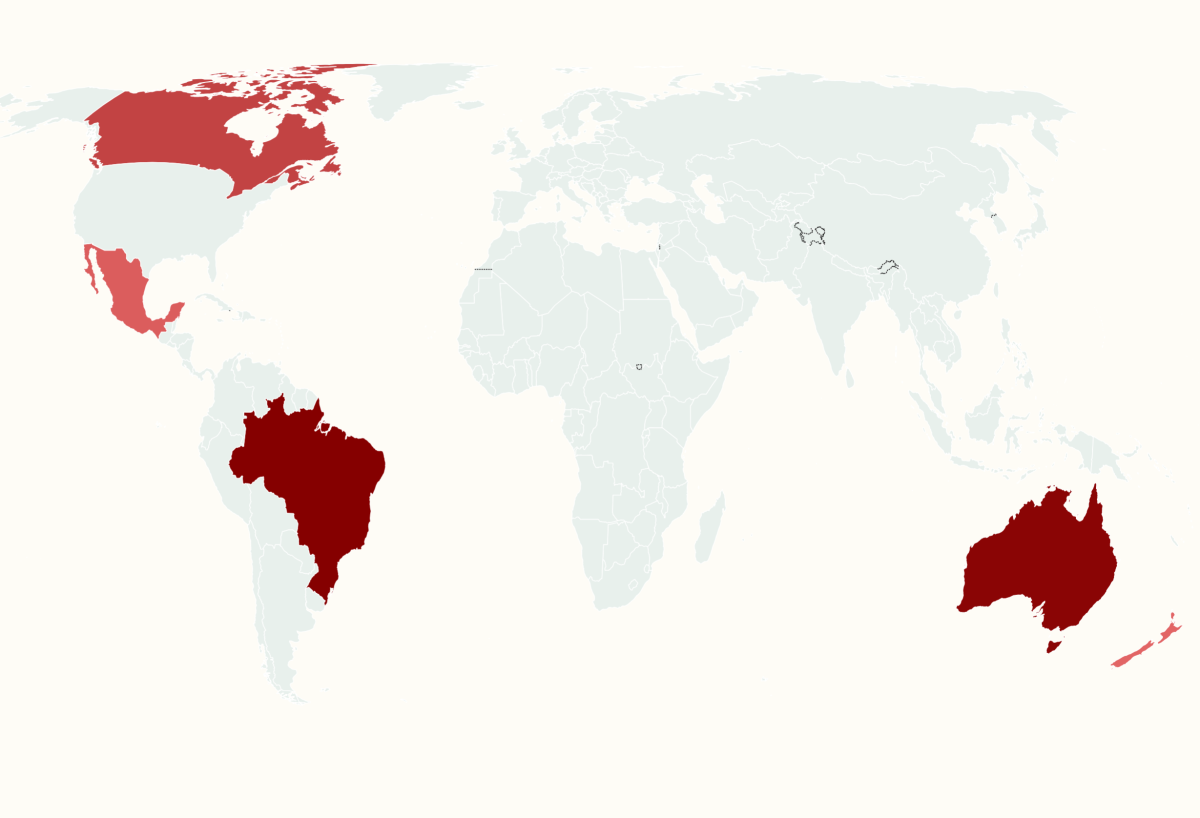
According to the most recent USDA data, U.S. beef imports totaled 542 million pounds in June, 24 percent higher year over year. And while recent trade and agricultural developments have altered the outlook for supplies, America continues to source the majority of its foreign beef—particularly lean and ground beef—from a handful of countries. Despite being the target of several tariff threats and imposed duties, Brazil remains the top supplier of beef to the U.S. in 2026, having shipped 716.9 million pounds—or around 325,000 metric tons—through June.
Brazil is followed by Australia, Canada, Mexico and New Zealand, who together have supplied close to two billion pounds as of mid-2026. The U.S. has imported 622.7 million pounds from rest of the world combined. Neither Trump nor his officials have identified which countries will supply the 300,000 metric tons—close to Brazil’s total imports in 2026—or which entity made the “commitment” that this will be sold to U.S. consumers at a 25 percent discount.
The White House has said that, should the beef be sold at a higher price than promised, the president will consider "whether to eliminate what remains of the increased in‑quota quantity." “I don’t want to say which countries, but there are a few countries,” Trump said on Friday, when asked about the origins of the beef. The U.S. granted Argentina lower-tariff access to the U.S. market to import 80,000 metric tons of beef earlier this year, in another effort to curb rising prices. But the White House said that this measure had been insufficient to offset the effects of growing demand and higher prices “that are expected to continue absent further action.” This month, the USDA’s Food Safety and Inspection Service (FSIS) issued a recall for nearly 30,000 pounds of Argentine beef that had been imported without undergoing the department’s required reinspection process.
Extract — continue reading at the source.