Democrats have cut into Republicans' voter registration advantage in several states with competitive Senate races ahead of the 2026 midterm elections, though Republicans retain advantages in some of the conservative states that appear increasingly competitive. The race for Senate control appears increasingly competitive ahead of the November 3 elections, with Democrats leading some polls in more conservative states like Alaska, Iowa, Ohio and Texas, all of which backed President Donald Trump by double digits in 2024. Democrats are increasingly hopeful that they can expand the electoral battleground to compete in these states that have historically been more difficult.
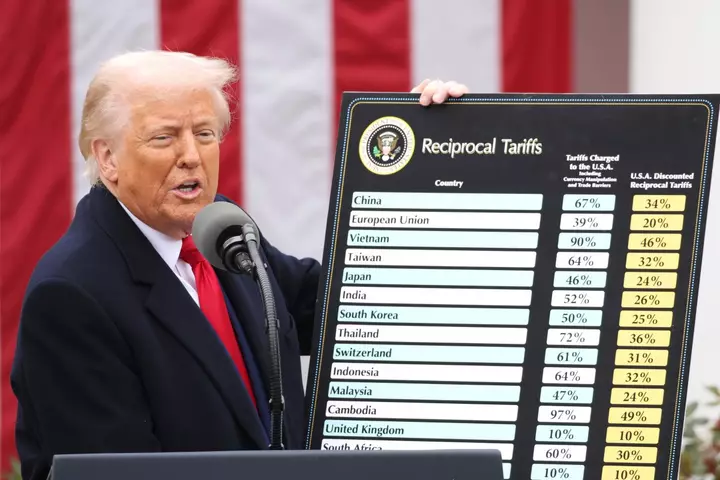
This is largely due to Trump’s approval rating falling to new lows in polling this week amid frustrations with the economy, cost of living and soaring gas prices amid the Iran war. Voter registration data can reveal changes in states’ partisan composition, but it’s not always predictive of how a state will vote, particularly during a wave year when one party is benefiting from a strong national environment. These numbers can be influenced by factors including population shifts, migration patterns, the removal of inactive voters from voter rolls and people leaving a party when they are dissatisfied with its direction.
Notably, not all states have registration by party. Georgia, Michigan, Minnesota, Ohio and Texas all have fairly competitive races this year, but there is no partisan registration in those states. Stephen Farnsworth, political science professor at the University of Mary Washington, told Newsweek that voters “often punish the president’s party in midterm elections.” Trump’s unusually low approval rating is making things worse for Republicans compared to the usual midterm pain for the party in the White House, he said.
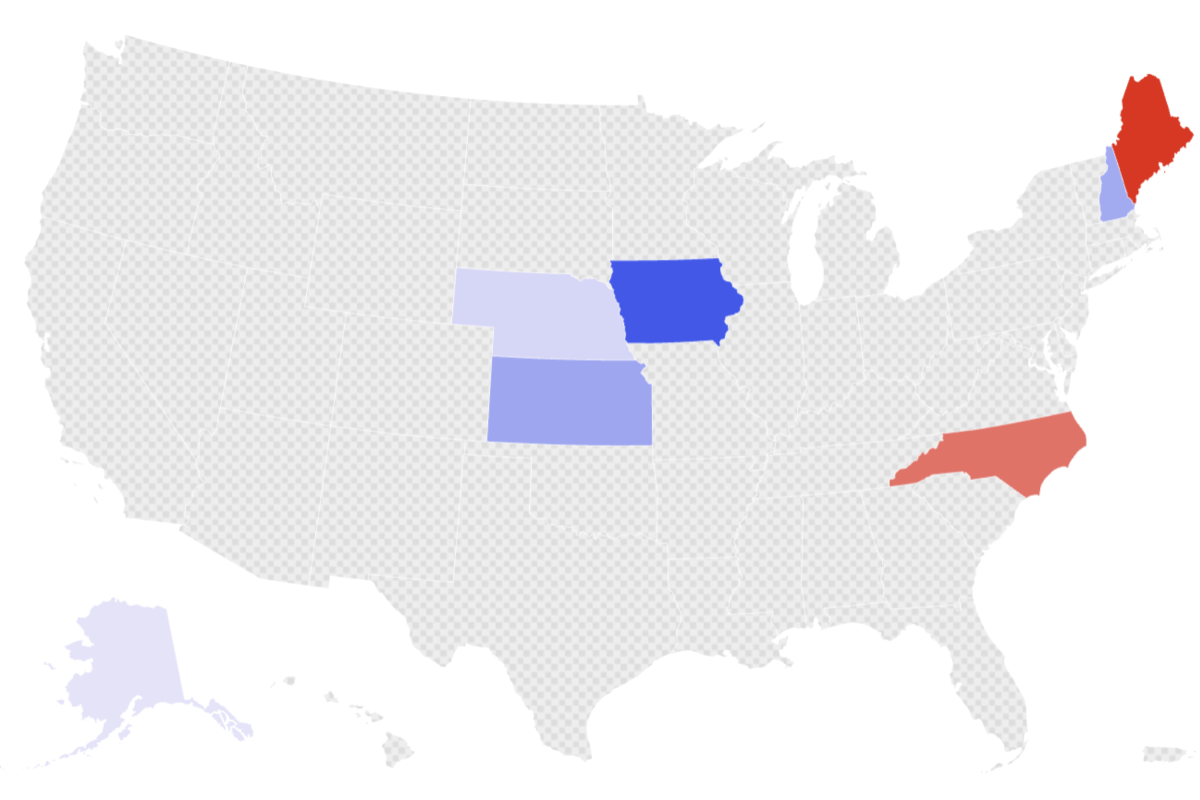
A lot of young people in particular worry about the availability of good jobs in the face of growing AI, which is another policy area where Trump is out of step with voters,” Farnsworth said. There are several states where Democrats have narrowed the gap in voter registration that also have competitive Senate races this year, though Republicans do hold advantages in each of these states. The gap has slightly narrowed in Alaska, where GOP Senator Dan Sullivan is facing a challenge from former Representative Mary Peltola.
In December 2025, Republicans had a 73,829 advantage on the voter rolls. That had narrowed to a 72,290-voter advantage in September 2026, according to the Alaska Division of Elections. Polls show a tight race in the state, which backed Trump by about 13 points in the 2024 election.
Alaska has been viewed as a reliably Republican stronghold, but a leftward shift in cities like Anchorage has loosened the GOP’s grip on the state. The latest Alaska Survey Research poll showed a tight race, with Peltola leading Sullivan in the final round of ranked-choice, 50.6 percent to 49.4 percent. It surveyed 1,495 likely voters from August 20 to 23 and had a margin of error of plus or minus 3 percentage points.
Extract — continue reading at the source.