A winter weather advisory remains in effect in Alaska through early Tuesday as forecasters warn of accumulating snow, strong winds and hazardous travel conditions in parts of the Eastern Alaska Range, offering an early reminder that snow season is already beginning in some parts of the country. The National Weather Service (NWS) said 3 to 7 inches of snow are expected above 2,500 feet along the Richardson Highway near Isabel Pass, with even heavier totals possible at higher elevations. Snow levels are forecast to fall to between 2,000 and 2,500 feet as rain changes to wet snow, while northerly wind gusts could reach 40 miles per hour.
Forecasters warned that blowing snow could significantly reduce visibility and make travel difficult. The advisory covers areas including Donnelly Dome, Black Rapids and stretches of the Richardson Highway. The advisory is scheduled to remain in effect until 4 a.m.
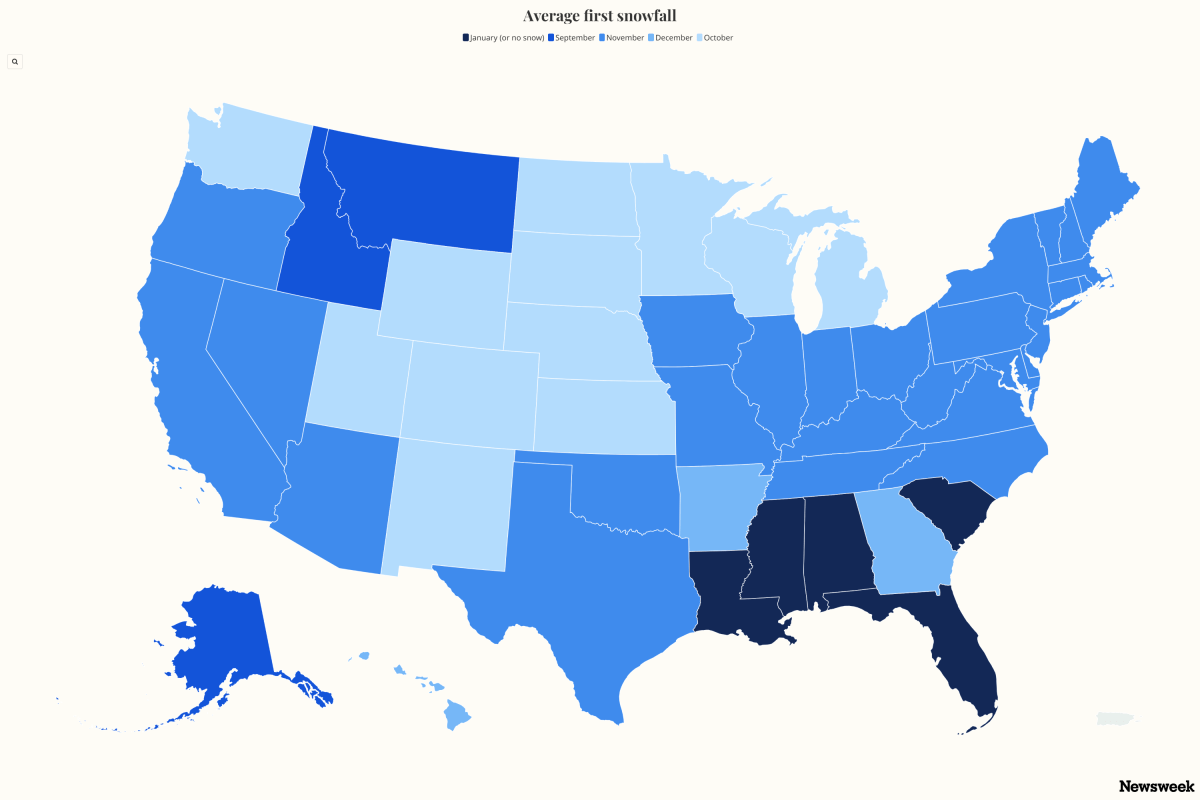
The advisory arrives on the final day of August, a time when much of the country is still focused on late-summer heat. However, climatological averages show that the first measurable snowfall is often not far away for many northern states. Weather Channel analysis based on NWS climatological data shows the first accumulating snowfall of the season typically begins appearing in parts of the Rockies, Northern Plains, upper Midwest and northern New England during September and October, before spreading southward and eastward through late fall and early winter.
The average timing of a state's first measurable snowfall varies widely, ranging from early fall in the northern Rockies to midwinter across parts of the Southeast. Based on NWS climatological averages summarized by weather researchers, states generally fall into the following monthly categories: Meteorologists caution that these are long-term averages, meaning actual snowfall can arrive much earlier or later in any given year depending on weather patterns. The Weather Channel notes that October is generally when accumulating snow first appears across much of the Rockies, Northern Plains, northern Great Lakes and higher elevations of New England.
Many Midwest and Northeast locations typically see their first measurable snowfall in November, while some major East Coast cities often wait until December. The South presents a different picture. Many southern states do not receive measurable snow every year, making averages less meaningful than in colder regions.
When snow does occur, January and February are often the most favorable months for accumulation. In addition to Alaska's winter weather advisory, a frost advisory has been issued in Southern Oregon as temperatures could dip low enough to harm crops and plants early Wednesday morning. "Frost could harm sensitive outdoor vegetation," the NWS Medford advisory said.
Extract — continue reading at the source.