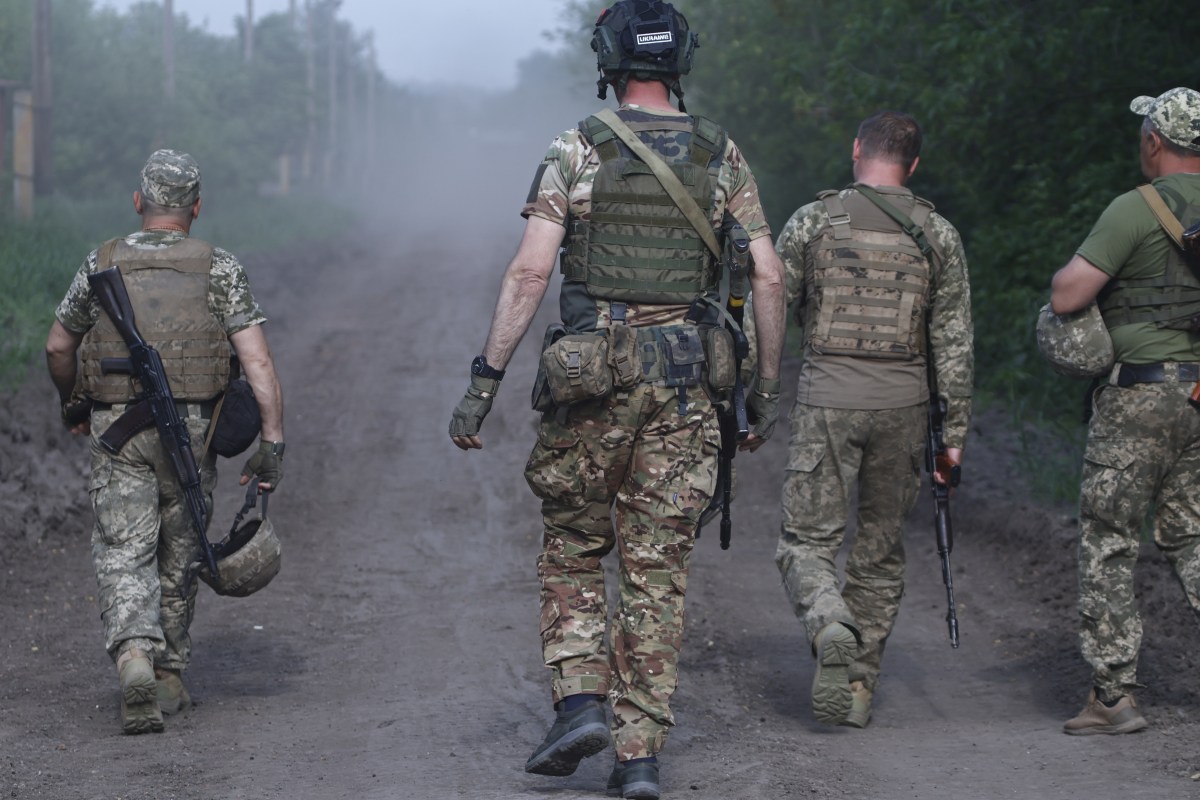
Amid the ongoing war, Kyiv has disrupted Russian goals of capturing the Donetsk region, according to analysis that suggested that Ukraine's forces have regained the initiative on the strategic and operational levels for the first time in two years. It comes as Russian President Vladimir Putin is reportedly being given exaggerated accounts from his generals about battlefield gains that amplify his false view he is winning the war, as he refuses to back down from his maximalist war goals during talks this month with Trump administration officials Steve Witkoff and Jared Kushner. Ukraine has reduced Russia’s territorial gains to zero over the last six months and carried out successful counteroffensives in the Kupiansk, Oleksandrivka, and Lyman sectors, according to analysis by the Institute for the Study of War (ISW) whose map outlines these successes that even pro-Kremlin military bloggers have acknowledged.
The think tank said Ukraine stopped Russia pushing into Dnipropetrovsk region, regained lost ground around Kupiansk and destroyed a Russian salient that threatened the northern flank of Slovyansk and the Donetsk Oblast Fortress Belt. The fortress belt is the network of heavily fortified cities and defensive positions in Donetsk Oblast that has been the backbone of Ukraine's defense of the eastern Donbas region, whose capture is a key goal for Putin. It means that Ukrainian forces have "successfully contested the initiative at both the strategic and operational levels starting in late 2025 and persisting throughout 2026 for the first time since the August 2024 Kursk Offensive," the ISW said in its analysis on Saturday, referring to the Ukrainian push inside Russian territory over two years ago.
Newsweek has contacted the Russian defense ministry for comment. Russian military bloggers, who often give an unvarnished view of Moscow’s battlefield efforts, said Ukrainian forces had effectively cut the Russian salient north of Lyman and pushed Russian forces to the Zherebets River, between September 9 and 11, the ISW's assessment says. The so-called Z-bloggers accused Russia’s military command of not paying enough attention to the areas.
Open-source intelligence X account Clément Molin wrote last week that Ukraine’s 3rd Army Corps had managed to cut the Russian salient north of Lyman and liberated more than 77 square miles of territory. The ISW map shows this thwarted attempt. Revishvili said this success would alleviate pressure on the Fortress Belt from the northeast.
"More importantly, it once again demonstrates that maneuver warfare remains possible despite increasing battlefield transparency, provided it is supported by careful planning, precision, and tactical ingenuity," he said. Retired Australian Army Major General Mick Ryan described the Ukrainian gains as “a pleasant surprise in the midst of the ongoing Russian missile barrages against Ukrainian cities.” Ryan wrote in an X post on Friday that Ukrainian forces undertook a smaller operation in southern Ukraine that liberated approximately 290 square miles and so in a few months, executed “two quiet yet successful counteroffensive operations in different parts of the country,” challenging the narrative of a stalemate along the frontline. However, the ISW said that Russian forces had made limited but significant gains in and around Kostyantynivka and east of Slovyansk and Kramatorsk but are fighting to maintain momentum there and elsewhere along the front line.
Revishvili said that the next months will be difficult for Ukraine with Moscow likely to have a two-month window to intensify pressure on the Fortress Belt, as changing weather conditions of cloud and fog may reduce the effectiveness of drones. Russian forces are likely to continue concentrating their efforts around Dobropillia, Kostiantynivka, and Druzhkivka, seeking to gain a foothold through infiltration tactics and establish a presence in at least one of these settlements that could serve as a bridgehead for subsequent operations, he said. "Such a foothold would provide Russian forces with greater access to operational space, allowing them to concentrate additional forces and intensify their offensive efforts in the area," Revishvili added.
Extract — continue reading at the source.