A newly announced nuclear microreactor project in Indiana is the latest sign of a U.S. nuclear power revival that is reshaping the country's energy landscape and driving reactor development from Washington state to Texas. On Wednesday, the Department of War announced plans to deploy the Navy's first advanced nuclear microreactor, a compact nuclear power system designed to provide reliable electricity for military installations, at Naval Weapons Station Crane in Indiana by September 2028. The department said the reactor would provide reliable power for one of the nation's key military research and weapons installations and help strengthen energy resilience and national security.
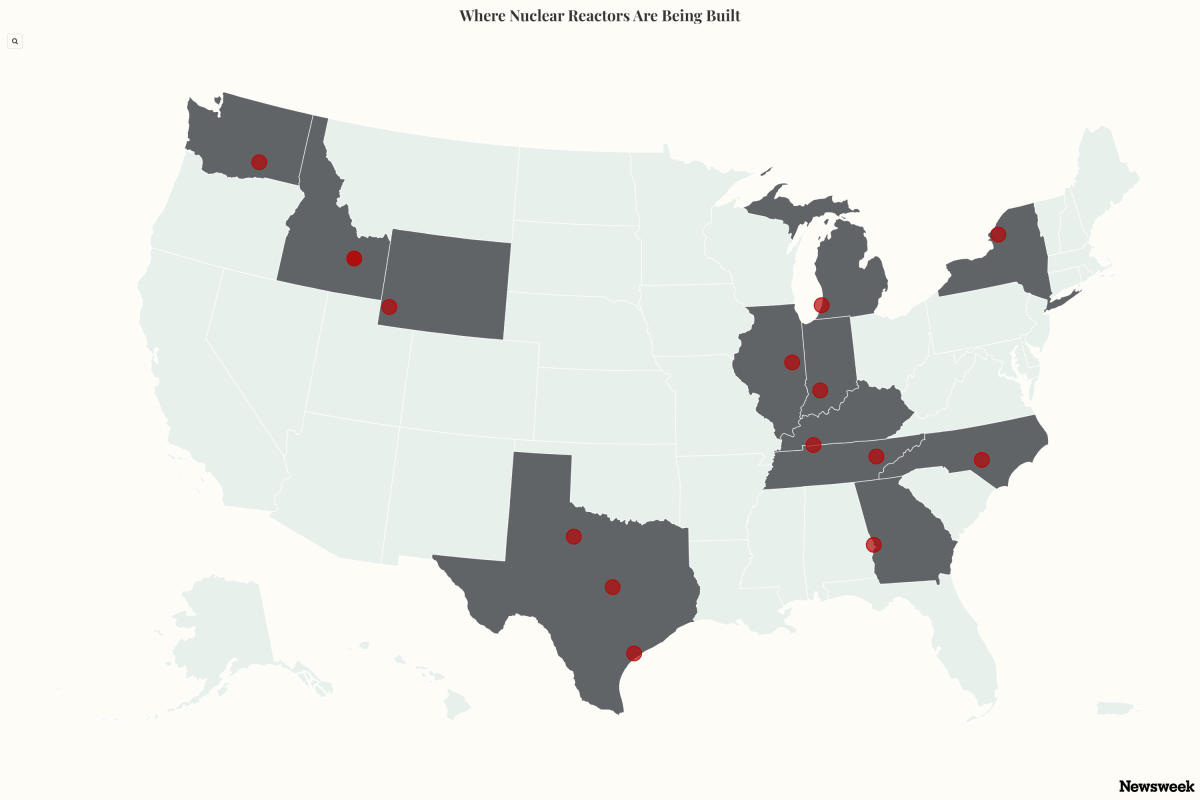
"Under President Trump's bold leadership, the Department of War is rapidly fielding next-generation energy solutions for our warfighters," Emil Michael, Under Secretary of War for Research and Engineering, said in a press release announcing the new reactor. "We are unleashing the American nuclear industrial base to ensure our military installations possess the resilient infrastructure required to maintain uninterrupted operations." The Indiana project joins a growing list of nuclear reactor developments underway across the country. They include the TerraPower Natrium project in Wyoming, Kairos Hermes in Tennessee, X-energy's Xe-100 reactor projects in Washington state and Texas, the Palisades SMR project in Michigan, the KRONOS Micro Modular Reactor in Illinois, and the Oklo Aurora and Project Pele projects at Idaho National Laboratory.
Multiple military microreactor projects are also planned under the Army's Janus program at Fort Hood, Fort Drum, Fort Campbell, Fort Benning and Fort Bragg. The map showing the new reactor sites is based on publicly announced reactor projects with identified locations that are in development, licensing, construction, demonstration or deployment phases. It may not include every reactor proposal nationwide, particularly projects in early planning stages or newly announced developments that have not yet appeared in major tracking databases.
For example, the newly announced nuclear microreactor in Indiana doesn't yet appear on the Center for Strategic and International Studies (CSIS) Advanced Nuclear Deployment Dashboard, but a CSIS spokesperson told Newsweek the dashboard would soon be updated to reflect the announcement. The surge in reactor development follows decades in which nuclear energy largely stalled in the United States. After decades of public skepticism driven by accidents such as Three Mile Island, Chernobyl and Fukushima, concerns about climate change, energy security and rising electricity demand have helped fuel a renewed push for nuclear power in the United States.
Policymakers, utilities and technology companies are searching for sources of carbon-free electricity that can operate around the clock. Unlike solar and wind power, nuclear plants can generate electricity continuously regardless of weather conditions. Rising electricity demand, concerns about grid reliability and efforts to reduce greenhouse gas emissions have all helped fuel renewed interest in advanced reactors and small modular reactors, or SMRs.
President Donald Trump has made expanding nuclear energy a key part of his administration's energy policy. In May 2025, he signed a series of executive orders aimed at accelerating reactor construction, streamlining the licensing process, strengthening domestic nuclear fuel production and expanding U.S. nuclear generating capacity. The military has also embraced nuclear power as a resilience tool.
Extract — continue reading at the source.