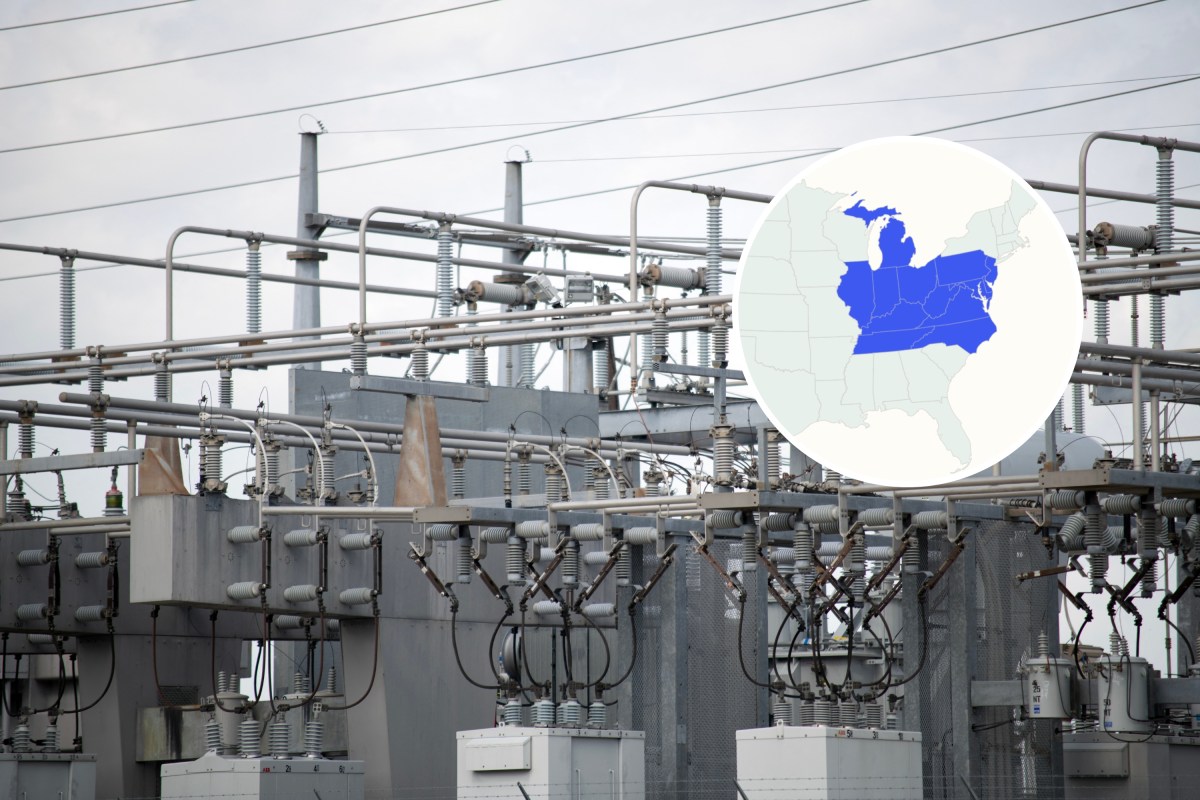
The Department of Energy has issued an emergency order to reduce the risk of blackouts across the territory managed by PJM Interconnection, which coordinates electricity supplies in much of the Mid-Atlantic and parts of the Midwest. PJM, which coordinates electricity for more than 67 million people across 13 states and Washington, D.C., said Monday that it had issued a maximum generation and load management alerts “ahead of expected tight system conditions caused by unusually warm fall weather” as well as equipment outages for maintenance and construction. Energy Secretary Chris Wright issued the order on Monday “to mitigate blackout risks in the mid-Atlantic ahead of a period of elevated demand, a high rate of planned generator outages during the autumn maintenance season, and numerous planned transmission outages,” the Department of Energy said in a statement.
The Department of Energy said the order directs PJM to bring specified power-generating units online when required to maintain reliable supply. The order takes effect on October 13 and remains in place through October 16. A PJM spokesperson told Newsweek on Tuesday that it does not expect any impacts to customers and that customers are not being asked to take action.
Similar emergency orders had been granted by the Department of Energy multiple times this year, the spokesperson added. Newsweek contacted the Department of Energy for comment via email outside of business hours on Tuesday. PJM manages the flow of electricity across all or parts of 13 states—Delaware, Illinois, Indiana, Kentucky, Maryland, Michigan, New Jersey, North Carolina, Ohio, Pennsylvania, Tennessee, Virginia and West Virginia—as well as the District of Columbia.
The organization says it serves more than 67 million people. According to the Department of Energy’s order, PJM forecast demand at approximately 111,500 MW or above on Tuesday, October 13. In addition, the next day, Wednesday, roughly 61,591 MW of generation outages are expected by the regional transmission organization, which said it would come within 900 MW of its reserve margin.
Reserve power acts as a buffer should electricity demand exceed expectations or a generator unexpectedly go offline. The Department of Energy said it estimates that over 35 GW, equivalent to 35,000 MW, of unused backup generation remains accessible nationwide.
Extract — continue reading at the source.