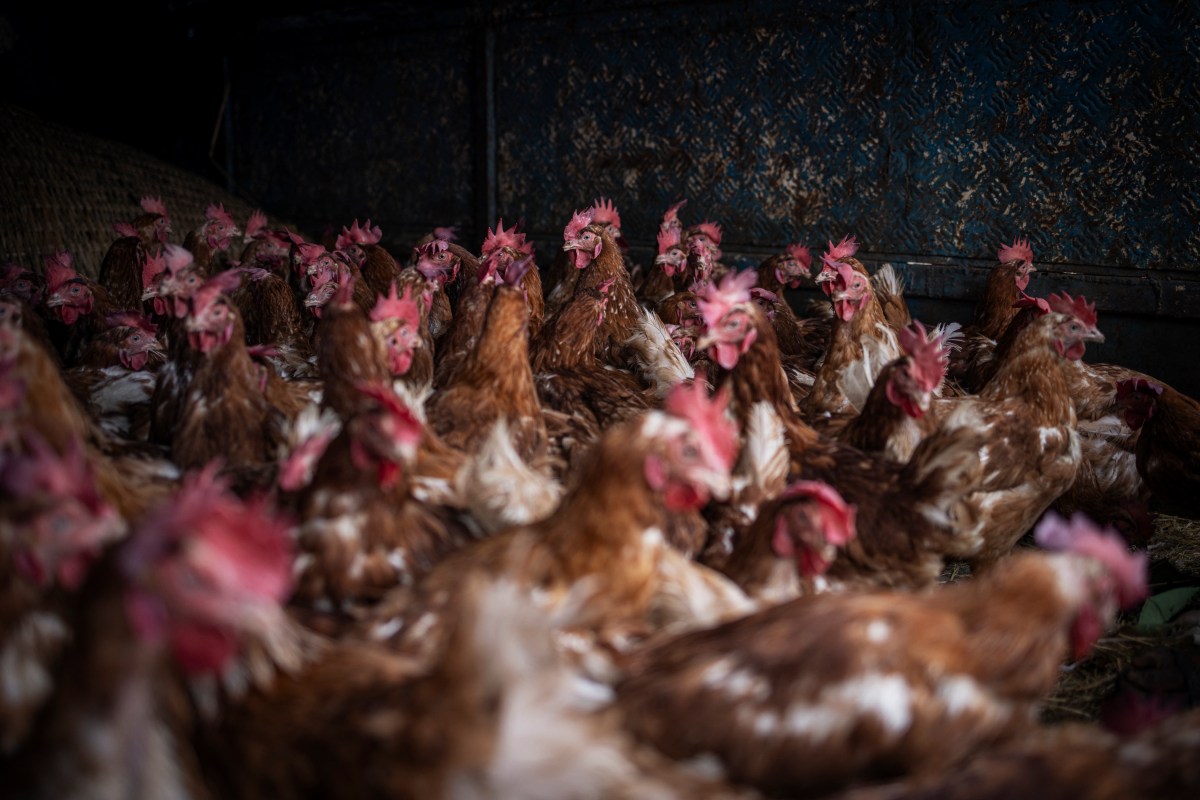
For Kalkidan Nigussie, who helps small-scale farmers across Africa raise poultry, it’s clearly both. Since its 2018 pilot in Malawi, the "Egg Hub" program—which Nigussie oversees—has trained around 190 farmers to produce at least 15 million eggs across Malawi and Ethiopia, with plans for expansion in Rwanda and Senegal. Seeing that progression firsthand makes the work very meaningful," Nigussie, who runs the initiative for Swiss-based think-tank Sight and Life, said in a phone interview from Malawi.
The group provides training, quality feed, at least 500 birds, and an interest-free loan for participating farmers, half of whom are women with basic experience raising hens. Eggs are a nutrient-dense and cost-effective source of protein that can help close nutrition gaps in Africa, a region where over half the population are moderately or severely food insecure, United Nations figures showed. The U.N. said nearly 67 percent of the African population could not afford a healthy, nutritious diet in 2025.
Conflicts in the Middle East, global aid cuts and extreme weather events such as El Niño in 2026 and 2027 are likely to worsen hunger and food insecurity, particularly in vulnerable regions like sub-Saharan Africa, according to a European Commission report in September. By 2030, up to 520 million people will be facing hunger, over half of whom will be in Africa, the report added. Development projects that help build resilience to climate shocks like drought, or spikes in food prices due to conflicts, are key to helping communities build sustainable futures, said Sight and Life managing director Sufia Askari.
"You can provide food, and that's a quick solution. But that’s not sustainable. Turning an existing solution into lasting change cannot happen overnight," Askari told Newsweek.
The foundation, which partners with local officials and U.N. bodies, aims to expand the Malawi program to 63 farms from 12 this year, and has already started recruiting poultry farmers in Senegal and Rwanda. The program has given farmers the skills to raise birds that lay 300 eggs per year compared to 40 eggs annually, Nigussie said. This has "skyrocketed" livelihoods and food security in the villages they work with.
Women and children in Malawi are eating more eggs each month, egg prices have fallen, and farmers are tripling their earnings, he added. "One of our egg poultry farmers was saying that it was survival before, not a business. Her birds died, her income was uncertain and she had no structured knowledge or reliable support," said Nigussie, who added that the farmer has since repaid her loan, completed three production cycles and doubled her income.
Extract — continue reading at the source.