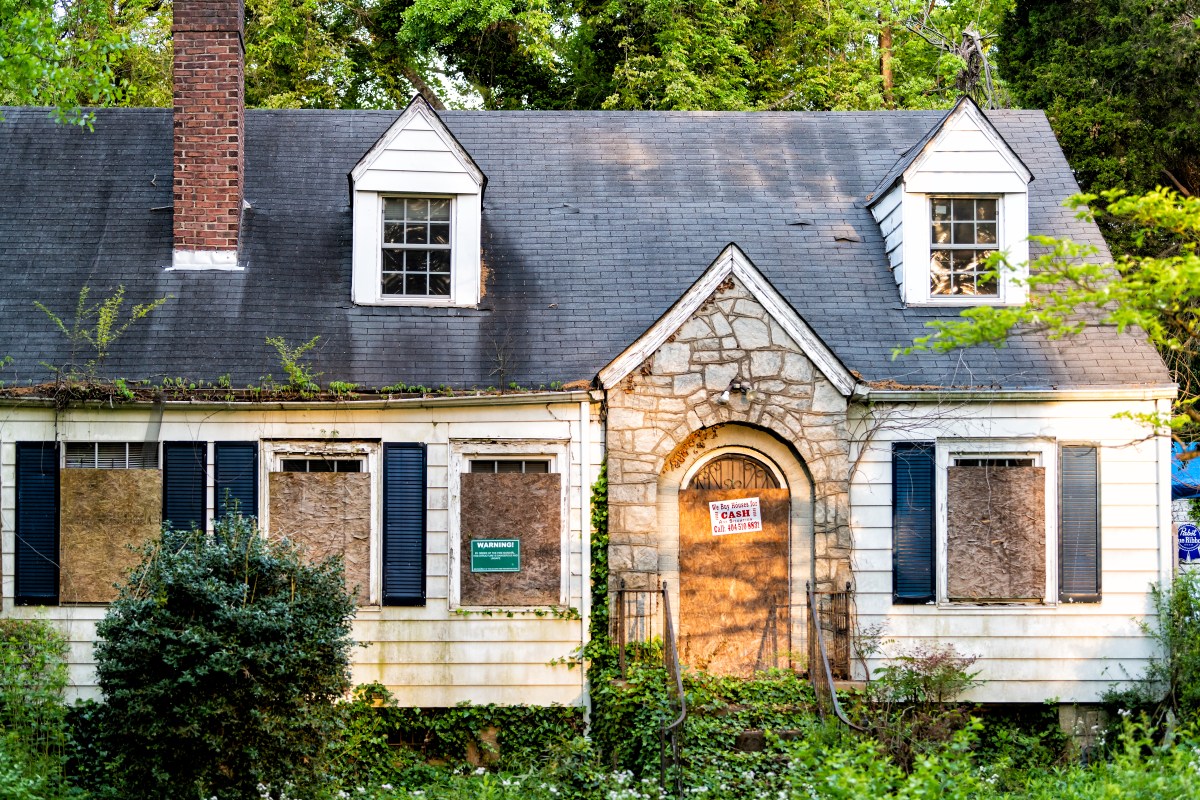
The number of homes entering foreclosure and homes repossessed by lenders nationwide continued increasing in July month-over-month and year-over-year, as Americans struggle to keep up with their mortgage payments, according to new data by real estate and property data provider ATTOM. With borrowing costs still rising as the war in Iran fuels uncertainty over the U.S. economy, one in every 3,603 housing units nationwide had a foreclosure filing in July, for a total of 39,906, up 1 percent from June and up 10 percent from a year earlier. This increase “shows that financial pressures remain a factor for some homeowners,” Rob Barber, CEO at ATTOM, said in a statement, even as he pointed out that foreclosure activity remains relatively low when compared to historical standards.
The handful of states taking the brunt of this increase in foreclosure activity in July makes for a well-mixed bunch including a state in the West, three in the South, and one in the Northeast. Nevada topped ATTOM’s list with one foreclosure filing for every 1,703 housing units, followed by South Carolina with one in every 2,085 housing units. Florida came third, with one in every 2,232 housing units with a foreclosure filing, Delaware fourth with one in every 2,579 housing units, and Texas fifth with one in every 2,653 housing units.
At a more local level, among metropolitan areas with 200,000 residents or more, Punta Gorda, Florida, recorded the worst foreclosure rate in July, with one filing for every 899 housing units. Next came Killeen, TX (one in every 1,359); Las Vegas (one in every 1,394); Vallejo, California (one in every 1,432 housing units); and Lakeland, Florida (one in every 1,501). Rising homeownership costs, higher mortgage rates, and the winding down of pandemic-era financial protections are likely behind the recent rise in foreclosure activity across the country.
After the average 30-year fixed-rate mortgage fell below 6 percent (5.98) at the national level for the first time in years in late February, mortgage rates started climbing again after the Iran war began, leaving the U.S. housing market in the same slump it faced by the end of last year, when ongoing affordability issues had significantly brought down demand. As of the week ending August 27, the nationwide average 30-year fixed mortgage rate was 6.66 percent, according to Freddie Mac, up from 6.56 percent a year earlier. That is on top of still-rising home prices, with the median sale price of the typical U.S. home reaching $408,776 in June, according to Redfin, up 2.2 percent from a year earlier and significantly higher than the average of $340,000 Americans paid for a home five years earlier.
Property taxes, another rising cost that has made homeownership less affordable since the pandemic, are also still rising faster than inflation, with the average homeowner last year paying $4,427, up 3.7 percent from 2024, according to an ATTOM analysis released earlier this year. By comparison, the Consumer Price Index (CPI), a measure of inflation, has risen 2.7 percent in 2025. All these costs (including climbing homeowners insurance premiums, especially in disaster-prone states) have pushed homeownership increasingly out of reach for millions of Americans.
But it is only one of the added costs Americans are facing since the start of the war in Iran, which has also pushed up gas prices all across the country. In May, President Donald Trump, whose popularity has taken a plunge since the start of the conflict in the Middle East, said he does not “think about Americans’ financial situation” when it comes to the Iran war. That’s the only thing that motivates me,” he said.
Extract — continue reading at the source.