In the fall of 1969 the Rolling Stones were in a Los Angeles recording studio, putting the final touches on their album Let It Bleed. It was a tumultuous time for the Stones. They had been struggling with the album for the better part of a year as they dealt with the personal disintegration of their founder and multi-instrumentalist Brian Jones, whose drug addiction and personality problems had reached a critical stage.
Jones was fired from the band in June of that year. He died less than a month later. And although the Stones couldn’t have known it at the time, the year would end on another catastrophic note, as violence broke out at the notorious Altamont Free Concert just a day after Let It Bleed was released.
It was also a grim time around the world. The assassinations of Martin Luther King and Robert F. Kennedy, the Tet Offensive, the brutal suppression of the Prague Spring—all of these were recent memories.
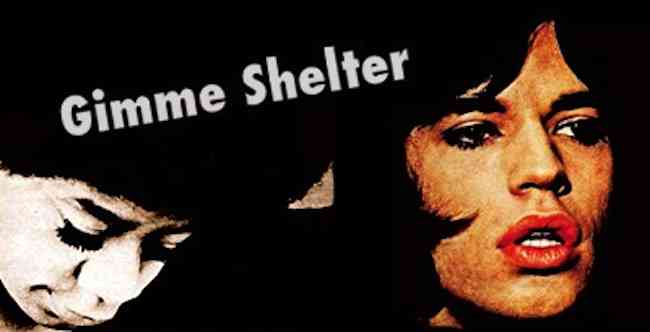
Not surprisingly, Let It Bleed was not the most cheerful of albums. As Stephen Davis writes in his book Old Gods Almost Dead: The 40-Year Odyssey of the Rolling Stones, “No rock record, before or since, has ever so completely captured the sense of palpable dread that hung over its era.” And no song on Let It Bleed articulates this dread with greater force than the apocalyptic “Gimme Shelter,” in which Mick Jagger sings of a fire “sweepin’ our very street today,” like a “Mad bull lost his way.” Rape, murder! It’s just a shot away It’s just a shot away In an interview with Melissa Block for the NPR program All Things Considered, Jagger talked about those lyrics, and the making of the song: One of the most striking moments in the interview is when Jagger describes the circumstances surrounding soul singer Merry Clayton’s powerful background vocals.
She came in and knocked off this rather odd lyric. It’s not the sort of lyric you give anyone–‘Rape, murder/It’s just a shot away’–but she really got into it, as you can hear on the record.” The daughter of a Baptist minister, Merry Clayton grew up singing in her father’s church in New Orleans. She made her professional debut at age 14, recording a duet with Bobby Darin.
She went on to work with The Supremes, Elvis Presley and many others, and was a member of Ray Charles’s group of backing singers, The Raelettes. She is one of the singers featured in the documentary film, 20 Feet From Stardom. In an interview with Terry Gross on NPR’s Fresh Air, Clayton talked about the night she was asked to sing on “Gimme Shelter”: Well, I’m at home at about 12–I’d say about 11:30, almost 12 o’clock at night.
Extract — continue reading at the source.