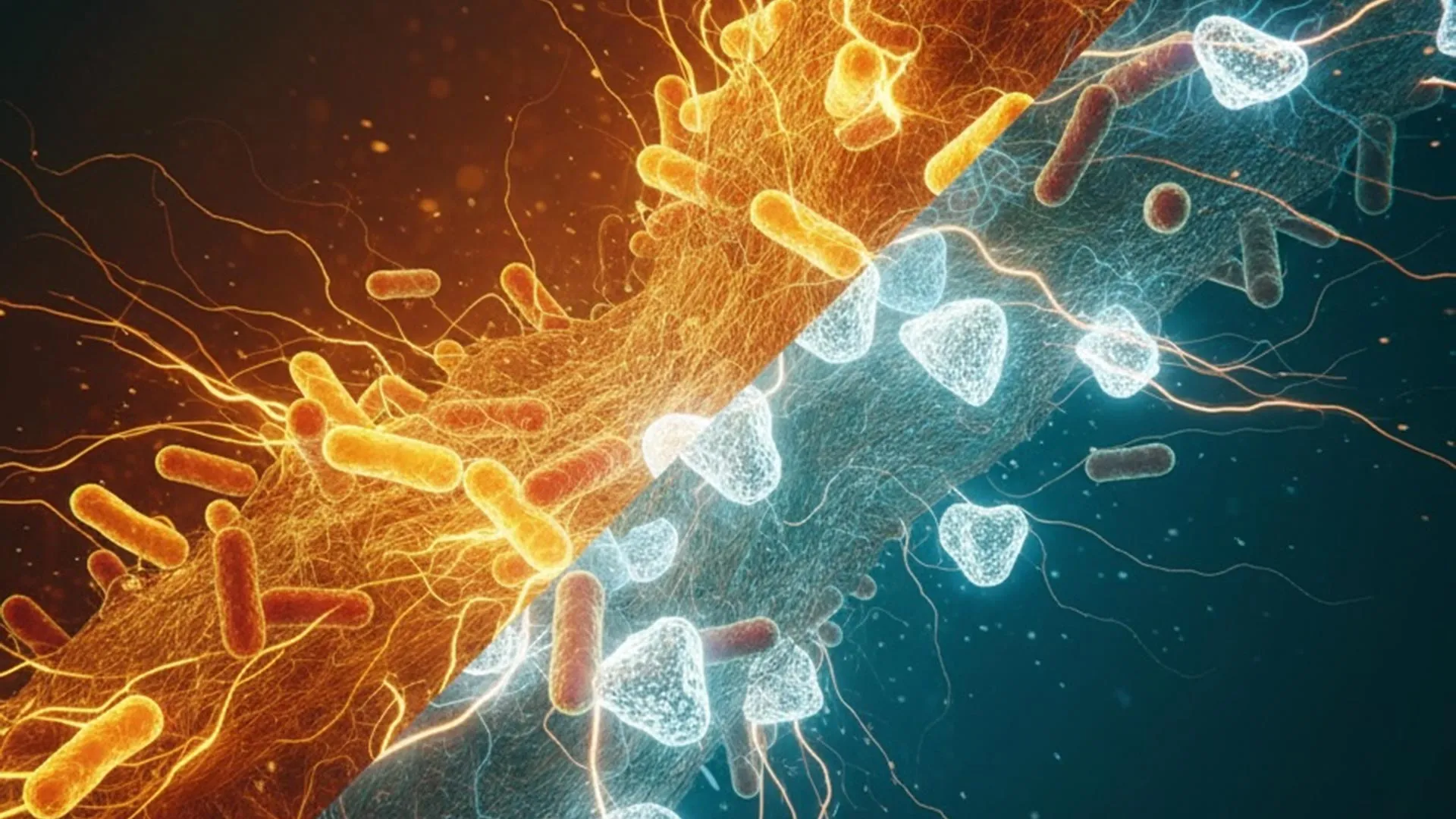
This article has been reviewed according to Science X's editorial process and policies. Editors have highlighted the following attributes while ensuring the content's credibility: KAIST researchers have demonstrated the potential of using microorganisms to produce a bio-based alternative to petroleum-derived materials for hot-melt adhesives (HMAs). These heat-activated glues are widely used in packaging, furniture, electronics and automobiles.
Using Escherichia coli, the team produced a new polymer from glucose and demonstrated adhesive performance and thermal properties that support its potential use as an HMA. The research team led by Distinguished Professor Sang Yup Lee from the Department of Chemical and Biomolecular Engineering developed the microbial cell factory by engineering E. coli to produce new aromatic polyhydroxyalkanoate (PHA) polymers from glucose for adhesive applications. The research is published in Nature Communications.
The researchers applied systems metabolic engineering, an approach that redesigns a microorganism's overall metabolism to produce a target compound, to re-engineer the metabolic pathways of E. coli. Through this approach, the researchers successfully produced two new adhesive materials from glucose, poly(4HB-co-PhLA) and poly(3HB-co-4HB-co-PhLA), both belonging to the PHA family of biodegradable polymers. Adhesives are essential materials used in a wide range of industries, including packaging materials, electronics, automobiles and construction materials.
In particular, HMAs are solid adhesives that are melted with heat for bonding and then solidify as they cool. Because they do not require separate organic solvents and enable rapid bonding, they are widely used in industry. However, most hot-melt adhesives currently in use are based on petroleum-derived polymers such as ethylene-vinyl acetate.
Although they offer excellent adhesive performance, most do not readily degrade in nature and can cause waste and microplastic problems. In particular, even when biodegradable packaging materials are used, if the adhesive does not degrade, the biodegradability and recyclability of the entire product may be reduced. To address this problem, the research team focused on PHA, a type of biodegradable plastic produced by microorganisms.
PHA can be produced by microorganisms using renewable feedstocks such as glucose. It also has the advantage that properties such as polymer flexibility, strength and heat resistance can be adjusted in various ways depending on which components are included and in what proportions. Using this principle, the research team incorporated 4-hydroxybutyrate (4HB) and phenyllactate (PhLA) into a single polymer. 4HB contributes to the material's softness and adhesion, while PhLA increases the material's rigidity and heat resistance.
Extract — continue reading at the source.