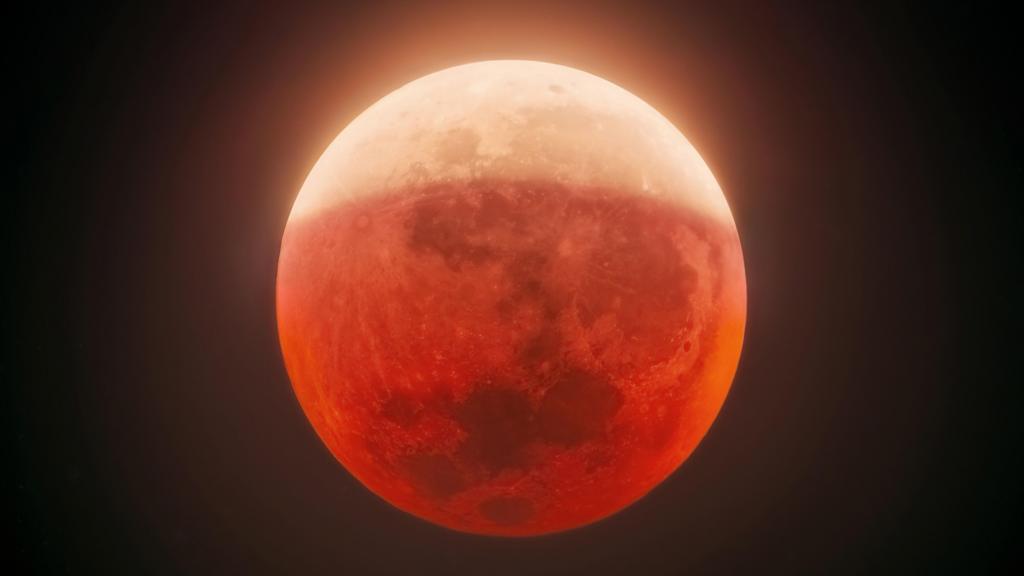
Skywatchers across the UK could have the chance to see a stunning partial lunar eclipse later this week as the Sun, Earth, and Moon line up in the night sky. Lunar eclipses occur when the Moon is full which will take place in the early hours of 28 August. It may cause the full Moon - nicknamed the Sturgeon Moon - to take on an eerie reddish glow.
It comes just weeks after the UK experienced its most dramatic partial solar eclipse in nearly 30 years. Adding to the spectacle, its position in the sky will be low on the horizon, causing a phenomenon known as the Moon illusion. This makes the Moon appear bigger and more dramatic than usual.
The eclipse will take place in the early hours of Friday 28 August. The partial eclipse will begin at in London, when the Moon enters Earth's darkest shadow. It will reach its maximum at , when around 90% of the Moon will be within the umbra.
By this point the Moon will be very low in the south-western sky, causing something known as the Moon illusion. This is a term for when the Moon appears much larger than it is based on its position in the sky - an effect caused by the way our brains process visual information. The effect is particularly noticeable during a moonrise or moonset, when the lunar disc is seen alongside familiar objects on the ground.
Exact Moonset times will vary across the UK. In London, it will set and move out of sight at approximately . A lunar eclipse happens when the Earth passes between the Sun and the Moon, causing the Moon to temporarily move into the Earth's shadow.
During a partial eclipse, only part of the Moon enters the darkest section of that shadow, known as the umbra. The Moon is not completely cut off from sunlight, however. Sunlight passing through the Earth's atmosphere is scattered, with shorter blue wavelengths scattering more easily, while more of the longer wavelength red light reach the Moon.
Extract — continue reading at the source.