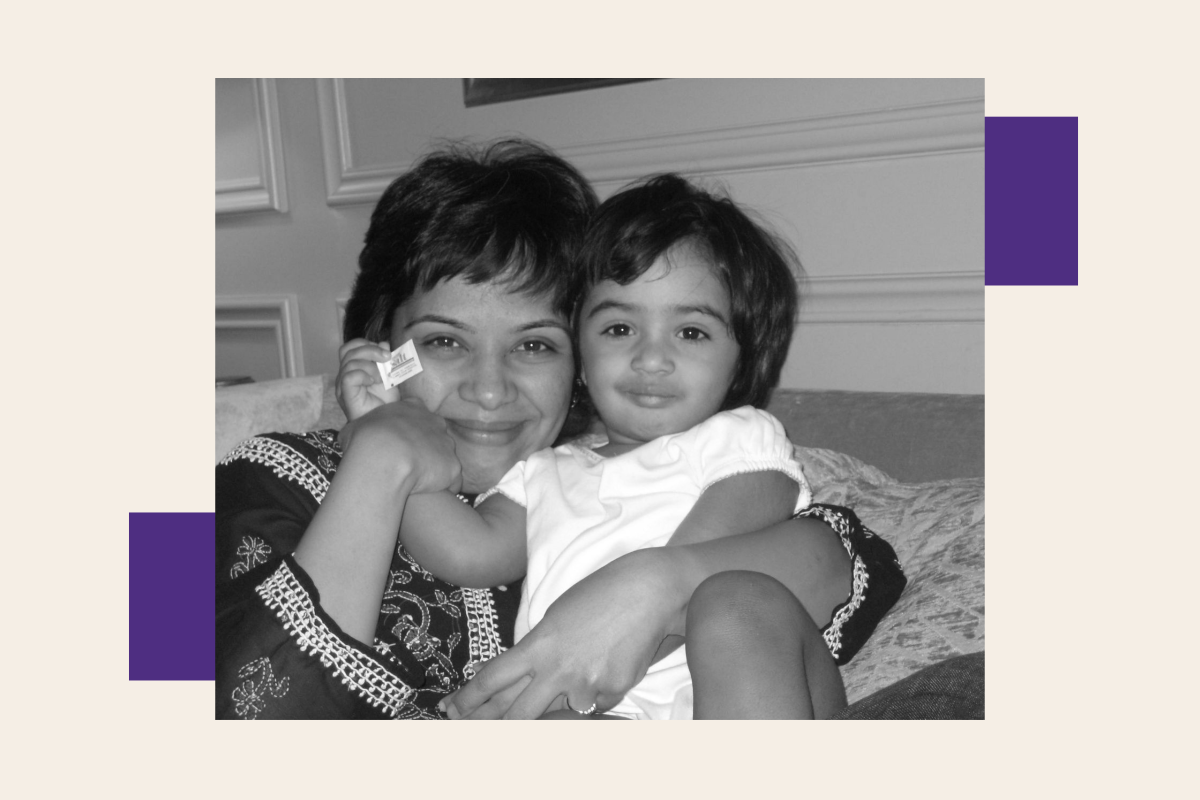
Mom, are you coming with us?” the paramedics asked as they wheeled my 2-year-old on a stretcher into the ambulance. They were at our house in response to my frantic 911 call when I saw my child having a seizure in her crib, her fever spiking to 103 degrees. The paramedic’s eyebrows shot up before his face returned to professional neutrality.
I had just deviated from nature’s unwritten protocol. That a mother was supposed to be with her child at times of distress. The truth is, I had no faith in my parenting abilities.
My husband had been the primary parent, in many ways both mother and father to our daughter so far. I was a mere bystander, not by choice, but by circumstances. As the ambulance left, I grabbed my car keys and drove the 10 miles to the hospital’s emergency center.
A place I could drive to on autopilot, my almost second home for the previous two years. The place where I endured endless rounds of chemotherapy, emergency room and clinic visits. The place where people routinely stopped to ask me for directions because I looked like I belonged there.
I wished then, more than anything else, I were going back there for myself, as a patient instead of a parent. I loved my child more than anything in the world; I just did not trust myself to be her best advocate. After years of fertility treatments, when I was finally pregnant at 33, I felt the last missing piece of the jigsaw puzzle of my life had clicked into place.
I had married my college sweetheart, we had opportunities to travel around the world, and my career was on the right trajectory. When our daughter was born, I assumed, based on what I’d read in the online baby forums, that mothers have a natural instinct to know when babies need food and sleep, and that babies, in turn, come equipped with rooting and sucking reflexes and maternal preference. Soon, as we brought our beautiful baby girl home, I learned that instinct and competence were two different things.
Extract — continue reading at the source.