NASA and SpaceX have delayed the planned launch of Crew-13 to the International Space Station after engineers discovered an oxidizer leak in the propulsion system of the mission's Dragon spacecraft. The issue was found during routine spacecraft processing ahead of launch. An oxidizer is a chemical that helps fuel burn inside a rocket or spacecraft propulsion system, making it an essential part of the vehicle's ability to maneuver.
NASA and SpaceX teams are now carrying out additional testing and reviewing data from the spacecraft. Any repairs or other required work will be completed before Dragon is cleared to fly. NASA has not yet announced a new target launch date.
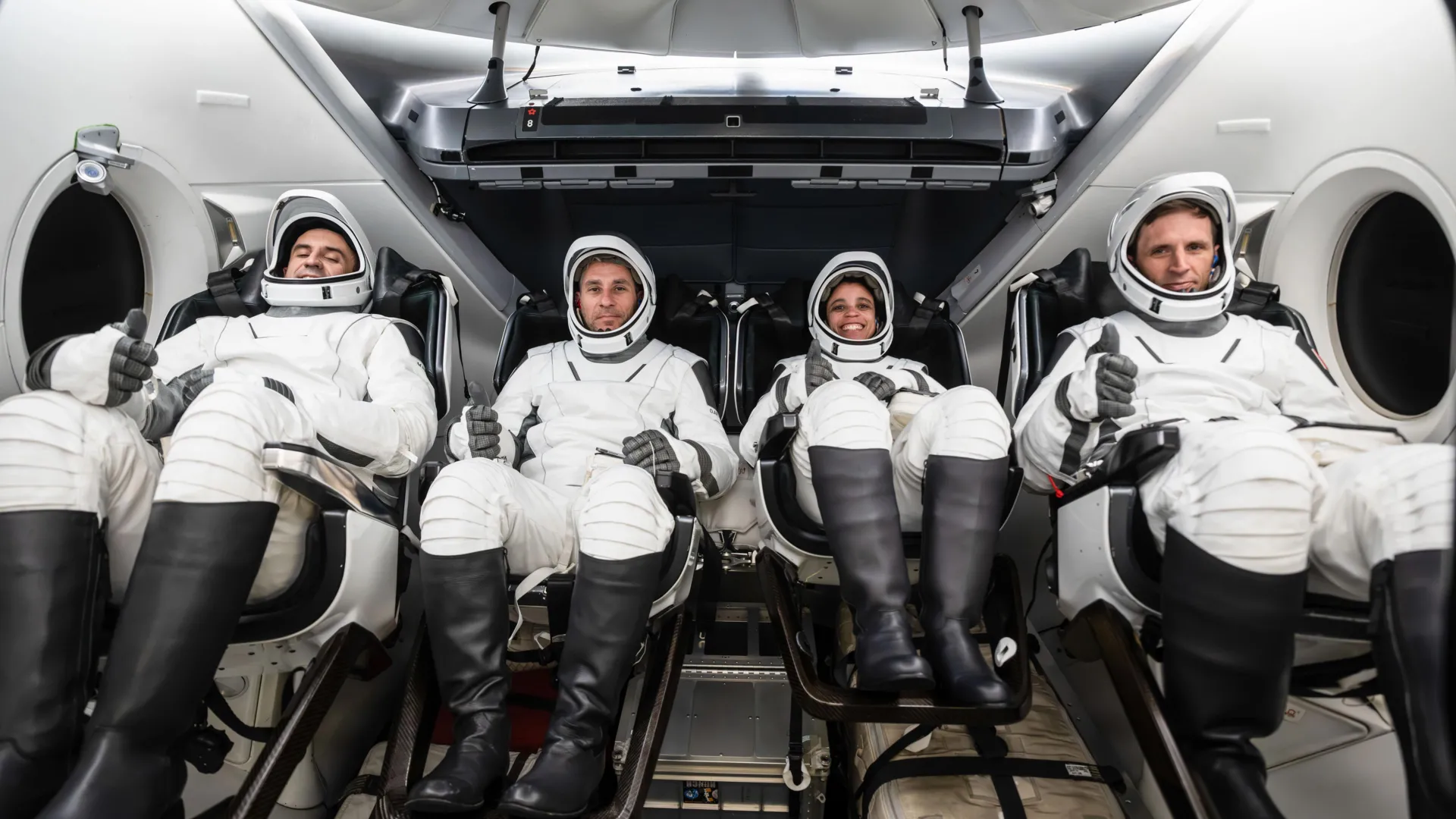
NASA astronauts Jessica Watkins and Luke Delaney will serve as commander and pilot of Crew-13, respectively. They will fly alongside CSA (Canadian Space Agency) astronaut Joshua Kutryk and Roscosmos cosmonaut Sergey Teteryatnikov, who will serve as mission specialists. Once the crew reaches the International Space Station, the four astronauts will become part of Expedition 75, the station's long-duration crew responsible for research, maintenance, and other operations aboard the orbiting laboratory.
About two weeks before the flight, the Crew-13 astronauts will begin quarantine at NASA's Johnson Space Center in Houston. The precaution helps reduce the risk that crew members could become sick shortly before traveling to space. When the mission is cleared to proceed, Crew-13 will travel aboard SpaceX's Dragon spacecraft, which is designed to carry astronauts to and from orbit.
Dragon will launch on a SpaceX Falcon 9 rocket from Space Launch Complex 40 at Cape Canaveral Space Force Station in Florida. NASA and SpaceX will announce a new launch date once testing, data reviews, and any necessary work on the spacecraft have been completed. Materials provided by NASA.
Note: Content may be edited for style and length. NASA’s Roman Telescope Begins a Million-Mile Journey Into Deep Space Researchers Have Discovered a New Way To Reduce Chronic Nerve Pain JWST Finds Giant Planets Face a Cosmic Race Against Time Magnetic Bacterium Extends Lifespan by 43% in Surprising Anti-Aging Study
Extract — continue reading at the source.