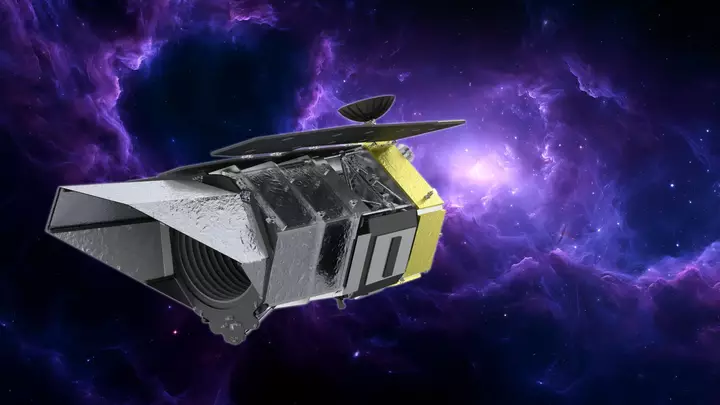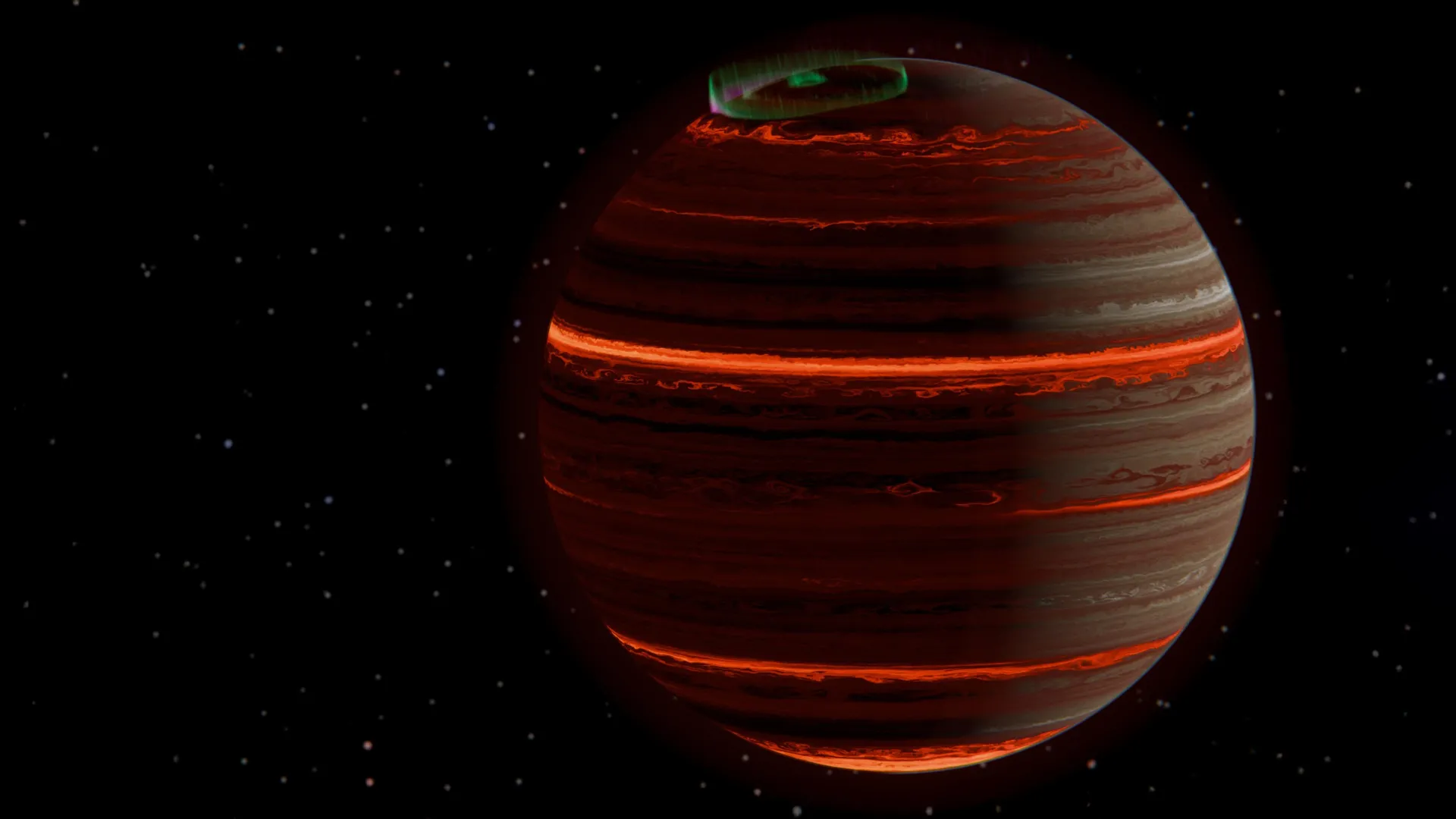
Scientists have discovered a powerful new way to decode the weather on distant worlds, revealing surprisingly organized patterns hidden within the turbulent atmosphere of a mysterious object 20 light-years from Earth. Researchers at Trinity College Dublin used observations from NASA's James Webb Space Telescope to investigate SIMP 0136, a brown dwarf previously associated with phenomena resembling the northern lights. They found that its complex weather is largely governed by just two factors: changes in temperature and the vertical structure of its clouds.
The discovery offers a new way to understand the atmospheric conditions of distant worlds and could help astronomers investigate planets far beyond our Solar System. How NASA's Webb Telescope Decoded Alien Weather To investigate SIMP 0136, the researchers analyzed observations collected by NASA's James Webb Space Telescope (JWST) using a mathematical technique called Principal Component Analysis (PCA). This technique helps scientists make sense of large, complicated datasets by identifying the strongest patterns within them.
In this case, the team examined how the brown dwarf's light changed as it rotated, looking for subtle variations that could reveal what was happening in its atmosphere. Rather than beginning with detailed assumptions about how the atmosphere should behave, the researchers allowed the observations to reveal the most important processes. The method also helped separate genuine atmospheric changes from minor fluctuations and random noise in the measurements.
Webb's exceptionally sensitive instruments made this possible by detecting extremely small changes in the object's brightness as different parts of its atmosphere rotated into view. Scientists Discover Hidden Order in Chaotic Alien Weather The results revealed something unexpected. Although SIMP 0136 appears to have a highly complicated atmosphere, nearly all of its observed atmospheric variability could be explained by just two dominant components, consistent with temperature fluctuations and changes in the vertical arrangement of clouds.
Even more remarkably, the researchers identified three recurring weather states that appear and disappear from view as the brown dwarf rotates. Together, these states create a shifting atmospheric patchwork. Some regions are hotter and have thinner clouds, while others are cooler and contain thicker cloud layers that extend farther vertically through the atmosphere.
Instead of constantly changing in an unpredictable way, these weather patterns appear to follow an underlying structure. The findings, published in Astronomy & Astrophysics, suggest that the seemingly chaotic atmosphere of SIMP 0136 is actually governed by a remarkably consistent set of processes. Brown dwarfs occupy an unusual place between planets and stars.
Extract — continue reading at the source.