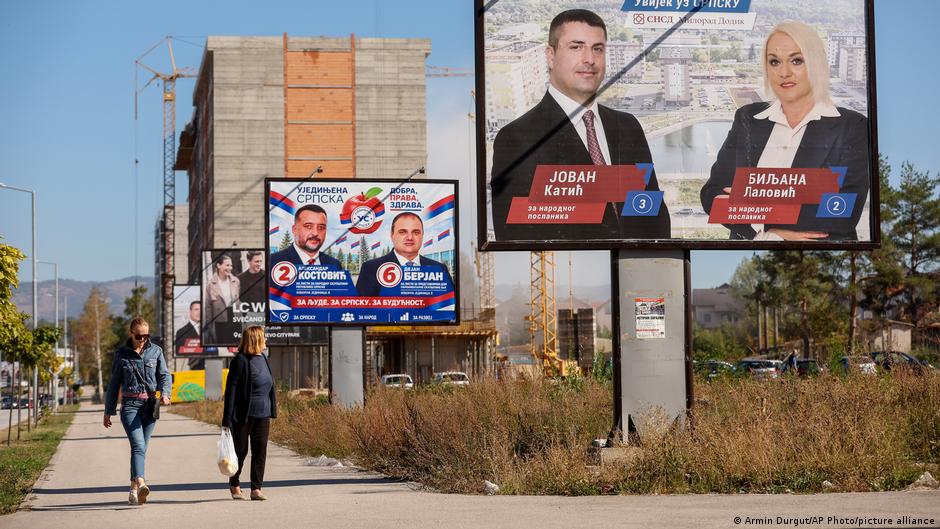
Bosnian officials reported a record-low turnout following the Sunday election, with only 41.5% out of the country's 3.4 million voters eligible to take part in the general election. Polls closed in Bosnia-Herzegovina on Sunday evening, where around 3.4 million voters were eligible to take part in the Balkan country's general election. With more than 90% of votes tallied, the Central Election Commission (CIK) said turnout for Sunday's election was a record-low 41.5%, down from 51.5% in 2022.
Nationalist parties dominated races as citizens chose officials across multiple tiers of government; including members of the country's multiethnic, tripartite presidency. With counting nearly concluded, Serb nationalist Zeljka Cvijanovic, Bosniak moderate leftist Denis Becirovic and Croat nationalist Darijana Filipovic have been announced as the winners of the presidential seats of their respective ethnicities. Cvijanovic had been backed by the Republika Srpska's former secessionist leader Milorad Dodik, who was barred from holding public office for six years after being convicted of defying the top international envoy overseeing the 1995 peace process.
"I am declaring that we have won," Dodik told supporters in Banja Luka on Sunday night. He said his SNSD party had retained the Serb seat in the presidency and remained power in Republika Srpska. With counting nearly over, Cvijanovic looked to have won with 55.6% of the vote.
Social Democrat Becirovic won the race for the Bosniak seat with 38.1% of the vote, while Croat Filipovic took 48.2% of the vote. Voters also chose lawmakers for the federal parliament and the heads of institutions for the country's two largely autonomous entities — the Muslim-Croat Federation of Bosnia and Herzegovina (FBiH) and the Serb-run Republika Srpska (RS). Currently, about 50% of Bosnia and Herzegovina's citizens are Muslim Bosniaks, 31% are Orthodox Serb and another 15% are Catholic Croat.
Between 1992 and 1995, more than two milion people were displaced and nearly 100,000 killed in a civil war started by Serbia. The country has been peaceful in recent years but ethnonationalist parties have kept divisions alive even as voters say they want to move on from the war-era rhetoric. The election comes at a time when the country is struggling with a number of challenges.
There's been an economic downturn, sluggish progress toward EU membership, and sustained political gridlock — with dominant ethnic parties from these entities repeatedly stalling decisions by the weak central government that binds them. The election saw contests that pitted the Bosniak SDA, Serb SNSD and Croat HDZ BiH against multi-ethnic opposition coalitions led by the Social Democratic Party. Polls closed at 7 p.m. local time (1700 GMT), with preliminary results to be released later in the evening — though complex constitutional order and drawn out coalition talks mean that the true result of Sunday's election could remain unclear for months.
Extract — continue reading at the source.