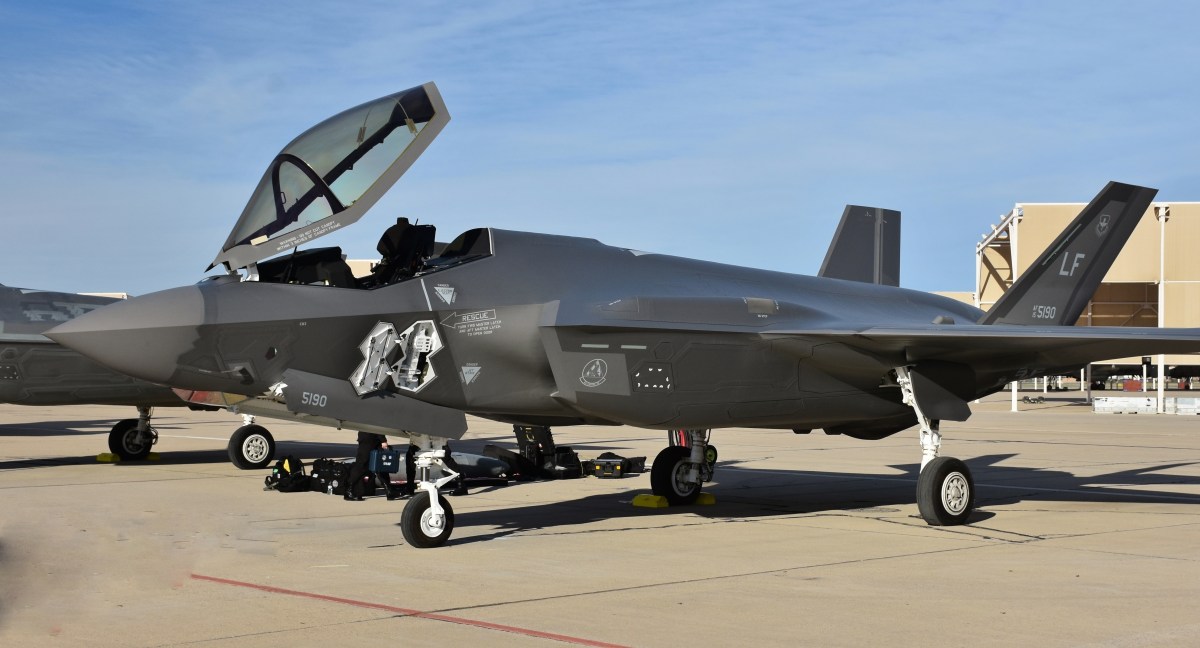
Finland has built its first F-35 fighter jet engine as the NATO member strengthens its defenses along its border with Russia. Finnish defense company Patria completed assembly of the country's first F135 engine on September 3, marking a major step in Finland's role in the F-35 program, as reported by Interesting Engineering. The development comes as Finland continues to strengthen its military capabilities after joining NATO in 2023 following Russia's full-scale invasion of Ukraine in 2022.
Finland has ordered 64 F-35A fighter jets from U.S. defense company Lockheed Martin, with the first aircraft expected to arrive in Finland later this year. The Nordic country shares a border of more than 800 miles with Russia, making its growing F-35 capability significant for NATO's northern flank. Newsweek contacted Patria and the Finnish Ministry of Defense via email Sunday for comment.
Patria's first Finnish-assembled F135 engine is the first of a planned series of engines to be assembled in the country. The company is expected to continue assembling F135 engines for Finland through 2030. It will also provide maintenance and overhaul services for the engines throughout the lifetime of the country's F-35 fleet.
Patria's involvement extends beyond the engines. The company is also manufacturing F-35 forward fuselages and other components as part of the wider international F-35 program. The domestic production and maintenance capabilities are intended to strengthen Finland's security of supply, giving the country greater control over the support of its new fighter fleet.
The F-35 is a fifth-generation multirole fighter designed with stealth capabilities, advanced sensors and networked operations. Finland's first F-35s are due to enter service with the Finnish Air Force as the country replaces its aging fleet of F/A-18 Hornets. The military buildup comes alongside efforts to strengthen Finland's civilian preparedness.
More than 2,000 people recently participated in a major civil defense exercise in the Finnish city of Kuopio. The exercise was described as Europe's largest civil defense exercise since World War II. The scenario included cyberattacks, disruption to critical infrastructure and the threat of missile strikes.
Extract — continue reading at the source.