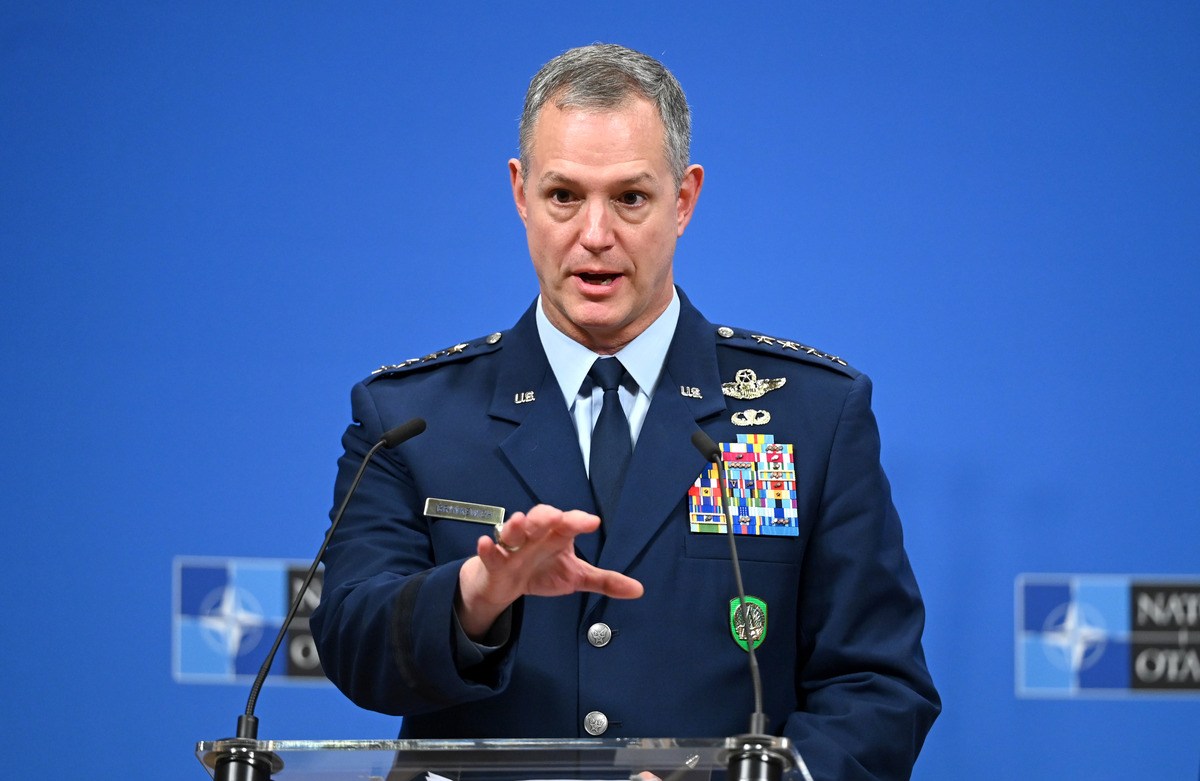
NATO's most senior military commander has set out a plan for how the alliance would fight any nation that attacks one of its member states, amid warnings from top intelligence chiefs that Russia could mount an assault on NATO's eastern edge in the coming months. General Alexus Grynkewich, the current Supreme Allied Commander Europe (SACEUR), said all 32 members of NATO had agreed to a "common vision" he dubbed a "theory of victory." This means the alliance will be able to continue making sure no country dares to attack one of its members and, if such an attack did happen, NATO will be able to defend itself, he said on Monday, speaking on Monday at a security forum in Warsaw, Poland. NATO officials have warned in recent months Russia could escalate its so-called "hybrid warfare" assaults against alliance members, or even attempt a small-scale land-grab against a NATO country in eastern Europe as early as this fall.
"Hybrid warfare" is a broad term, largely referring to activities that stop short of open fighting, such as cyberattacks, information campaigns or targeting vulnerable infrastructure like power grids or undersea cables. Some form of limited land seizure or military operation against NATO territory is generally seen as the realistic worst-case scenario for the alliance, rather than an all-out, Ukraine-style invasion push. Denmark's military and foreign intelligence service said in a stark statement in late September that Moscow had upped its cyberattacks and sabotage operations in Europe, and described Russia as "more willing to take risks." NATO countries are rushing to build up their military stockpiles, spend more on defense and beef up their militaries after pressure from U.S.
President Donald Trump, the U.S. telegraphing to Europe and Canada it wants to end their reliance on U.S. troops and equipment so Washington can concentrate on China's potential plans for Taiwan. European NATO nations, particularly those pressed up on Russia's border or Ukrainian soil, have been further set on edge by a series of drone and missile incursions into their airspace, which some officials describe as Moscow probing NATO reactions, trying to weaken the alliance and hack at support for Ukraine. Air Force general, played down fears of an armed attack, insisting on Monday: "I do not assess that conflict is imminent or inevitable." If NATO came under attack, its land forces would be deployed to the location of the breach and launch operations to destroy these advancing forces, Grynkewich said.
The alliance would send aircraft and ships to the area, using a mix of cheaper munitions and long-range precision weapons to hammer the enemy troops, the NATO general added. Space and cyber forces would be activated, but Grynkewich did not specify how they would be used. Advanced sensors would pick up any other forms of attack and stop them before they can gain momentum, Grynkewich said.
If these enemy soldiers continue to attack—or bring in reserve troops—NATO would target "not just the attacking force itself, but anything and everything that supports, sustains, and controls that force," Grynkewich added. NATO would use lots of inexpensive weapons to overwhelm the invading troops, as well as a smaller number of costly, but highly accurate missiles, he said. This is a breaking story and will be updated.
Extract — continue reading at the source.