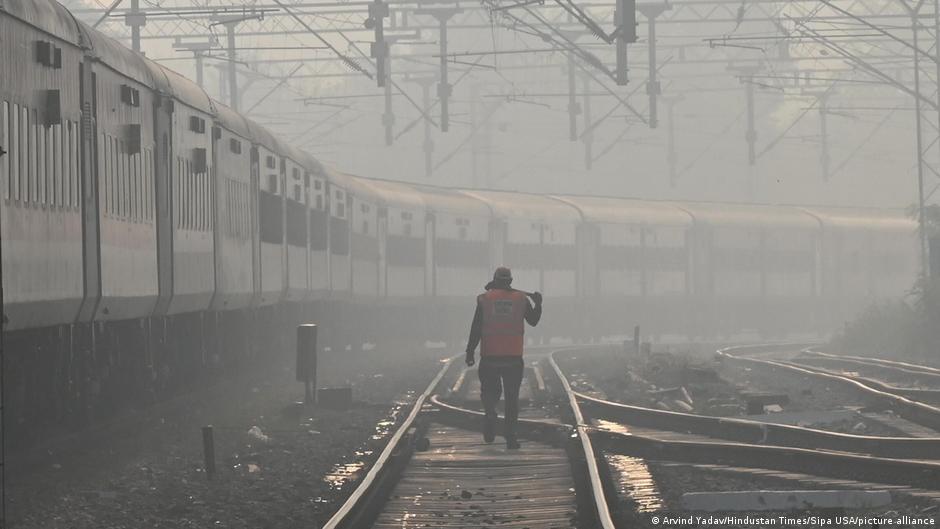
On a slightly chilly and distinctly smoggy morning in New Delhi, Khushboo Arora was looking for another air purifier for her mother, who has underlying health complications, before the city's air quality deteriorated further. "Already, I am starting to get a recurring headache," she said. "These days when I wake up, I don't feel fresh.
As the day progresses, I feel a heaviness in my head, itching in my eye and a constantly parched throat." Not too long ago, the unpacking of woolens announced the advent of winter in Delhi. Now, it's the light hum of an air purifier in the corner. Arora said she has already stopped doing yoga in the park and taking her morning walks.
She has also filled her house with air-purifying plants and started spraying water mist inside the house to bring down the level of pollution. "My parents look at me like I have gone mad. But I feel people are not realizing the gravity of the situation," she said.
Winters in Delhi increasingly follow a familiar pattern: Air quality deteriorates, residents struggle to breathe, emergency restrictions kick in and governments exchange blame. Then the season changes, only for the cycle to repeat the following year. On Thursday, Delhi's air fell into the "Very unhealthy" category, according to Swiss air quality monitor IQAir, with an average PM2.5 concentration of 157.9 micrograms per cubic meter of air.
The World Health Organization (WHO) recommends an annual safe limit of no more than 5 micrograms. Studies have shown that exposure to PM2.5 — air particles with a diameter smaller than 2.5 micrometers that can penetrate deep into the lungs and enter the bloodstream — is associated with an increased incidence of head and neck cancer (HNC), like oral, nasal and throat cancers. But despite years of attempted interventions, India's capital continues to struggle with the same pollution crisis.
Delhi is not dealing with an unknown problem. There is considerable scientific understanding of its causes. A 2026 assessment by an expert panel reviewed by the Delhi government identified the major winter contributors of PM2.5 as vehicular emissions, industrial activity, road and construction dust, biomass and waste burning, and pollution from neighboring regions.
Extract — continue reading at the source.