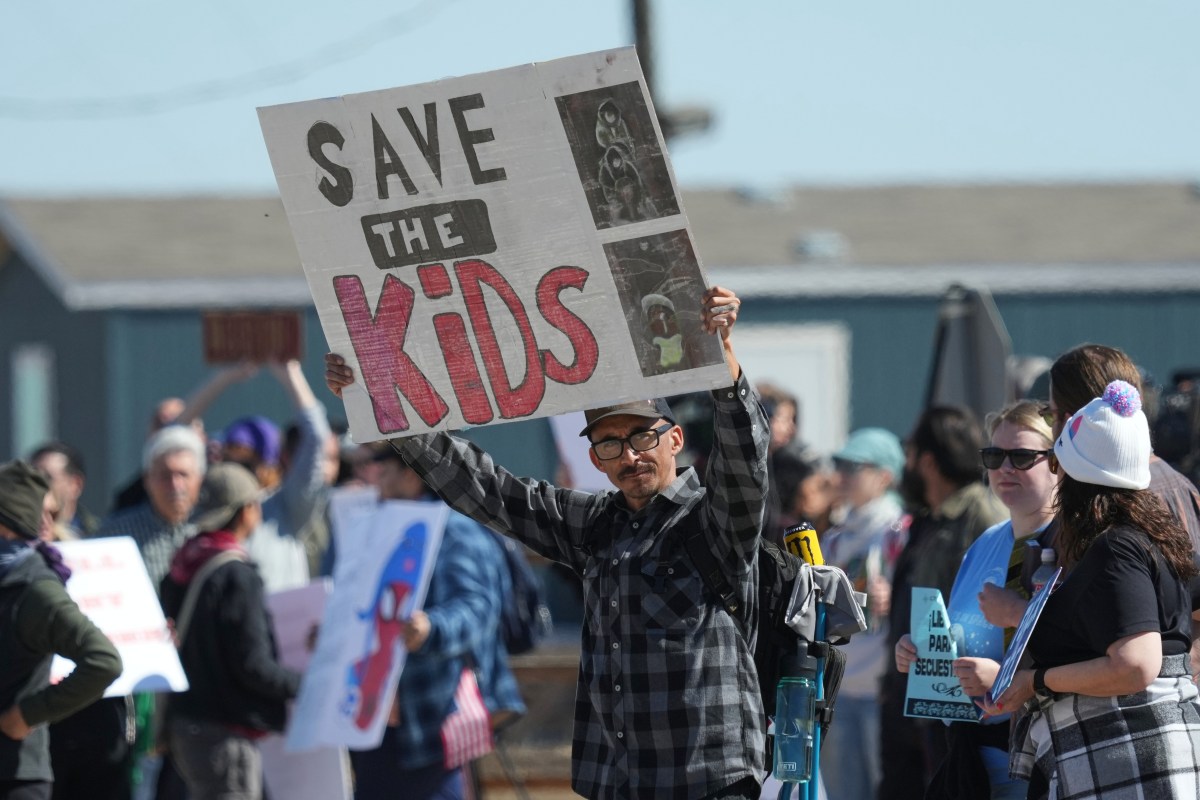
The Trump administration was ordered Monday to pay for independent monitoring of conditions in immigrant detention centers housing children, after mounting concerns about one center in particular in Dilley, Texas. Gee, an appointee of former President Barack Obama, said that oversight is necessary because of a combination of the government's "history of noncompliance," and evidence of current noncompliance when it comes to the standards and expectations for the detention of immigrant children—something that has been an issue faced by both Trump administrations. The ruling appoints former Los Angeles City Attorney Andrea Sheridan Ordin as Special Master and pediatrician Dr.
Paul Wise as Independent Monitor. The pair will have authority to inspect facilities, conduct announced and unannounced visits, review records, interview detainees and employees, validate detention data and provide quarterly reports to the court. Responding to the ruling, a Department of Homeland Security (DHS) spokesperson told Newsweek that Gee was trying to "demonize the brave men and women of DHS." The litigation stems from the Flores Settlement Agreement, a 1997 accord that sets national standards for the detention, release and treatment of immigrant children in federal custody.
Among other requirements, Flores mandates that minors be held in facilities that are "safe and sanitary" and released without unnecessary delay whenever possible. The agreement has shaped federal immigration detention policy for decades and frequently served as a flashpoint during both the first and second Trump administrations' efforts to expand family detention. The court is also seeking renewed attention to whether detained families are being informed of their rights under Flores.
Gee noted evidence plaintiffs submitted that families interviewed by legal advocates generally did not recall receiving information about those rights. The special master will assist efforts to develop and implement a notice-of-rights process for families at Dilley. Gee emphasized that her order is not a contempt finding or punishment against the government.
Instead, she said federal courts may appoint outside monitors when exceptional circumstances and ongoing concerns about compliance with existing court orders exist. The judge pointed to evidence that some children and families continued to spend lengthy periods in custody despite a dramatic decline in migrant family arrivals at the southern border. According to figures cited in the ruling, encounters involving children and families were down 89 percent during much of fiscal year 2026 compared with the previous year.
Yet court filings described cases where children allegedly remained in U.S. Customs and Border Protection (CBP) facilities for days or even weeks. The court specifically highlighted concerns about detention times in the Rio Grande Valley, El Paso, and San Diego sectors, as well as conditions inside those facilities, including complaints about extreme cold, lighting that interfered with sleep, and limited access to soap.
Extract — continue reading at the source.