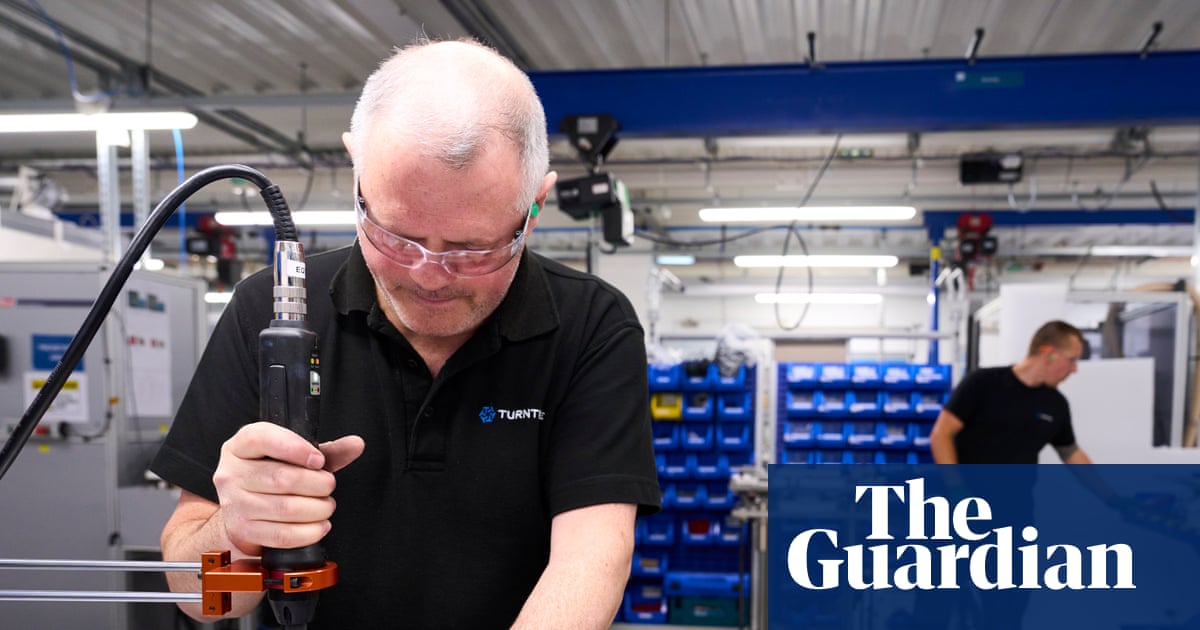
In a factory in Gateshead, engineers carefully wind metal wires around iron cores to go in electric motors. Here, workers produce a smaller “pancake motor”, which generates higher torque than conventional versions for supercars or construction equipment. These workers form part of north-east England’s automotive industry, which has experienced a long line of political disruptions, from Margaret Thatcher’s efforts to attract international investment, through Brexit and now Andy Burnham’s reindustrialisation strategy.
Across the Gateshead factory, which is owned by Turntide, more people are readying tools to assemble 2.5-tonne prototype battery packs for Hitachi’s hybrid trains, also to be built in the north-east. The busy factory is just one example of the ripples that have spread out from the centre of the area’s automotive industry, the Sunderland car factory 15 minutes down the road owned by Japan’s Nissan. Turntide’s business would not be here without its bigger automotive neighbour.
Hyperdrive, one of the businesses combined into US-owned Turntide, secured its first batteries from a factory supplying Nissan. The smaller company shows why governments court big manufacturers: they bring stable jobs and can also spark growth in the local economy. Yet the situation is not so positive across the local industry.
Four decades after opening in 1986, Nissan’s underutilised Sunderland plant is hoping to build cars for China’s Chery. The deal, which is still not confirmed, came at just the right time for Sunderland’s workers, with the plant operating at barely half its capacity and facing a series of Brexit threats to its export-led model. The Nissan factory opened as the keystone of Thatcher’s investment drive.
In Sunderland those efforts are mostly seen as a success: the first Bluebird from the plant takes pride of place in the city’s museum. The factory produced 507,000 cars in 2016, just shy of the 510,000 made in 2012, and it was seen as the carmaker’s most efficient plant internationally. Andy Palmer, who was Nissan’s global chief operating officer before leaving to lead Aston Martin in 2014, said the plant was “the shining star globally for Nissan in the manufacturing world”.
Yet it still had to fight to survive. Nissan closed its other European plant in Spain in 2020 (later selling it to Chery). That survival was “no mean feat”, Palmer said, and came “in spite of everything else” that it had to deal with.
Extract — continue reading at the source.


