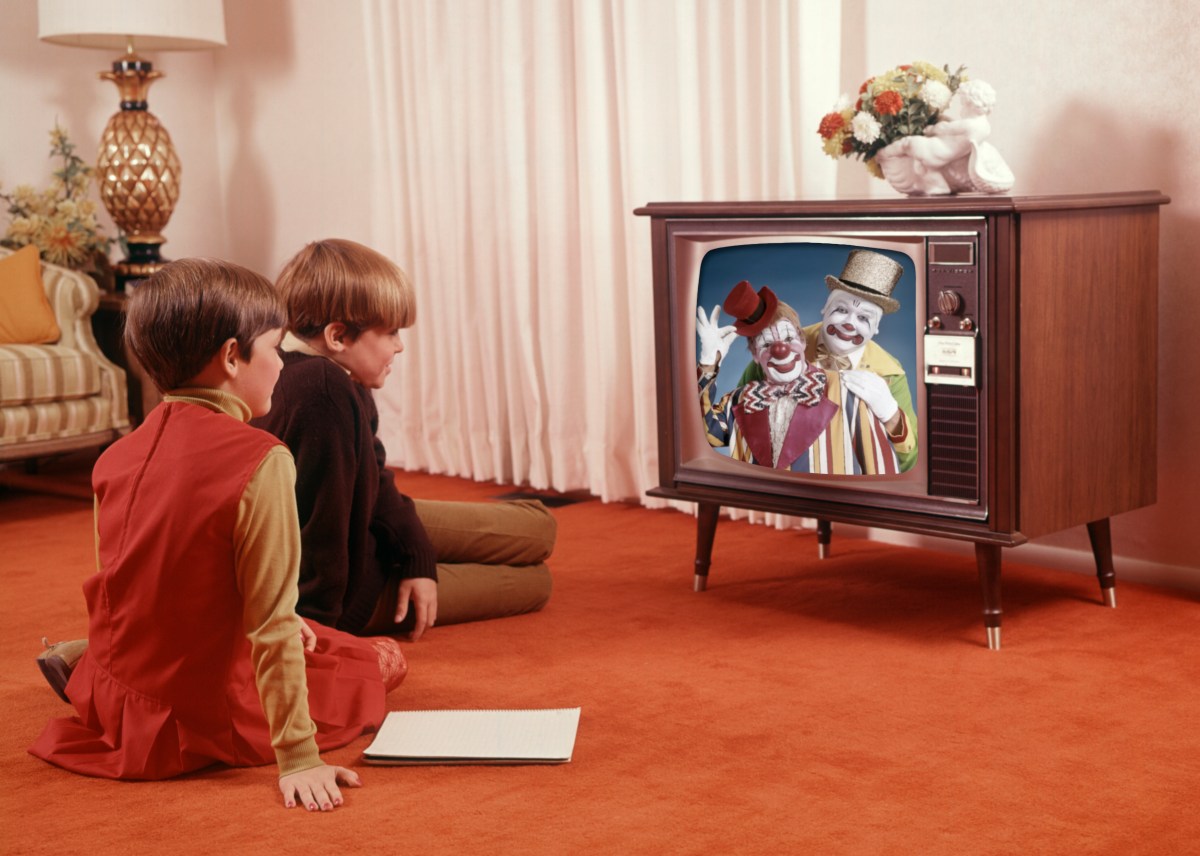
I was born in Italy in 1989, when television consisted of a handful of major channels and cartoons aired after school because that's when they aired. You watched what was on when it was on. Around 4 p.m., Italian television came alive with Japanese cartoons dubbed into Italian.
The translated anime included Sailor Moon, Dragon Ball, Mila e Shiro, Holly e Benji, È Quasi Magia Johnny: kids like me watched these shows religiously, blissfully unaware that some of the programming was actually pretty inappropriate. Consider Lady Oscar, about a girl raised as a boy by her military father who eventually becomes commander of the French Royal Guard. There were questions of gender, class, sexuality, forbidden love, political revolution and death.
These aren't necessarily inappropriate subjects, mind you, but they might warrant an adult conversation before being shown to a 7-year-old. Then there was Gemelli Nel Segno Del Destino, a French animated series about two children hunted by a tyrannical Chinese empress. Three decades later, I still remember the anguish of that cartoon, and you can make of that what you will, but you should know that my mother still has no idea what I was watching.
Fast-forward to the United States in 2026, where I am raising four children in a society that has apparently decided that anything remotely entertaining must be available immediately, preferably in 17 different formats. Perhaps the Italians of the 1990s were onto something? Of course, this isn't an Italian-versus-American problem.
I imagine Italian parents today are fighting the same battles because the world has changed: our entertainment choices are now defined by endless streaming services, YouTube, social media and algorithms competing for children's and adults' attention. There is more content than ever and, somehow, less worth watching. But the inappropriateness has changed, too: what we watched as kids 30 years ago was arguably too mature for our age, and what children watch today is often too infantile for their intelligence.
The former exposed us prematurely to the complexities of adulthood, while the latter seems designed to keep children perpetually entertained without requiring them to think or, well, grow into adulthood. I am perfectly comfortable saying no to my kids, especially when it comes to what they watch on TV. The "no YouTube and no shorts" rule occasionally provokes reactions that should really be reserved for humanitarian catastrophes.
Extract — continue reading at the source.