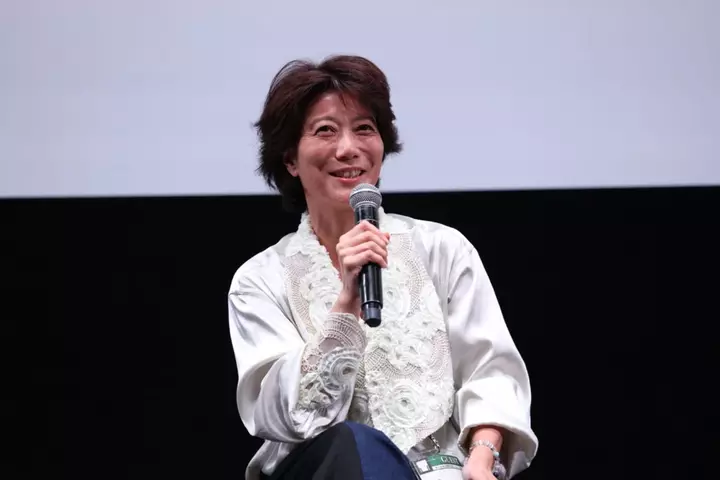
Known for her dark relationship dramas, including the 2017 multiple-award-winner “Dear Etranger,” Mishima Yukiko has taken a different approach with her latest film, “Two Cigarettes, Three Nights,” which is in competition at the 39th Tokyo International Film Festival. Based on a 2014 novel by Chihaya Akane, it stars Matsuoka Mayu as Kanna, a picture book illustrator who has tired of her nice-but-boring live-in boyfriend (Inoue Yuki) while having nothing but a physical connection with her cynical married lover (Nakajima Ayumu). Then a close friend from her college days, Haseo (Narita Ryo), reenters her life after a gap of seven years and once again becomes her confidant.
Now a salesman for a drug company and still single, Haseo is something of a womanizer, though he keeps his relationship with Kanna strictly platonic. Shot in Kyoto, Hiroshima and Toyama Prefecture, the film makes screenwriter Sawai Kaori’s talky script feel visually dynamic, while avoiding cliché shots in Kyoto and Hiroshima, two of Japan’s most famous tourist destinations. Instead of posing against temples and cherry blossoms, the two principals stroll along a riverbank or on railroad tracks as they renew their friendship – and flirt with something more.
Years ago, she and a male friend spent more time walking together than sitting inside a shop and talking, she recalls. At the same time, Kanna and Haseo don’t face each other right away. So when they go into a ramen shop, they are sitting side by side at a counter.
The same with buses and trains – they sit next to each other, looking in the same direction.” A big influence in her shotmaking style, Mishima says, is Ozu Yasujiro, who often filmed characters side by side or even making the same motions in unison. My film starts from that personal perspective, but then it kind of opens up to the world.” The film’s first act hints at sex comedy, and Mishima cast both of her leads – Matsuoka (“Tremble All You Want”) and Narita (“Convenience Story”) – with their comic abilities in mind. But she has crafted something more intimate and complex, with an ending open to interpretation.
It makes a huge difference.” The film is no lighthearted laugh fest: Kanna and Haseo are not always likable characters, acting in ways selfish, callous and even cruel. No matter how bad the person they’re portraying is, you end up understanding them or rather you can’t help but feel the way they do. That’s their charm.” Other characters add their perspectives, such as a surly bartender who is close to Haseo and thinks Kanna is hurting him, and Kanna’s jaded college friend who freely admits to cheating on her husband and sympathizes with Kanna’s infidelities.
It’s more a story about what Kanna comes to see. By spending time with Haseo, she gains a perspective that lets her see not just herself but the world.” Kanna’s art also changes. In sharp contrast to the commercial hack work that pays her bills, she completes a painting that grows out of her three eventful days with Haseo.
Extract — continue reading at the source.