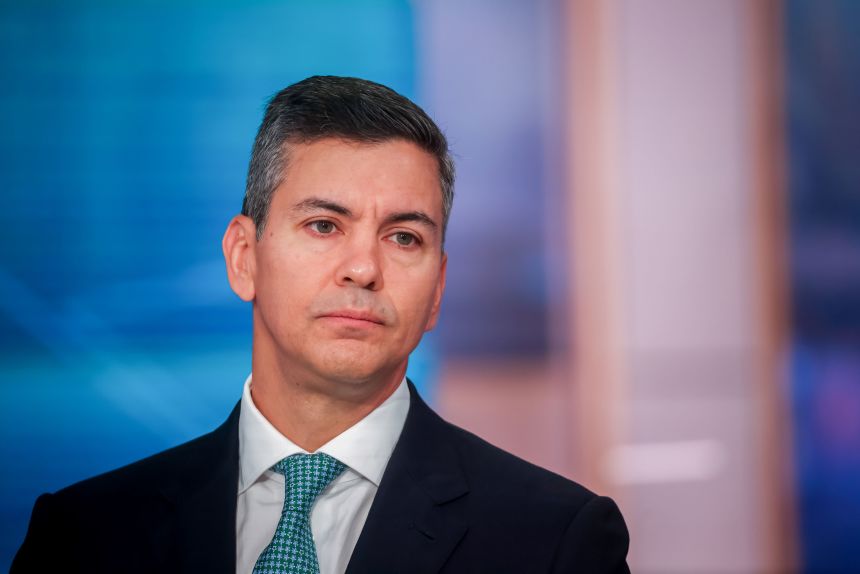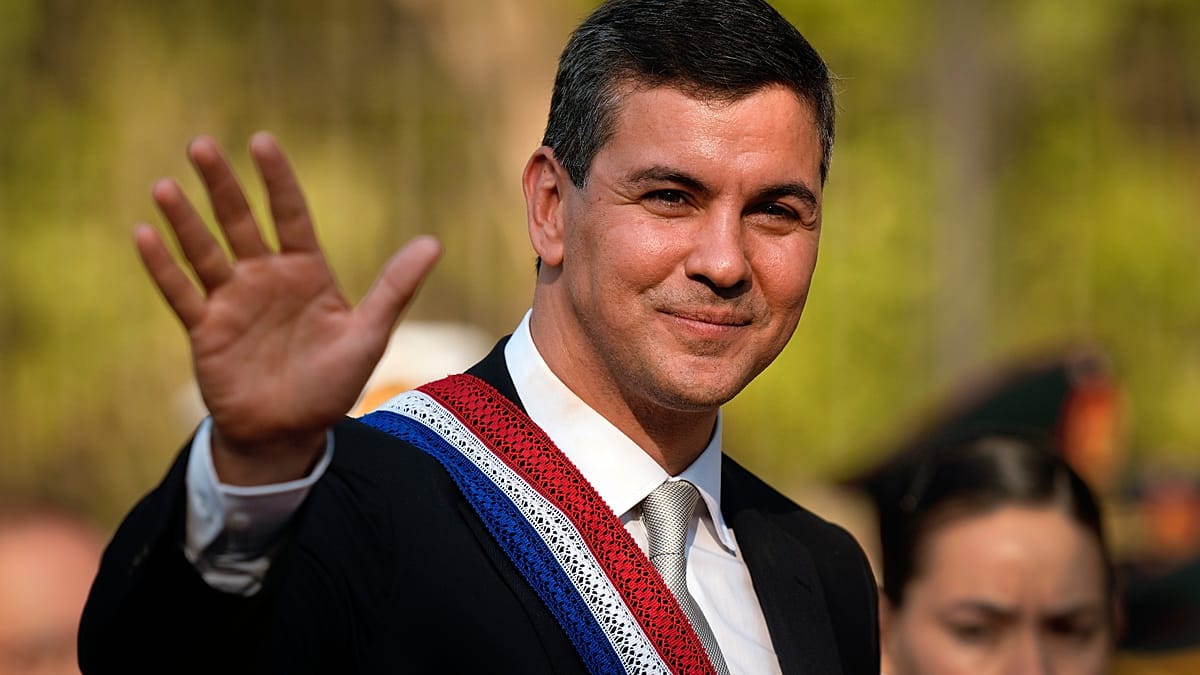
Paraguayan President Santiago Peña has resigned on Thursday amid a banking crisis just before the Chamber of Deputies voted unanimously to impeach him. Ueno Bank, the bank that was placed under intervention earlier this week, had close to three million customers, who have suddenly found themselves without access to their accounts. Protests have roiled the South American nation after its central bank took control of Ueno Bank on Tuesday, citing a severe capital shortfall.
Peña, a close ally of US President Donald Trump, announced his decision in a video posted to X as lawmakers debated his impeachment, saying he was stepping down in the interest of "the stability of our country, social peace and the need to preserve our democratic institutions." "I want to apologise to the people if at any point I failed. It was never my intention to betray the trust you placed in me," the right-wing president said in the video. The Paraguayan president, who until last year held a stake in a company related to Ueno Bank, expressed contrition but stopped short of accepting responsibility for the banking crisis that has plunged a South American nation long prized by foreign investors for its stability into financial and political turmoil.
Long lines of people trying to withdraw their money from Ueno branches snaked down Asuncion's streets on Tuesday and Wednesday, while angry protests swarmed the capital on both evenings. Regulators investigating the bank found poorly documented lending and expenses wrongly accounted for as assets. But once the books were corrected, Ueno's capital fell half below the legal minimum, which led to the central bank seizing the lender.
Ueno’s app, cards and transfers went dark, and its branches locked their doors, leaving desperate depositors lined up outside with no way to cash out their savings. On Wednesday, a rush to open new accounts elsewhere crashed other banks’ mobile apps, fueling public panic. "In the face of these accusations, I can't pretend to be oblivious," said ruling party deputy Alejandro Aquilera during the debate.
"We have more than three million Paraguayans who have been harmed, who feel betrayed, swindled, deceived," she said. Ueno Bank, which exploded from an obscure finance company to a household name in less than five years, claimed more than 60% of Paraguay’s adults as customers. They are now left scrambling to recoup their savings, government pensions, and, for 7,000 employees impacted by the bank's closure, unpaid wages.
Many Paraguayans are left asking how a bank linked to the president, who until last year had a stake in Ueno’s holding company, could grow so rapidly in size and importance despite repeated warnings about its dubious lending practices. The answer lies in the uncomfortable proximity of Peña’s long-ruling Colorado Party to the country’s regulators and business elite, a weakness that has endured even as steady economic management and rapid growth made Paraguay a darling of international investors in recent years. The digital lender, a rebranded version of a decades-old finance company, lured customers with generous cash-back offers on groceries, grew to more than 70 locations, sponsored Paraguay's national soccer team and plastered its name on the country's main stadium.
Extract — continue reading at the source.