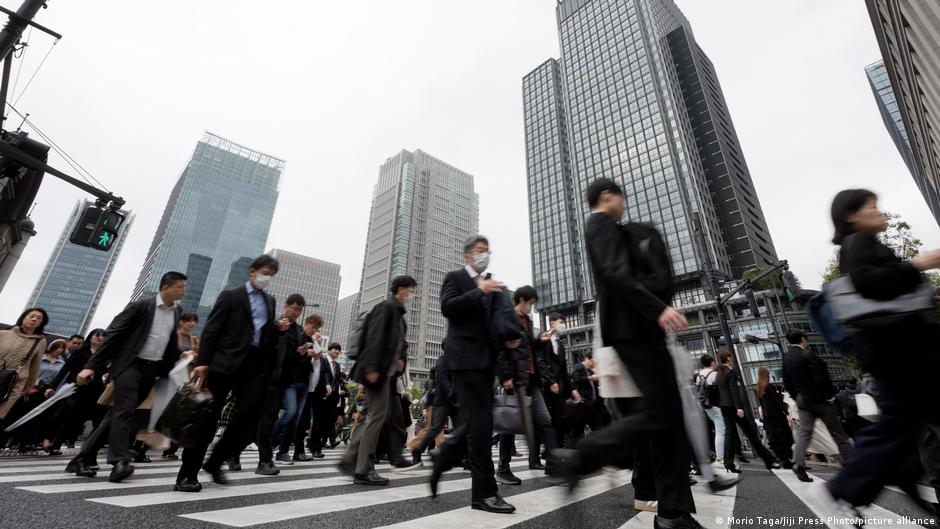
For Y.M., a Japanese man in his early 20s, his first job out of university at a real estate sales firm quickly turned into a daily trial of endurance. Among his colleagues, he was always the one being screamed at. According to his testimony featured on the website of Leadbrain, a Tokyo-based labor and human resources consulting firm, he sought a quiet way out because he was wary of how colleagues perceived him.
He was reluctant to burden his parents and determined to avoid workplace conflict, which is a common attitude among working Japanese. Rather than submitting his resignation in person, he opened his phone and began searching for a resignation proxy service, a third-party agency that could help him quit without direct interaction with his employer. In Japan, vanishing from a workplace without notice is known as bakkure, a concept somewhat parallel to "ghosting" in modern dating.
For many foreigners, leaving a job without notice would be considered an irresponsible and hurtful act. But within the logic of Japanese social interactions, vanishing is a way to avoid direct conflict and maintain harmony — at least on the outside. Demand for these resignation agencies is booming.
Albatross, one of Japan's leading businesses of this kind, helps about 450 people quit without confrontation every month. They charge roughly €120 ($138.5) per client working a full-time job. The majority of these clients are young professionals in the service industry and manufacturing.
The process can be completed within 15 minutes. "The reasons why people requested us to resign for them range from physical violence to sexual harassment," said Yuka Hamada, the CEO of Albatross. "They are vulnerable in this case, and they are not brave enough to quit their job." Around one in three people reported experiencing some form of harassment at work, according to a survey of Japanese workers aged 20 to 49 by consulting firm Shikigaku.
Traditional Japanese corporate culture originated during the post-World War II economic boom and relies heavily on the "lifetime employment" system. In this culture, loyalty is regarded as the highest virtue, and bosses often view resignations as insults, so many young employees fear resigning in person. "Announcing one's intention to resign can feel not merely like ending a contract, but like disappointing others or betraying expectations that one has previously continued to meet," said Hiroki Nakamori, an associate professor at Rikkyo University's Graduate School of Social Design Studies.
Extract — continue reading at the source.