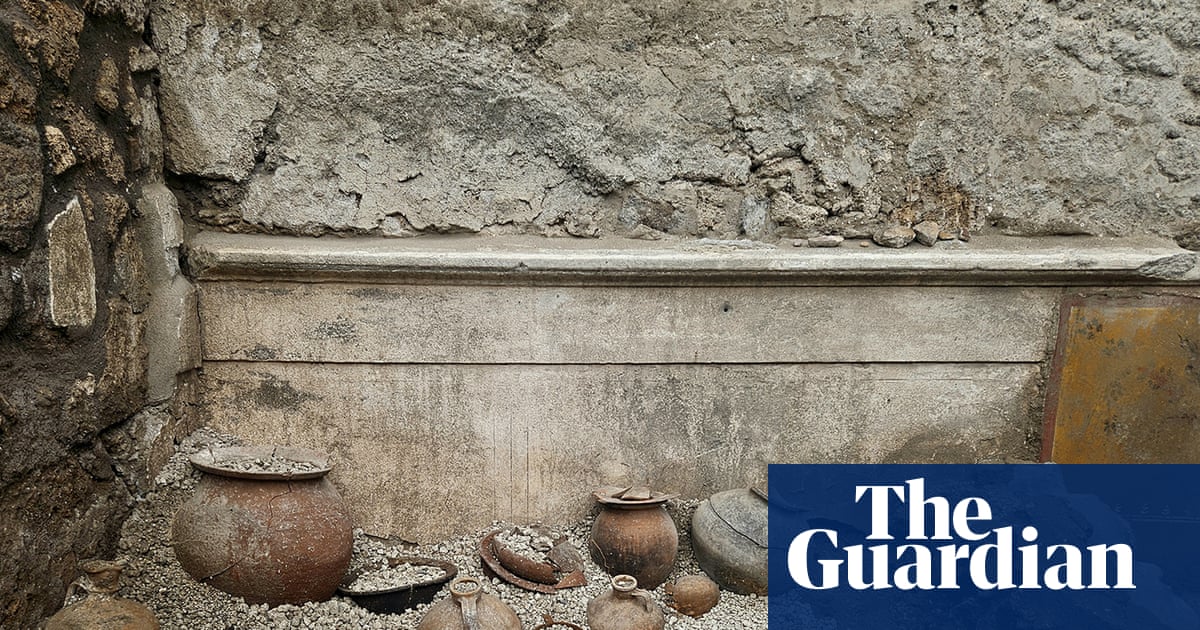
Fragments of personal objects, from makeup tools and a perfume bottle to coins and a child’s necklace, have been found tucked away in a wooden wardrobe sealed off for almost 2,000 years in the ruins of Pompeii. The artifacts provide an intimate glimpse of daily life in the ancient Roman city before it was devastated by the eruption of Mount Vesuvius in AD79. The wardrobe was discovered in a room of a home on Via dell’Abbondanza, which was one of the most bustling streets in Pompeii.
The items inside included tweezers, a small glass perfume bottle, an incense burner and a bronze lantern. But the most intriguing relic was a necklace featuring more than 20 small charms crafted from various materials and representing several deities, including depictions of the gods Bes and Mercury. The type of necklace, known as a crepundia, was traditionally worn by children.
Its decorative charms rattled to help parents keep track of their children and could also help them be identified. Many people moved around in the Mediterranean area and tended to carry personal objects with them.” The wardrobe contained other items including 38 bronze coins, cooking pots and a wooden box with lead weights, suggesting that someone who lived in the home was a tradesperson. The fact that money and personal objects were left behind could point to the owners having to flee the eruption at short notice, Zuchtriegel said.
Archaeologists also found the fragmented skeletons of two mice inside an amphora that had been kept in a storage area of the home. The home had previously been associated with a person called Cornelius Maximus owing to the discovery of inscriptions, which are no longer visible. Its facade was first excavated in 1912, but experts are only now delving into some of its rooms as part of a wider restoration project.
There are also excavations under way at the Villa of the Mysteries in a suburb of Pompeii, which also first came to light in the early 20th century. The majority of the inhabitants in the Villa of the Mysteries were actually servants.” Excavations at Pompeii regularly yield discoveries from the ruins of the ancient city. In 2025, a large and sophisticated thermal bath complex, which was thought to have been used by its owner to woo well-heeled guests, was found during excavations of a home on Via di Nola in Regio IX, a wealthy district of the city.
A home containing a cramped bakery, where enslaved people were believed to have been imprisoned and made to produce bread, was found in the same district in 2023.
Extract — continue reading at the source.