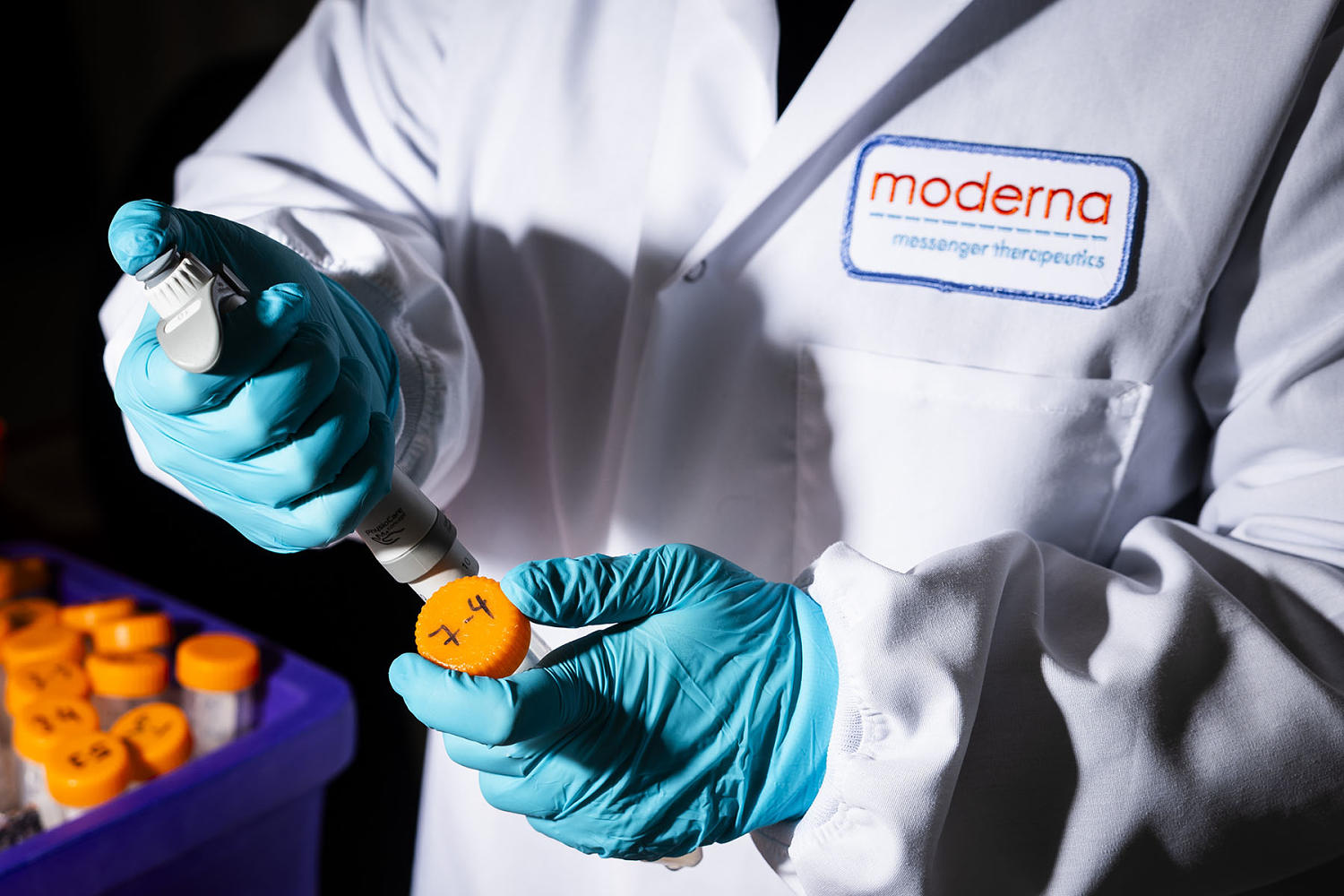
A new personalized mRNA vaccine for melanoma is being hailed by some oncologists as a major breakthrough after it reduced the risk of cancer recurrence and death by 42% compared with standard treatment in a late-stage clinical trial. Robert Vonderheide, director of Penn Medicine’s Abramson Cancer Center and president-elect of the American Association for Cancer Research, said the results are a “game changer.” “It will be seen as the first step toward using cancer vaccines to their full potential,” said Vonderheide, who was not involved in the trial. The experimental vaccine, called intismeran, was developed by drugmakers Moderna and Merck.
Intismeran is personalized to each patient, using genomic data from the patient’s tumor. The new results will be presented Saturday at the annual meeting of the European Society for Medical Oncology in Madrid. The trial included 1,137 Stage 3 melanoma patients.
All of the participants had undergone surgery to remove their tumors and were being treated with Merck’s immunotherapy drug Keytruda. In addition to Keytruda, 757 of the participants also got the personalized vaccine; the remaining 380 got a placebo. Two years later, 82% of the patients who received both the new vaccine and the immunotherapy hadn’t had a recurrence, compared with 70% in the immunotherapy plus placebo group.
In Stage 3 melanoma, the cancer has spread to nearby lymph nodes or other sites on the skin, but it hasn’t spread to distant organs. Cancer recurrence is the “dreaded event” for these patients, Vonderheide said. If it does return, spread to distant organs is more likely.
Georgina Long, co-medical director of the Melanoma Institute Australia who led the clinical trial, said that while scans might suggest that melanoma has been completely removed by surgery, invisible cancer cells may still be lurking. The vaccine also helps the immune system fight cancer. Each vaccine is created by taking the excised tumor, sequencing its genome and identifying a tell-tale fingerprint of abnormal proteins known as neoantigens, Long said.
The vaccine trains the immune system to recognize and target these neoantigens, similar to how a standard vaccine is trained to recognize and target a virus or bacteria. Intismeran uses messenger RNA technology, the same platform pioneered in the development of Covid vaccines that’s hailed for how quickly it can be rolled out. Each patient received their personalized vaccine in a little over nine weeks on average.
Extract — continue reading at the source.