The planetary life support systems relied upon by humans have deteriorated to their worst levels ever recorded amid ongoing pollution and habitat destruction, according to a key yet grim annual update by scientists. Of the nine “planetary boundaries” that help determine whether life can flourish on Earth, seven are being breached at their highest ever levels of transgression, according to the latest planetary health check, a process that was established in 2009. The seven key indicators in the danger zone include climate change, change in biosphere integrity, land system change, freshwater change, modification of biogeochemical flows, introduction of novel entities and, for the first time last year, ocean acidification.
Only two of the assessed areas, stratospheric ozone depletion and atmospheric aerosol loading, have shown improvement over the last decade, although researchers warn that atmospheric aerosols, which can form air pollution, are still a problem in several regions of the world. The coalition of 60 scientists who conducted the analysis of the key guardrails for human life under the auspices of the Potsdam Institute for Climate Impact Research warned that the consequences of breaching these planetary boundaries is “becoming increasingly clear all around us”. The assessment, which poured over the latest scientific data, seeks to establish the state of the defined areas that provide a “safe operating space for humanity”.
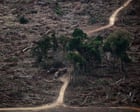
Human civilization has developed in the past 10,000 years due to a relatively stable climate and natural resources that sustainably provide us with food, shelter and a safe living environment. These conditions are being badly warped, however, by the ongoing release of huge amounts of planet-heating pollution, from the burning of fossil fuels, and the mass disposal of other pollution such as plastic into our environment. Habitats such as forests and wetlands are being torn apart, fragmented and flattened to make way for agriculture and urban areas, imperiling animal species and natural systems upon which we depend.
The ability of landscapes and bodies of water to cope with this and act as a buffer to the worsening climate crisis is “weakening and may be significantly overestimated”, the new report warns. While forests and oceans have sucked up a vast amount of the carbon dioxide we have emitted, there are signs that these natural systems are faltering. For example, there is a chance that the Amazon rainforest, a huge carbon store, could reach a tipping point where it becomes a savannah, which would have “serious implications for climate stability, food and water security, and human health around the world”, the report states.
The report comes on the heels of a series of extreme events around the world in the past year that scientists say have been made far more likely by the upending of our environment. Huge floods hit Pakistan last year, while this year has seen record heat and wildfires across Europe, the hottest ever summer in the US, and a disastrous flood on the Tibet-Nepal border. The oceans, which are absorbing much of this extra generated heat, have hit new temperature records.
The 2026 planetary health check puts data behind what communities on the frontlines already know from living it. We do not have the luxury of treating these as separate crises any longer.” The report was released on Monday shortly after the start of Climate Week, a major gathering of politicians, business leaders and activists in New York City that leads up to the UN general assembly. Members of the Planetary Guardians – including Mary Robinson, the former Irish president; Juan Manuel Santos, the Nobel laureate and ex-president of Colombia; and oceanographer Sylvia Earle – attended the launch of the report.
Extract — continue reading at the source.