On Thursday, police in South Africa found the pattially naked body of Dineo M. The 38-year-old had been beaten and stabbed to death in Ekurhuleni, a municipality on the outskirts of Johannesburg, South Africa's largest city. This is one of a series of killings of women in their 20s and 30s in Ekurhuleni over the past two months.
But for Dineo's sister, Carol, this is much more than another statistic in a country where gender-based violence (GBV) was declared a national disaster in 2025. "We sit here today and we will never see her walk through the door. Her 2-year-old has no idea what is going on," Carol told DW.
"How do you explain to her [...] your mother was brutally murdered, dumped behind shrubs, left unrecognizable? [...] That is why you don't have a mother today." Authorities said it was not yet clear whether the killings were linked. However, they said they have identified similarities, and have issued an alert for women in Ekurhuleni to take precautions. Police Minister Firoz Cachalia said on Sunday that so far there was no conclusive evidence that the killings were carried out by a serial killer, "but nothing has yet been excluded while investigations continue." For families and communities, the deaths have raised fresh questions about whether existing measures are enough to protect women.
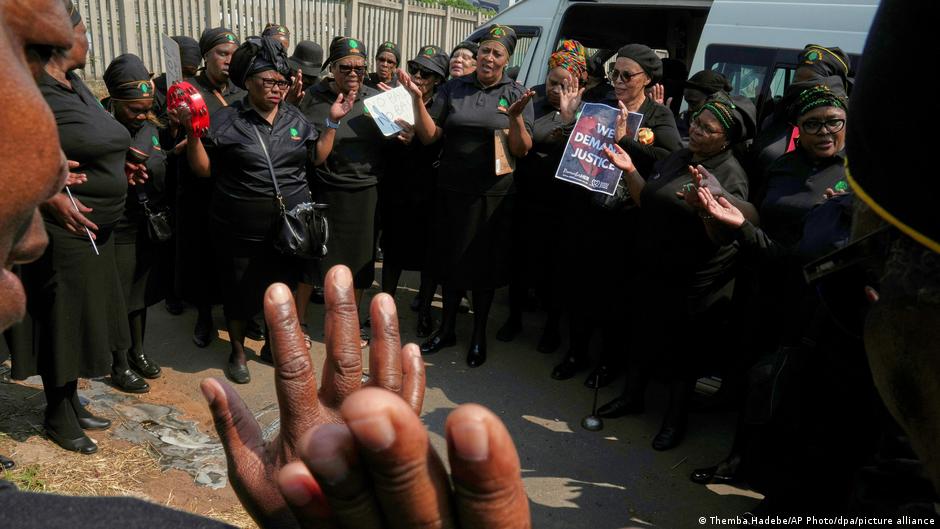
South African Minister in the Presidency for Women, Youth and Persons with Disabilities Sindisiwe Chikunga said at a protest march in Johannesburg that violence against women often starts behind closed doors. Stop financially abusing women," she said, warning that verbal abuse can escalate. "They start with insults.
They proceed to assault and then to murder. It cannot be." For Naledi Masipa, campaigns manager at Gender Links, an NGO promoting gender justice across Southern Africa, the problem encompasses all of society. "Having laws and policies does not automatically change what happens in communities and households," she told DW, adding that the entire support system must work, from reporting and policing to health services, psychosocial support and legal assistance.
If one part fails, she said, women continue to carry the burden. "The real test is whether a woman in an ordinary community feels safer." Amnesty International South Africa said the response to the crimes must recognize the gendered nature of killings. "Femicide itself is not recognized as a crime.
Extract — continue reading at the source.