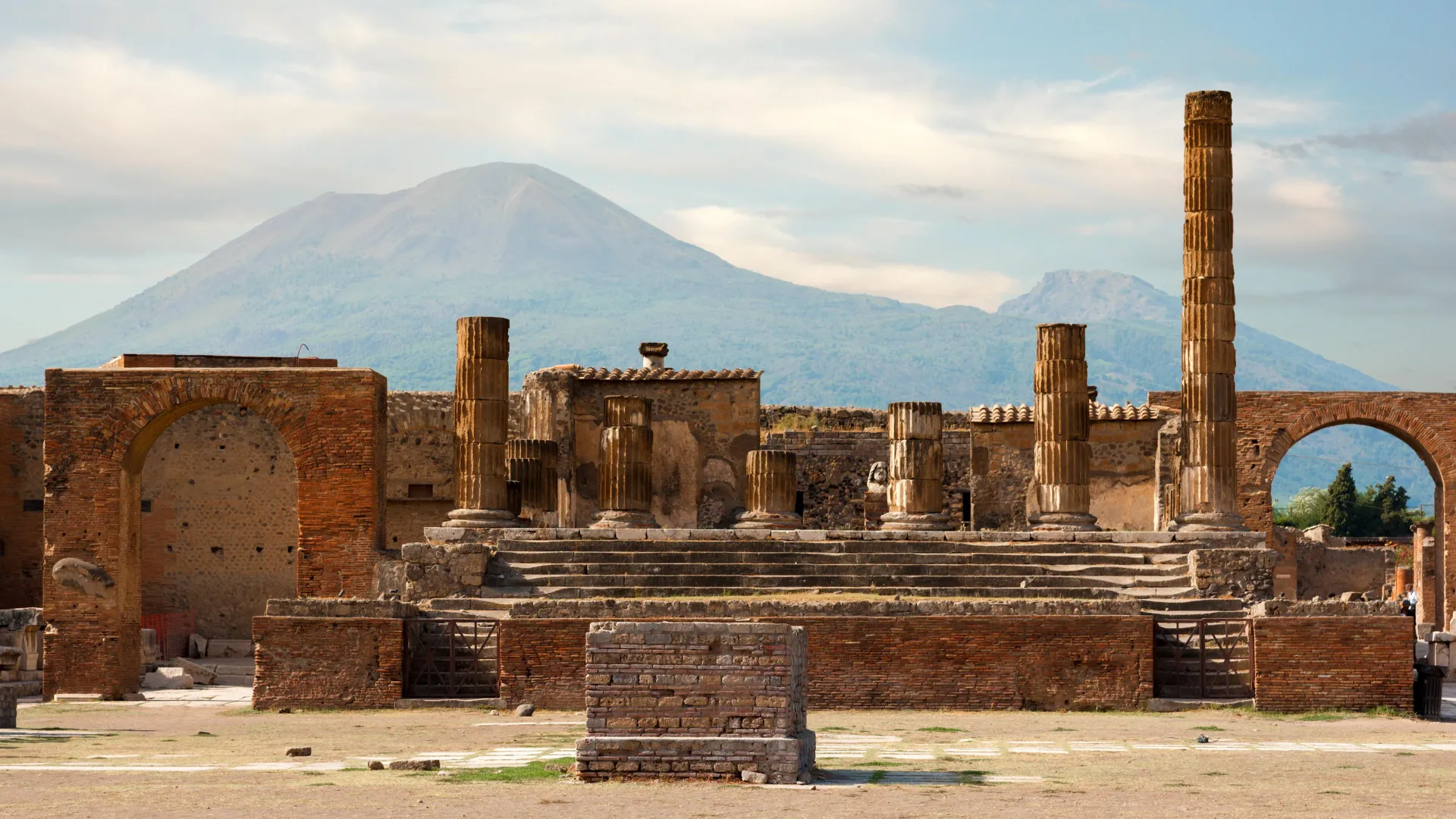
Nearly 2,000 years ago, Pliny the Younger documented what he witnessed when Mt. Vesuvius erupted, burying Pompeii and killing his uncle, Pliny the Elder. His account did more than preserve the story of one of history's most famous volcanic disasters.
It also recorded enough information about when the eruption occurred to give modern scientists an unusually precise historical reference point for testing volcanic dating techniques. Researchers from the Berkeley Geochronology Center, UC Berkeley and the University of Padua in Italy now report in Science Advances that this historical benchmark has helped them significantly improve the precision of argon-argon dating. By calibrating the method against the inferred eruption date of Aug. 24, 79 CE, they have strengthened what is already one of the most widely useful tools for determining the ages of rocks and volcanic events.
The advance could help geologists, paleontologists and archaeologists assign more reliable dates to events in Earth's past. That includes eruptions from volcanoes that continue to pose risks to heavily populated regions around Mexico City, Naples and Yogyakarta in Indonesia. The improved calibration could also help researchers verify other dating techniques, including carbon-14 dating of organic materials and uranium-lead dating of rocks that formed billions of years ago early in Earth's history.
A More Precise Clock for Volcanic History "If you want to put together the eruptive history of a volcano in relatively recent time, precision and accuracy really count," said study leader Paul Renne, a Berkeley professor in residence of earth and planetary science and director of the independent Berkeley Geochronology Center. "The study shows that you can achieve that kind of highly useful precision and accuracy into the historical realm." Accuracy describes how close a measurement is to the correct value, while precision reflects how consistently that measurement can be reproduced. To test the recalibrated method, the researchers examined eight samples of sanidine, a potassium-containing volcanic mineral from Vesuvius.
The argon-argon measurements placed the eruption 1,938 ±13 years before the minerals were analyzed in 2025. Based on the historical evidence preserved in Pliny the Younger's writings, the minerals were actually 1,946 years old. That corresponds to a precision of 0.7% and an accuracy of 0.4%.
"This lets us more precisely infer causality between events in the geologic record, for example a meteor impact structure and a mass extinction," Renne said. About a decade ago, Renne used argon-argon dating to establish precise ages for a meteor impact, major volcanic eruptions in India and the extinction of the dinosaurs. All three events occurred within a span of only a few tens of thousands of years about 66 million years ago.
Extract — continue reading at the source.


