Your phone starts at 1, your calculator at 7 — only one of them was studied
In 1960 Bell Labs tested telephone keypad layouts on people. Then it asked the calculator makers why theirs was upside down. The answer: nobody had ever looked into it.
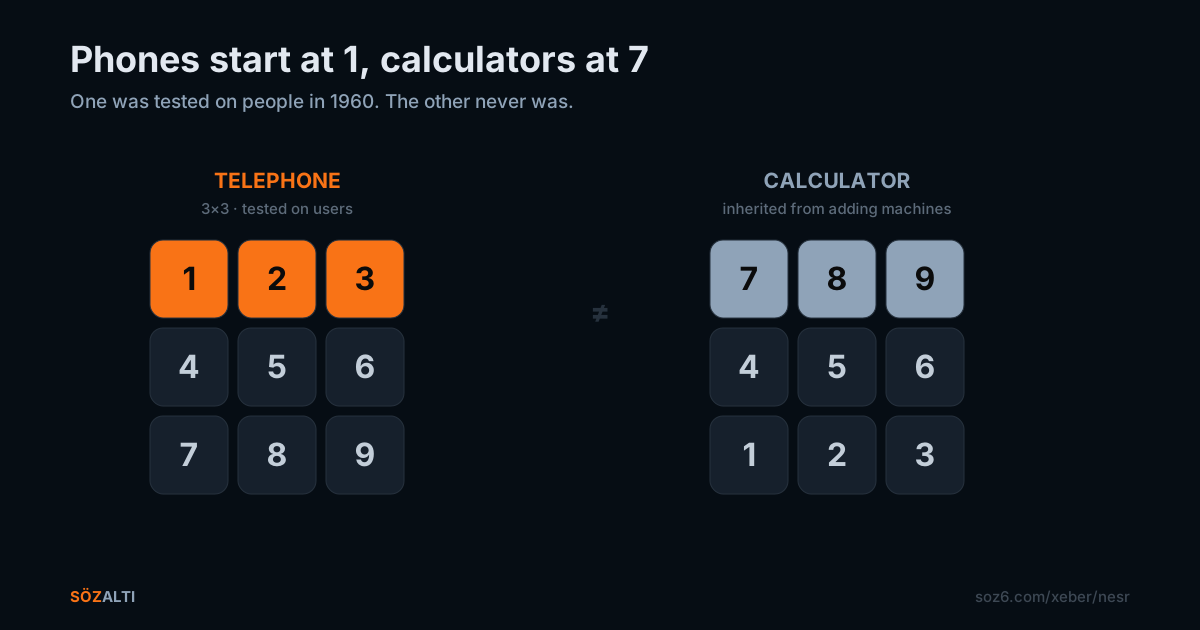
Take out your phone. Look at the number pad. The top row is 1-2-3.
Now open a calculator. The top row is 7-8-9.
Two devices, the same ten digits, opposite layouts. We use both dozens of times a day and almost nobody gets them confused, because the brain knows which object it is looking at. But why are there two standards at all?
The answer is lopsided: one of them is the result of research, and the other is the result of nothing.
In 1960, at Bell Labs, R. L. Deininger was looking for a layout for the push-button telephone. This was not a small question. The United States was about to convert an entire country from rotary dials to buttons, and whatever was chosen would stay for decades.
Deininger tested a range of arrangements: a three-by-three matrix, two rows of five laid out horizontally and vertically, even circular layouts running clockwise and anticlockwise. Each was measured for speed, for error rate, and for what people said they preferred.
The winner was the three-by-three grid with 1-2-3 on top. The reason was simple: for someone who reads left to right and top to bottom, the numbers should grow in the same direction. Experienced calculator users were slightly faster on the inverted layout — but the average person made fewer mistakes on the telephone one, and the telephone was for everyone.
The interesting part comes next. Bell Labs contacted the leading calculator manufacturers and asked them why they had put the low numbers at the bottom.
The answer was that nobody had studied it. That was simply how it had ended up — an inheritance from mechanical adding machines, with no research and no argument behind it.
So the world now runs two numeric keypad standards side by side: one chosen by experiment on human beings, the other carried forward because it already existed. Both feel equally normal.
This happens constantly in technology. One standard gets examined and chosen; another survives merely by being there first — and years later both look equally inevitable. Telling them apart requires going back and checking whether anyone ever asked the question.
The keypad on a cash machine uses the telephone layout. The number pad on the right of your computer keyboard uses the calculator layout. They sit half a metre apart and they are never going to agree.