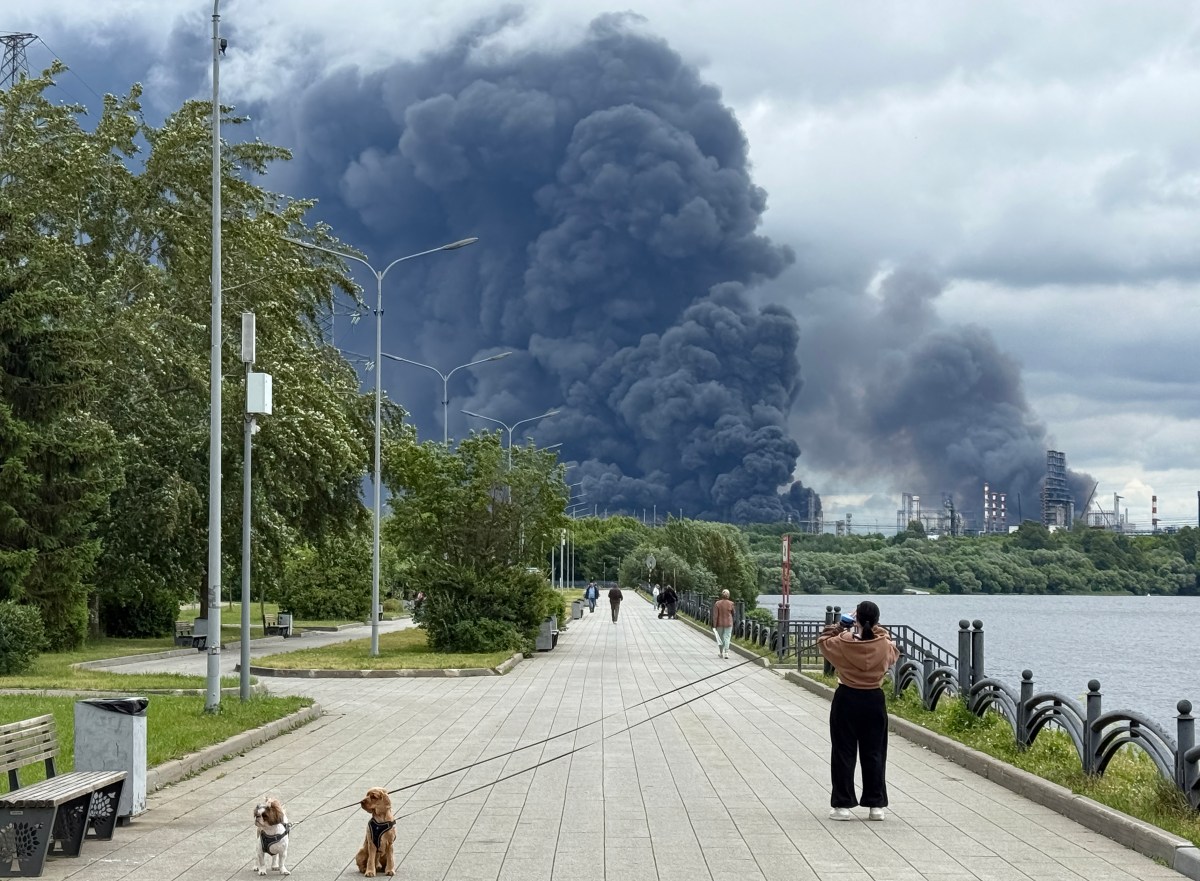
Russia’s corporate job market has a promising new growth sector, one in which hitting quarterly targets carries a rather different meaning. Lukoil is currently advertising for a "chief specialist for protection against unmanned aerial systems" in Moscow, with a tidy monthly salary upwards of 290,000 rubles ($3,400). Here’s the link, for anyone considering a change of scenery!
The successful applicant will be expected to "search for new promising technical solutions" for protecting company facilities, including passive defenses, firing systems, interceptor drones, electronic warfare, radar, and new comms systems. It’s not the kind of job description you’d expect to see on a corporate job board, but in wartime Russia it’s just the cost of doing business. Paying through the nose to keep Ukrainian drones away is bad enough for Russia’s corporate bosses, but now they’re being told to spend like air-defense chiefs without getting to act like them.
The Kremlin now expects companies to fund their own protection while keeping command of the wider system for itself. In Putin’s Russia, it turns out even buying your own air defense does not mean it’s yours. The Russian government has spent 2026 building legal machinery designed to force Russian businesses to shoulder more of the burden of drone defense.
Under Federal Law 58-FZ, enacted in March, private security firms contracted by Russian companies to protect fuel-and-energy, strategic, and other designated critical facilities can receive weapons from Russia’s National Guard to counter unmanned systems. Then Putin added the incentive scheme from hell. Presidential Decree No. 604, signed by Putin on August 24, grants the state power to temporarily seize control of private businesses in various circumstances where owners are deemed to have failed to appropriately protect their facilities from drone attacks.
This can include situations in which the company’s anti-drone measures are found to be inadequate or have been adopted too slowly. Even if a Ukrainian drone manages to penetrate air defenses deemed adequate, the company can still be placed under temporary state administration simply for failing to recover quickly enough. Temporary management can cover all or part of a company’s Russian property, securities, corporate stakes and property rights, and the state-appointed manager retains almost total control of the assets, excluding the ability to dispose of them.
It’s not hard to see, then, why the likes of Lukoil are racing to hire counter-drone experts. The threat of Ukrainian drones is growing larger with each passing day; now you must demonstrate to the government you’re taking all available measures—and spending plenty of money—to make sure your assets are protected. In theory, this should spare you from the Kremlin’s wrath, even if not from Kyiv’s.
Extract — continue reading at the source.