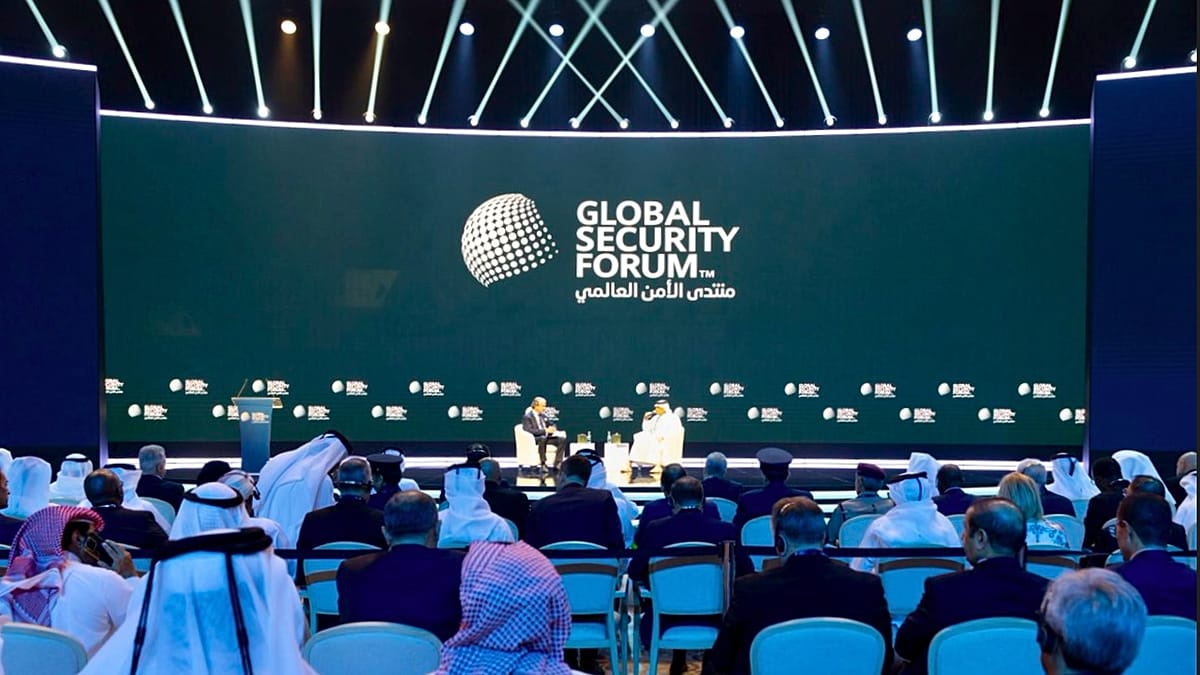
Qatar will soon announce a new defence partnership, Deputy Prime Minister Sheikh Saoud bin Abdulrahman Al Thani said on Monday, while also calling for talks and closer economic ties with Iran to prevent further conflict. Sheikh Saoud, also minister of state for defence affairs, told the Global Security Forum in Doha that Qatar was using lessons from the Iran war to better protect itself and develop new defence plans with its neighbours. The planned defence partnership would help Qatar counter ballistic missiles, drones and cyberattacks, he said, also focusing on water security.
He also said Qatar would soon announce a local defence production hub, with local manufacturing or investments in defence companies, working with a regional partner and allies including the United States, Britain and France. He said that “more than 90% of (Iran’s) attacks” on the region were countered successfully by the Gulf region due to cooperation with the US, through decades of military investments, training and shared experience and that developments of Al Udeid airbase — the biggest US base in the Middle East — would continue in line with their needs. Sheikh Saoud told the Global Security Forum that Doha had stayed in contact with Tehran at different levels despite Iran’s attacks.
The deputy prime minister called for talks between Iran and the six Gulf Cooperation Council (GCC) countries, as well as Pakistan and Turkey, once the US and Iran reach a settlement. International allies should also be consulted, he said. Until then, he said Qatar was working with Pakistan and Oman on mediation, comparing it to a long-distance race that requires determination and resilience.
Sheikh Saoud said that the Gulf countries could emerge from the conflict with stronger economies and new partnerships, as they had after previous crises. He pointed to France and Germany’s joint work on Airbus as an example of countries building economic links. Qatar’s deputy prime minister said that Qatar and Iran also share a major offshore gas field, giving both countries an interest in avoiding further disruption.
He also warned that ongoing disruptions in the energy sector continue to send shockwaves worldwide, and that crises in the region can disrupt the “chain of supply from east to west and also from west to east”. He also rejected transit fees in the Strait of Hormuz and said uncertainty over shipping would raise costs for consumers. Sheikh Saoud said energy disruptions and other regional conflicts pose an ongoing threat to Qatar and the Gulf countries, and that regional instability can affect Gulf investment toward Europe.
Extract — continue reading at the source.