Ben Macintyre uses the acronym MICE to describe the reasons people betray their countries: Money, Ideology, Coercion or Ego. In the set-piece that opens his latest work of true-espionage, we discover a new reason: erectile dysfunction. Stressed, drinking too much, under constant surveillance, furious about the corruption of his colleagues and frustrated with his home life, the KGB’s Vladimir Kuzichkin is offering to betray the secrets of his homeland and its Iranian allies, if only a British doctor can help him have sex again.
If you have read Macintyre before, you’ll recognise a classic example of his style: the journalist’s eye for salacious detail combined with a historian’s rigour. The rest of Redwood lives up to the attention-grabbing opening scene; I devoured it in a single sitting. If you haven’t read him, he is the author of a hatful of bestselling books about war, politics and secrecy, several of which have been adapted for the screen, and one of which – Operation Mincemeat – has become a West End and Broadway musical.
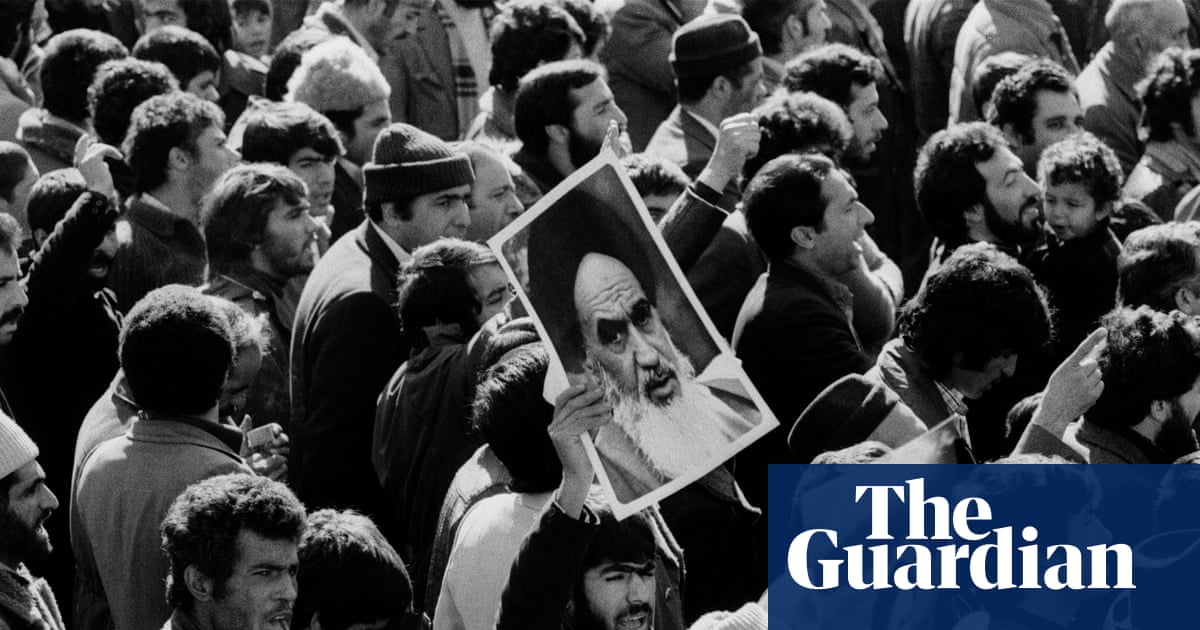
They are sometimes derided as “dadlit”, the kind of nonfiction read by golf club bores and armchair colonels. But Redwood is as far above yet-another-book-about-the-second-world-war as a George Smiley novel is above Jack Reacher. The setting is the immediate aftermath of the 1979 revolution that brought Iran’s ayatollahs to power.
The west was on the back foot, having lost a key ally, with the Americans particularly discomfited by Islamists having seized their embassy and taken its staff hostage. The Soviets, meanwhile, thought they had an opportunity to spread their influence south, to a strategic and oil-rich country with warm water ports. Kuzichkin’s job was to further this aim by distributing money, arms and encouragement to the Tudeh party, an orthodox communist movement led by a Stalinist who had spent the previous few decades in exile in East Germany.
He ran his operation out of the huge Soviet embassy, where his mostly useless colleagues celebrated even the smallest of successes with vast quantities of vodka, and he really hated it. Literally across the street, in the equally large British embassy, was Ian McCredie, a young MI6 operative who had recently arrived in Tehran with a wife and baby in tow, his task to re-establish a British intelligence presence after the entire team had been forced to leave. He didn’t drink as much as Kuzichkin, but he did discover 50 crates of whisky that a predecessor had imported as a present for the Shah and left in a garage, so was able to ride out the revolutionaries’ ban on alcohol quite well.
The relationship between the two men, which becomes one of handler and double agent, is the backbone of the book. It is set against the ever-present risk of discovery by the Revolutionary Guard, and given added poignancy by the fact that neither one realises their actions are taking place amid a geopolitical tectonic shift, in which the communists are slipping into irrelevance and the Islamists rising to take their place. This is demonstrated most starkly when, after Kuzichkin has been safely exfiltrated to the UK for debriefing, his controllers send him to Pakistan to share his intelligence about the communists with the Iranian authorities.
Extract — continue reading at the source.


