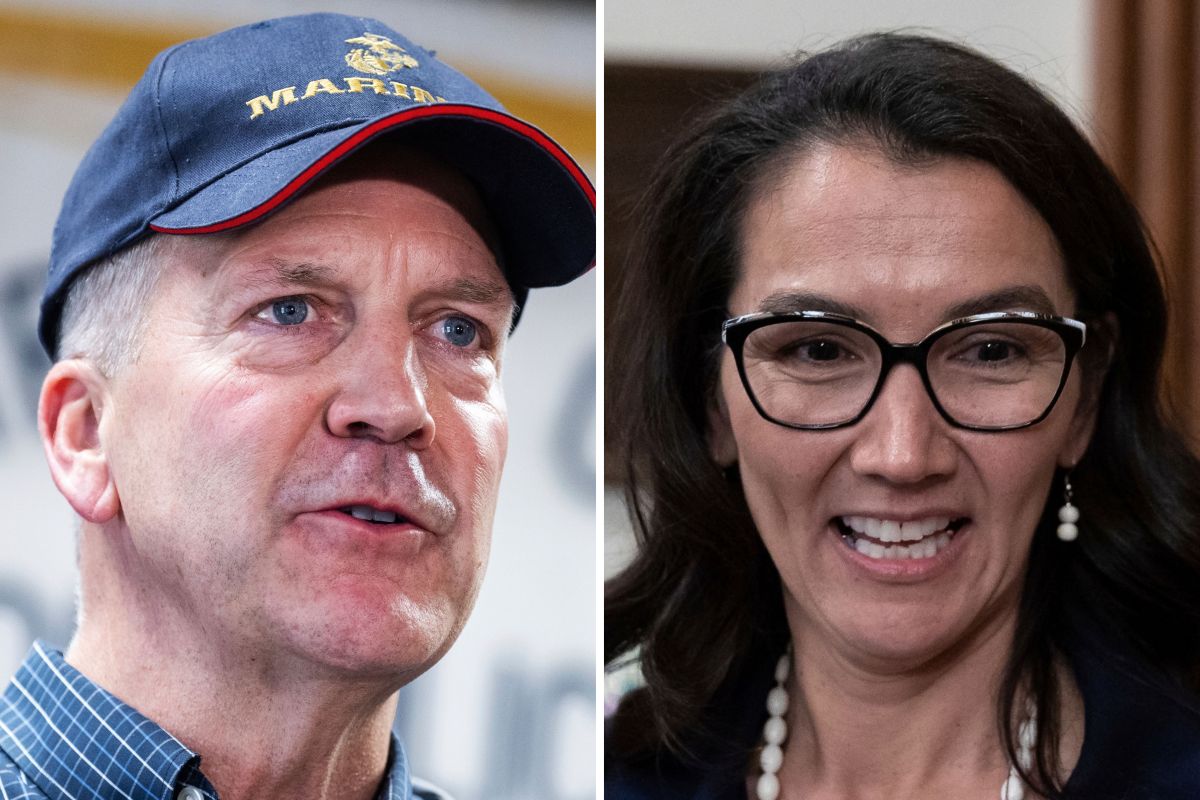
Democrat Mary Peltola holds a tight lead over Republican incumbent Senator Dan S. Sullivan in Alaska's Senate race ahead of the November election, a new poll has revealed. The survey, conducted by AARP between September 8-11, showed Peltola on 46 percent of the vote in the initial ballot, and Sullivan on 41 percent.
Meanwhile, another candidate named Daniel J. Sullivan Jr. secured 4 percent; Gerald Heikes gained 3 percent; and 7 percent of voters were undecided. Alaska advances four primary candidates regardless of party and uses ranked-choice voting in the general election, eliminating the lowest finisher and redistributing ballots according to voters' next available preferences until a candidate has a majority.
The AARP poll showed that Peltola secured 53 percent of the vote in a final round match-up, compared to Sullivan's 47 percent. Newsweek contacted Peltola and Sullivan's campaigns for comment by email. Peltola—the last remaining Democratic candidate in the race—maintains a strong lead among voters aged under 50, including a net 45-point lead among those aged 18-34, and a 18-point lead among those aged 35-49.
In contrast, Sullivan maintains small leads among those aged 50 and older. Peltola also has a strong 32-point lead among independents on 58 percent to Sullivan's 26 percent. Meanwhile, Peltola leads among women and college-educated voters to a greater degree than Sullivan does with men and non-college-educated voters, the poll shows.
Peltola also has a stronger net favorability on +6 percent, compared to Sullivan on -4 percent. "Peltola's image is in positive territory thanks to voters under 50, while she is a bit negative with those 50+. The reverse is true for Sullivan," the poll says.
"Peltola's image is demographically strongest with women, Alaska Natives, and college graduates. Sullivan is stronger with men, especially men 50+, and those without college degrees." The poll was conducted on 800 likely voters across Alaska, and had a margin of error of +/- 3.5 percentage points. Prediction markets allow traders to buy contracts linked to an election result, producing prices that can be read as implied probabilities.
Extract — continue reading at the source.