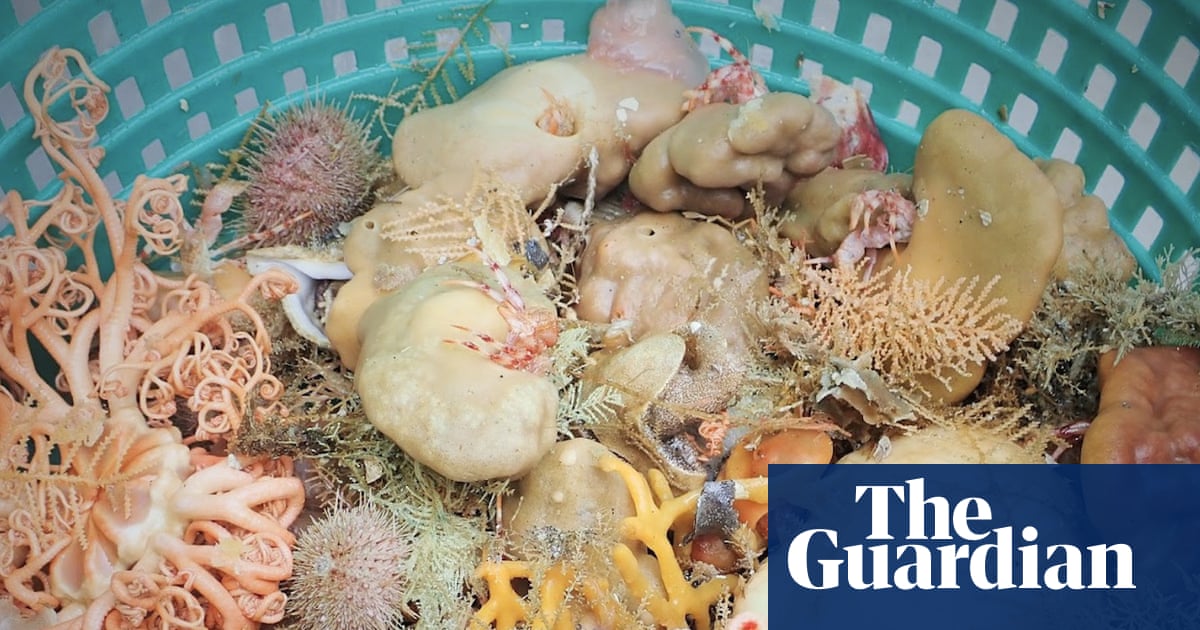
Scientists have discovered nine new deep-sea sponge species off Alaska, offering new insights into the region’s largely unexplored marine biodiversity. The National Oceanic and Atmospheric Administration (Noaa) announced the discovery on Thursday, saying the species were found in the Gulf of Alaska and the Aleutian Islands. The findings bring the total number of known sponge species in Alaska to 232.
The specimens were collected during Noaa Fisheries’ annual bottom-trawl surveys, which monitor groundfish and shellfish stocks. Researchers analyzed samples collected as far back as 2012, describing the new species in two recent scientific papers. Often described as living water pumps, sponges are among Earth’s earliest multicellular animals, dating back more than 600m years.
They filter seawater and help create habitats on the seafloor, despite having no brain or complex organs. There are now more than 232 identified species of sponges in Alaska, and probably hundreds more that we don’t know about yet. The future in this field is exciting,” he continued.
Unlike most marine animals, which can be identified by visible traits such as fins and body shapes, sponges can be much harder to distinguish. Because they lack complex organs and other distinctive external features, scientists often rely on their microscopic skeletons and genetic material to identify them. But despite the challenges, we successfully developed several new barcodes for Alaskan species,” she added.
Dense sponge communities are considered essential fish habitat by Noaa because they provide shelter that supports fish survival, growth and population recovery. Sponges also produce chemicals to defend themselves against predators and competing organisms. Some of these compounds have shown promise for potential use in cancer treatments.
Yet despite their ecological importance, Alaska’s deep-sea sponge communities face growing threats from Donald Trump’s proposals to expand deep-sea mining for critical minerals such as nickel and copper – used in military and technological applications – as well as bottom trawling in the region. Environmental groups have opposed the proposals, warning that the activities could damage fragile seafloor ecosystems as the climate crisis intensifies. Cooper Freeman, Alaska director of the Center for Biological Diversity, said: “Alaska’s sponge gardens do so much for a healthy ocean, including providing shelter and serving as vitally important nurseries for all kinds of fish and crabs.
Extract — continue reading at the source.