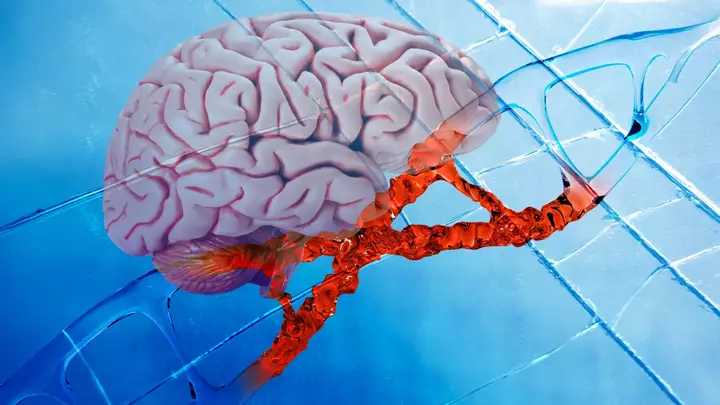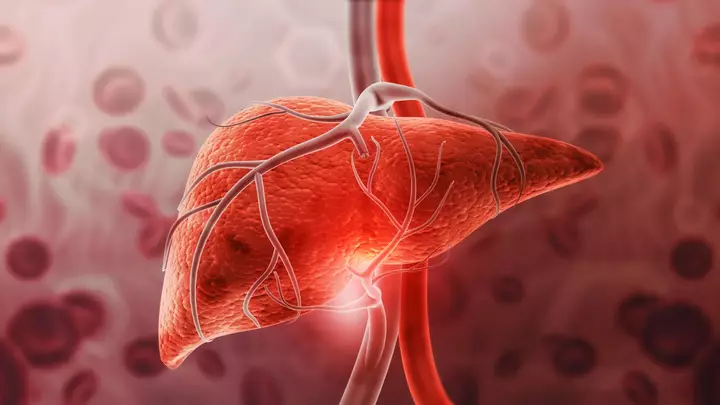
The liver may hold an unexpected key to fighting two of the most serious diseases associated with aging: Alzheimer's disease and heart disease. Scientists have discovered that restoring the function of aging liver cells can dramatically reduce harmful substances in the bloodstream, raising the possibility of treating diseases that affect organs far beyond the liver itself. In a new study involving older rats, researchers at the Keck School of Medicine of USC found that an experimental drug called cinaciguat reversed important signs of aging in specialized liver cells.
After just two weeks of treatment, levels of amyloid beta, a protein associated with Alzheimer's disease, dropped by half. Levels of LDL, commonly called bad cholesterol, also returned to those seen in younger animals. The findings, published in the Journal of Biological Chemistry, also revealed a previously unknown way that liver cells communicate with one another.
This discovery could help scientists develop treatments that restore the liver's ability to remove potentially harmful substances from the blood, possibly reducing the risk of Alzheimer's disease and atherosclerosis, a condition in which fatty deposits accumulate inside arteries. Why the Liver Could Be Important for Alzheimer's Although Alzheimer's primarily affects the brain, scientists are increasingly interested in how other organs might influence the disease. The liver plays a central role in filtering the blood and removing unwanted compounds, including substances that may contribute to disease when they accumulate.
The USC findings suggest that restoring this natural cleaning process could offer a different approach to preventing certain age-related illnesses. However, the results have so far been demonstrated only in rats, and additional studies are needed to establish whether the same benefits occur in humans. "We need to do further translational work to see whether our findings might point to new therapies," said corresponding author Laurie DeLeve, MD, PhD, professor and vice chair for scientific affairs in the USC Department of Medicine.
"We're hopeful, though, because the findings line up with a lot of epidemiological results showing age as a major risk factor for Alzheimer's and atherosclerosis, and liver damage as a risk factor for Alzheimer's." Targeting the liver could be particularly valuable in Alzheimer's research, where efforts to develop treatments acting directly in the brain have faced an estimated 98% failure rate in clinical trials. One major obstacle is the blood-brain barrier, a protective system that limits which substances can enter the brain from the bloodstream. While this barrier helps shield the brain from harmful compounds, it also makes delivering certain medications extremely difficult.
"If we're right that the liver is impactful, what do we do about that?" said first author Sam de Leve, MA, a USC lab technician and child of Laurie DeLeve. "Rather than trying to get a drug through the blood-brain barrier, which is obnoxiously difficult, we could direct drugs to the liver, an organ where there might be more therapeutic impact and certainly an easier job of drug delivery." Scientists Restore the Aging Liver's Natural Filters To understand how liver aging affects the bloodstream, the researchers focused on a relatively understudied group of cells known as liver sinusoidal endothelial cells (LSECs). These cells form the lining of tiny blood vessels inside the liver.
Extract — continue reading at the source.